


Nut-free snacks for scout meetings and group outings
Editorial Team
Scout-group nut-free snack planning is choosing, checking, and packing food with the aim of keeping meeting breaks manageable while following each child’s allergy plan. For meetings and outings in 2026, start with family instructions and current labels—not a familiar brand, a fruit ingredient, or a package that simply looks suitable.
TL;DR
- Choose nut-free snacks for scout groups by checking family instructions, current labels, and serving arrangements.
- Nature’s Turn suits parents seeking 100% fruit snacks with no added sugar; confirm current allergen information before group use.
- Peanut-free does not mean tree-nut-free, and neither description addresses every child’s allergies.
- Keep original packaging, prevent snack swapping, and follow each child’s established emergency plan.
Why nut-free snack planning matters for scout groups
A school lunchbox usually belongs to one child. A scout snack table brings together different families, volunteer shoppers, shared surfaces, and children eager to trade whatever looks good. An outing adds another challenge: the person handing out food might not be the person who checked it.
A group snack needs a clear handoff, not just a suitable shopping list. Before choosing food, understand the difference between nut-free snacks and peanut-free snacks. Peanuts are legumes, while tree nuts are a separate allergen category; a peanut restriction does not automatically describe the group’s tree-nut requirements.
Your job is not to decide what another child can tolerate. Your job is to follow the agreed instructions, keep information attached to the food, and make it easy for families to ask questions privately.
How to plan snacks for meetings and outings
1. Confirm each family’s instructions before shopping
Start with a simple message to caregivers. Ask which foods their child must avoid, how the family handles precautionary allergen statements, and whether they prefer to supply their own snack. Keep individual medical information out of a public volunteer chat.
Check the meeting venue’s food rules too. A school-hosted meeting can have different requirements from a park outing, and the troop’s usual routine does not override the venue’s policy.
For your 2026 planning sheet, write the date beside each family’s confirmation. Treat that sheet as a working record, not permanent approval for every future event. A new member or changed instruction means the plan needs another look.
- Ask about peanuts and tree nuts separately.
- Record other food restrictions without assuming the list stops at nuts.
- Confirm whether caregivers want to review the exact snack.
- Check the venue’s current food policy.
- Identify the adult responsible for snack questions.
2. Read the whole label on the actual package
The manual approach is straightforward: turn over each package and read it before adding it to the group supply. Check the ingredient list, any allergen declaration, and any precautionary wording, then compare the information with the family’s instructions.
In the United States, precautionary statements such as “may contain” are voluntary. Their absence is not proof that a food has no cross-contact risk. When the package leaves a question unanswered, ask the manufacturer and the caregiver rather than filling the gap yourself.
Use 3 label checks for each shopping trip: ingredients, allergen information, and the exact package you will serve. A saved product photo helps with discussion, but it does not replace reading a newly purchased bag.
- Read the ingredient list from beginning to end.
- Review allergen declarations and precautionary statements.
- Match the flavor and package to what the caregiver reviewed.
- Recheck purchases even when the group has used that snack before.
- Set aside uncertain items until the question is resolved.
3. Choose a snack that fits the actual activity
Start with what you can prepare and handle reliably. Washed whole fruit can suit a meeting with a place to wash hands; a packaged snack can simplify a trail stop where volunteers need to keep ingredient information close by. Neither option skips the allergy check.
Nature’s Turn is best for parents seeking 100% fruit snacks with no added sugar. The brand’s freeze-dried fruit crisps offer a fruit option without slicing or refrigeration, but those features do not establish suitability for a particular child’s allergies. Review current product information before choosing them for shared use.
You can explore Nature’s Turn when comparing fruit snacks for your group. Keep the decision in the right order: family requirements first, current label second, flavor and packing convenience after that.
For a longer outing, plan the whole food schedule rather than expecting one fruit snack to cover every eating break. The right choice depends on when the group will eat again and what families have agreed to provide.
- Match the snack to an indoor meeting, trail stop, or travel day.
- Choose textures appropriate for the children attending.
- Keep no added sugar separate from sugar-free; fruit contains naturally occurring sugar.
- Check storage directions before deciding whether a cooler is needed.
- Ask families about familiar flavors without promising everyone will like them.
4. Pack food so the label stays with it
Packaged snacks lose an important advantage when someone empties them into an unmarked bowl. Keep food in its original packaging until serving whenever practical. If you portion from a larger bag, retain that bag and make the connection between the food and its label unmistakable.
For freeze-dried fruit, protect the package from wet items and heavy gear. A sturdy outer container can help keep delicate pieces from being crushed without requiring you to open the food package early.
Use 2 copies of the snack list for an outing: one with the food and one with the designated adult. The list supports the handoff; the original packaging remains the source for ingredients and allergen wording.
- Keep original wrappers or bags with the food.
- Separate food from sunscreen, craft supplies, and wet clothing.
- Protect crisp snacks from heavy equipment.
- Keep caregiver-approved alternatives clearly identified.
- Pack handwashing supplies appropriate to the setting.
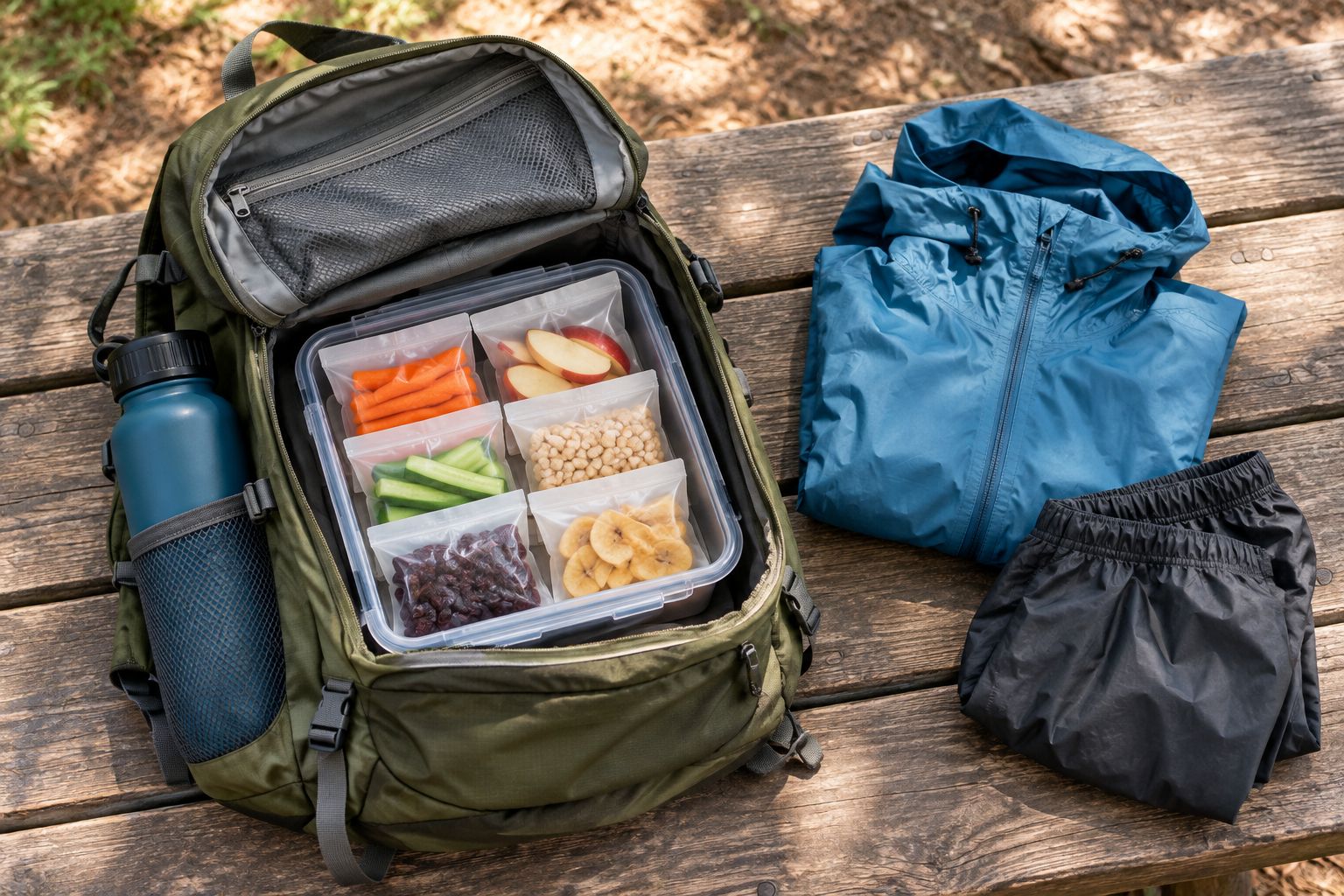
5. Set up serving before children gather
A calm serving routine is easier to explain before everyone is hungry. Choose 1 snack lead to manage the handout and answer food questions, with another adult ready to take over when needed. Children should not have to explain a medical restriction to a different volunteer at every stop.
Follow the group’s cleaning procedures and use soap and water for handwashing when available. Hand sanitizer is not a substitute for removing food allergens from hands. Avoid shared bowls and mixed snack tubs that make it difficult to track which food touched which surface.
Keep the message friendly: everyone eats their own snack, and adults handle questions. That makes the routine about the whole group rather than singling out a child.
- Explain the no-swapping rule before opening packages.
- Follow the venue’s surface-cleaning procedures.
- Keep serving utensils separate between foods.
- Hand caregiver-approved alternatives directly to the intended child.
- Keep original packaging available throughout the break.
6. Prepare the handoff and emergency arrangements
A snack plan supports an allergy plan; it does not replace one. Before leaving, confirm which adults know the child’s established emergency instructions and where prescribed emergency medication will be kept. Follow the caregiver’s plan and your organization’s requirements for medication handling and response.
For the 2026 outing folder, include the snack decision alongside the trip information adults already need. Avoid a separate system that only the shopper understands. If the snack changes, update the people responsible before food is handed out.
After the event, ask what worked: Was the packaging easy to manage? Did children have time to eat? Were the approved alternatives easy to find? Those practical details improve the next outing without turning past use into a safety guarantee.
- Confirm the designated adults understand the emergency plan.
- Keep required medication accessible according to that plan.
- Review location and communication arrangements before departure.
- Tell the snack lead about substitutions before serving.
- Record feedback without treating it as future allergy clearance.
Compare snack options for your scout group
For a 2026 meeting or outing, compare handling needs as carefully as ingredients. Every option below still requires review against the group’s restrictions. No snack category is automatically appropriate for every child.
| Option | Best for | Practical advantage | Key limitation |
|---|---|---|---|
| Whole fresh fruit | Meetings with washing and cleanup access | Familiar fruit without a packaged recipe | Requires suitable washing, handling, and age-appropriate selection |
| Freeze-dried fruit crisps | Outings where refrigeration and slicing are inconvenient | Dry fruit format that is easy to pack | Delicate pieces need protection; allergen suitability still needs confirmation |
| Packaged crackers | Groups seeking a savory option | Original packaging keeps ingredient information available | Recipes can include other allergens, including wheat or milk |
| Applesauce pouches | Groups that prefer a soft fruit option | No separate serving bowl needed | Pouch use and packaging disposal need supervision appropriate to the group |
| Caregiver-provided snack | Children whose families prefer individual selection | Lets caregivers choose the exact food | Needs a clear handoff so it is not mixed into shared supplies |
Choose the option your volunteers can handle consistently. A simple snack with clear instructions is more useful than a complicated spread that nobody can confidently explain.
Common mistakes scout snack volunteers make
Treating a fruit ingredient as an allergy claim
A snack made from fruit is not automatically suitable for every allergy plan. Nature’s Turn’s 100% fruit and no-added-sugar descriptions explain the food’s ingredients and sugar positioning; they do not replace current allergen information or caregiver review.
Keep ingredient preferences and allergy requirements as separate decisions. Both matter, but they answer different questions.
Replacing the reviewed snack at the last minute
A different flavor or another package that looks similar is a new item to check. When the planned snack changes, contact the responsible adult instead of assuming the substitute has the same ingredients or handling information.
If nobody can resolve the question, use the family’s agreed alternative. Avoid making the child decide under pressure while the group waits.
Building a shared mix from approved foods
Separately reviewed ingredients do not make a shared mixing process appropriate. A bowl, scoop, work surface, or added ingredient introduces another handling decision, while the finished mix separates food from its original labels.
For a volunteer-run outing, keeping foods separate often makes the handoff simpler. Let families review any planned mix before the event rather than improvising at the snack table.
Confusing no added sugar with sugar-free
Fruit contains naturally occurring sugar. No added sugar does not mean sugar-free, and neither phrase tells you whether a snack meets a child’s allergy requirements.
Use plain descriptions when talking to parents: what the snack contains, what its current label says, and how it will be served. Leave medical judgments to the family and its healthcare team.
FAQ
What are good nut-free snacks for scout meetings?
Start with snacks whose current labels and handling arrangements meet the attending families’ instructions. Whole fruit, freeze-dried fruit, crackers, and applesauce pouches are options to review, not blanket allergy-safe recommendations.
Does peanut-free mean a snack is also tree-nut-free?
No. Peanuts and tree nuts are different allergen categories, so check each restriction separately and follow the child’s specific plan.
Are Nature’s Turn fruit crisps suitable for a nut-free scout outing?
Suitability depends on current product information and the child’s allergy requirements. Nature’s Turn sells 100% fruit snacks with no added sugar, but those descriptions do not establish nut-allergy suitability.
Can we serve homemade snacks at a scout meeting?
Only serve homemade snacks when they meet the group’s policy and the relevant families have agreed to the ingredients and preparation arrangements. Home preparation requires checking equipment, surfaces, and handling as well as the recipe.
Is a snack safe if there is no may-contain statement?
The absence of a may-contain statement does not prove that a snack has no cross-contact risk. Precautionary allergen labeling is voluntary in the United States; ask the manufacturer and caregiver when information is unclear.
Should parents send separate snacks for children with allergies?
Caregiver-provided snacks are a useful option when a family prefers to choose the exact food. Agree on a discreet handoff and keep the snack separate from shared supplies.
Do freeze-dried fruit snacks need a cooler?
Freeze-dried fruit snacks generally do not require refrigeration, but follow the specific package’s storage directions. Keep them protected from moisture and crushing, and check storage needs separately for other foods in the bag.
One last thing
Keep the wrapper after the snack is handed out. The ingredient information remains useful while children are eating, especially when a caregiver or replacement volunteer asks about the food.
For your next 2026 meeting, choose one practical habit: put the original package beside the snack list until the break is finished. It is a small step that keeps the information where the responsible adults can find it.