


Nut-free snacks and peanut-free snacks: are they the same?
Editorial Team
No—nut-free snacks and peanut-free snacks are not the same. Peanuts are legumes, while tree nuts include almonds, cashews, and walnuts, so a peanut-free snack can still contain tree nuts. For school packing, check the exact allergens covered by a package claim, the current label, and your school’s policy rather than treating either phrase as a safety guarantee.
TL;DR
- Nut-free snacks and peanut-free snacks are not interchangeable; check whether a claim covers peanuts, tree nuts, or both.
- A peanut-free snack can contain almonds, cashews, or other tree nuts.
- Nature’s Turn offers 100% fruit snacks; that ingredient claim is not an allergen guarantee.
- For school snacks, check the current package, cross-contact information, and your school’s written policy.
Nut-free snacks and peanut-free snacks: are they the same?
Peanut-free addresses peanuts; it does not automatically address tree nuts. Nut-free is a broader-sounding phrase, but you still need to establish what the manufacturer means and whether the snack meets your school’s rules.
Use this comparison when reading snack packages in 2026. The distinction is about which allergens a claim addresses—not whether a snack looks simple, wholesome, or suitable for children.
| Package wording | What it addresses | Useful for | What it does not establish |
|---|---|---|---|
| Peanut-free | A claim about peanuts | Checking a peanut-specific restriction | Whether almonds, cashews, walnuts, or other tree nuts are excluded |
| Tree-nut-free | A claim about tree nuts | Checking a tree-nut-specific restriction | Whether peanuts are excluded |
| Nut-free | A broad claim whose scope needs checking | Starting a closer label review | Exactly which allergens and manufacturing conditions the claim covers |
| 100% fruit | An ingredient-composition claim | Finding fruit-only snacks | Whether manufacturing cross-contact has been addressed |
For fruit-only options, Nature’s Turn offers freeze-dried fruit snacks. Apply the same label checks to fruit snacks as you would to crackers, bars, or any other packaged food.
Why this matters when you pack school snacks
A snack can meet a peanut restriction and still fail a rule that also excludes tree nuts. A classroom request can also differ from the school’s general lunch policy, so the wording on the notice matters.
Picture a rushed morning: you see peanut-free on a snack bar and drop it into a lunchbox. If that bar contains almond butter, the peanut claim has not answered a tree-nut restriction. Match the snack to the actual rule, not to the most reassuring phrase on the front.
For your 2026 school snack routine, keep the current written policy somewhere easy to find. If your child has a diagnosed food allergy, follow the child’s individual allergy-management plan as well; a general school rule does not replace it.
Peanut-free snacks: best for a peanut-specific requirement
A peanut-free claim is useful when you need information about peanuts. Its limitation is scope: it does not tell you everything about tree nuts, other allergens, or suitability for a particular child.
Peanuts and tree nuts are separate allergen categories under U.S. food-labeling requirements. Someone’s ability to eat one does not establish their ability to eat the other. Let the child’s allergist guide individual avoidance decisions rather than using the botanical distinction to make a medical judgment.
When checking a peanut-free snack, ask:
- Does the ingredient list contain any tree nuts that your school also restricts?
- Does the package include advisory wording about peanuts or tree nuts?
- Does the manufacturer explain what its peanut-free claim covers?
- Does the exact product meet your child’s plan and the school’s policy?
A familiar package is not a reason to skip reading. Check each new purchase, including a different flavor or package size, rather than assuming the wording carries across the whole brand.
Nut-free snacks: best for a broader label check
Nut-free sounds like it answers both the peanut and tree-nut questions. Treat it as a claim to verify, not permission to stop reading. Ask whether it covers peanuts, which tree nuts it covers, and what the manufacturer says about cross-contact.
Cross-contact means an allergen unintentionally gets into another food. It can happen through shared equipment, utensils, storage, or handling; it is different from deliberately listing an allergen as an ingredient.
The useful part of a nut-free claim is that it points you toward relevant information. The limitation is that the phrase alone does not explain every production detail or establish suitability for every child.
Under FDA labeling guidance applicable in 2026, precautionary statements such as “may contain” are voluntary. Their absence is not proof that a product was made without shared equipment or other cross-contact opportunities.
That distinction matters at home, too. A snack made without nut ingredients can pick up residue if you portion it with a utensil used for peanut butter or pack it in a container that has not been properly cleaned.
Why school snack requirements vary
The right snack depends on the restriction you are trying to meet. These factors change the decision:
- Named allergens: A rule addressing peanuts alone is different from a rule addressing peanuts and tree nuts.
- Individual needs: A child’s allergy-management plan can include requirements beyond the school’s general policy.
- School setting: Classroom snacks, shared celebrations, and individual lunches can have different instructions. Read the rule for the occasion.
- Manufacturing information: An ingredient list and a statement about shared equipment answer different questions.
- Handling after opening: Shared scoops, containers, and preparation surfaces can introduce cross-contact after a package leaves the manufacturer.
If a school notice simply says nut-free, ask the school to clarify its scope. A short question before shopping is more useful than guessing at the lunchbox stage.
Keep the question concrete: does the policy exclude peanuts, tree nuts, or both, and how does it handle advisory labels? Ask the school for its rule rather than asking it to declare a particular snack safe for every child.
How do I check a snack before putting it in a lunchbox?
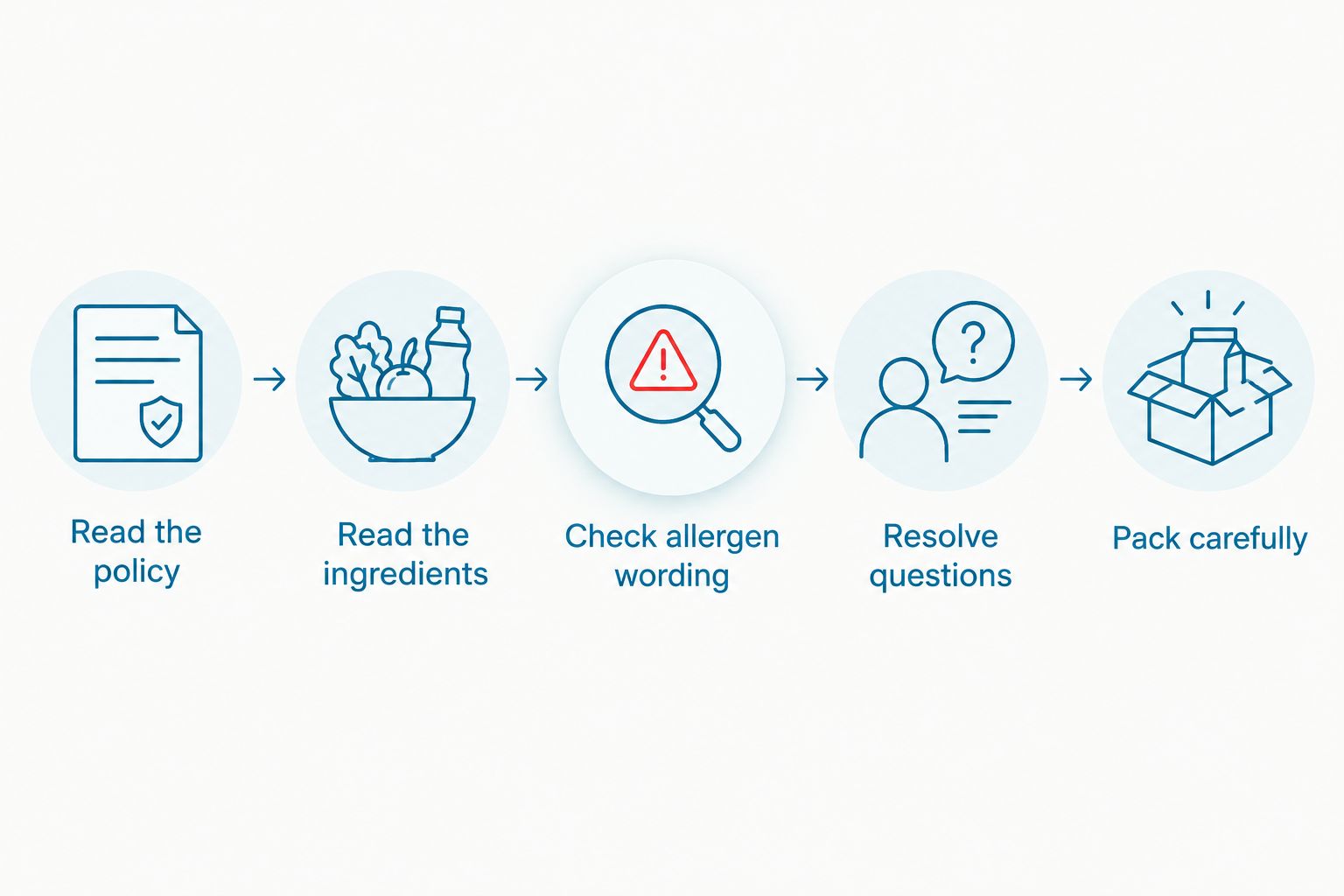
Use the same sequence whether you are checking fruit crisps, crackers, or a snack bar. Start with the school rule and finish with how you will pack the food.
- Read the policy. Identify the allergens and any instructions about precautionary statements or shared food.
- Read the ingredients. Check the full list on the exact package you are packing, not just a shelf tag or front-of-pack claim.
- Check allergen wording. Read any Contains statement and advisory wording. Do not assume every allergen detail appears in a separate box.
- Resolve questions. Ask the manufacturer about the exact product if the package does not answer a relevant manufacturing question. If suitability remains unresolved, choose something that meets the established requirements.
- Pack carefully. Wash hands with soap and water, clean food-contact surfaces and containers, and avoid utensils used with the excluded allergen.
For packaged foods covered by FDA rules in 2026, peanuts and tree nuts are among the 9 major food allergens. Major allergens must be identified as required on the label, but that does not mean every package must carry a separate Contains statement; allergen sources can also be identified within the ingredient list.
Keep the original packaging available when someone else needs to review the label. If you transfer snacks into reusable containers, retain the product information rather than relying on memory or an unlabeled bag.
Can fruit snacks fit a nut-restricted school routine?
Fruit snacks belong in the same checking routine as every other snack. A short ingredient list helps you see what is intentionally included, but it does not answer every manufacturing question.
Nature’s Turn freeze-dried fruit snacks are best for families seeking 100% fruit with no added sugar. That is an ingredient-based recommendation, not a claim that the products meet a particular school’s peanut or tree-nut requirements.
Nature’s Turn offers multiple fruit flavors and bag sizes. Choose a flavor your child enjoys, then review the current product information and school policy before making it part of the lunchbox rotation.
No added sugar also does not mean sugar-free: fruit contains naturally occurring sugar. Neither phrase tells you whether a food meets an allergy restriction, so keep nutrition claims and allergen checks separate.
Once a snack meets the applicable requirements, make packing practical. Use a clean container that protects crisp pieces from being crushed, and keep it separate from foods or utensils that could introduce the excluded allergen.
Are snacks without nuts in the ingredients automatically suitable?
No—an ingredient list without peanuts or tree nuts does not settle every allergy question. It tells you about intentionally included ingredients; it does not, by itself, establish the absence of manufacturing or handling cross-contact.
For example, a homemade snack can use ingredients without nuts but still be prepared with a shared utensil. A packaged snack can also need further review if the school’s rules address shared-equipment statements.
That does not make a short ingredient list unhelpful. It simply means ingredient review is one part of the decision, alongside the child’s plan, school instructions, and relevant manufacturer information.
For shared classroom food, check permission before preparing or sending anything. An individual lunchbox choice and a snack offered to classmates are different situations, and the school should direct the latter.
Can I use the same approved snack all school year?
You can keep a familiar snack in the rotation, but check the current package each time you buy it. Do not carry a previous label check over to another flavor, size, or product without reviewing it.
For your 2026 school-year list, record the exact product rather than just the brand. A broad note such as fruit crisps or peanut-free bars is less useful than identifying the specific item whose information you reviewed.
If your child changes classrooms, joins an after-school activity, or attends a field trip, check the instructions for that setting. Keep the routine simple, but do not let convenience turn an old decision into a permanent assumption.
FAQ
Are nut-free snacks always peanut-free?
Do not assume a nut-free claim answers every peanut question. Check whether the manufacturer’s claim explicitly covers peanuts, then review the current package and applicable school requirements.
Can peanut-free snacks contain almonds or cashews?
Yes, peanut-free snacks can contain almonds or cashews because those are tree nuts, not peanuts. Read the ingredient list whenever tree nuts are also restricted.
Does no added sugar mean a fruit snack is nut-free?
No, no added sugar is not an allergen claim. It describes added sugar, while fruit still contains naturally occurring sugar; check allergen information separately.
Does a missing may contain warning mean there is no cross-contact?
No, the absence of a may contain warning does not prove there is no cross-contact. Under FDA guidance, precautionary allergen statements are voluntary.
Are Nature’s Turn fruit snacks automatically suitable for a nut-free classroom?
Do not assume Nature’s Turn fruit snacks meet a particular classroom’s requirements based on the fruit ingredients alone. Review the current product label, relevant manufacturer information, and the school’s written policy.
What should I do if the school only says nut-free?
Ask the school whether nut-free means peanuts, tree nuts, or both, and whether its policy addresses advisory statements. Use that clarification when checking the exact snack package.
Should I keep the wrapper when I pack snacks in a reusable container?
Keep the original product information available so you or a supervising adult can review the exact label. Use a clean container and avoid preparation utensils that could introduce the excluded allergen.
One last thing
The most useful lunchbox habit is keeping the exact label available. A snack’s color, flavor, or familiar wrapper design cannot replace its ingredient and allergen information.
Before the next school morning, save the school policy alongside the product information you need. That small bit of organization gives you something concrete to check when a caregiver, teacher, or grandparent helps with packing.