


Allergy-friendly snacks for school field trips
Editorial Team
Parents’ allergy friendly snacks are foods chosen around a child’s specific allergies and school rules, with the aim of making field-trip snack time easier to manage. Unlike an ordinary lunchbox day, a trip means planning for changing locations, limited storage, and adults who need clear instructions.
TL;DR
- Choose allergy friendly snacks by checking the current label, your child’s allergy plan, and the school’s field-trip rules.
- Nature's Turn freeze-dried fruit snacks suit parents seeking 100% fruit; allergy suitability still requires checking the current package.
- Keep field-trip snacks in their original packaging when possible, and make your child’s approved food easy to identify.
- No added sugar does not mean sugar-free, and a short ingredient list does not guarantee allergy suitability.
Why allergy friendly snacks matter for school-trip parents
The best field-trip snack is one your child can eat under their allergy plan and the school’s rules—not one with the most reassuring front label. A familiar food is easier to plan around than an unfamiliar snack bought on the way to the bus.
For your 2026 field-trip checklist, separate convenience from allergy suitability. Nature's Turn sells freeze-dried fruit snacks made with 100% fruit and no added sugar. Those ingredient claims help you understand the food, but they do not establish whether a particular package meets your child’s allergy requirements.
A field trip also changes the practical questions. Will snacks stay in a backpack? Will children eat together? Who will help if a wrapper is difficult to open? Answering these questions before departure gives you a packing plan that fits the actual day.
You do not need a complicated snack system. You need the right food, readable information, and agreement with the adults supervising your child.
How to choose and pack field-trip snacks
1. Confirm the school’s field-trip rules
Start with the teacher or school nurse, not the grocery aisle. Ask for the rules for this particular trip: a classroom policy does not answer every question about a bus ride, museum visit, or outdoor lunch.
Make 2 separate checks: confirm what the school permits, then confirm what fits your child’s individual allergy plan. A school that restricts peanuts has not automatically screened every permitted food for milk, sesame, or another child’s allergen.
Keep the reply with your 2026 trip information so another caregiver can follow the same instructions. If the school requests original packaging, do not replace it with a plain container just to save space.
- School policy: Ask which foods or ingredients are restricted.
- Snack timing: Confirm when and where children will eat.
- Adult responsibility: Identify who receives your child’s food instructions.
- Storage plan: Ask whether snacks stay in backpacks or a shared bin.
2. Read the current package, every time
Check the package you will actually send. A remembered label, a shopping-site image, or last month’s wrapper is not a substitute for the current ingredient and allergen information.
For packaged foods in the United States, FDA allergen-labeling requirements identify 9 major food allergens: milk, eggs, fish, crustacean shellfish, tree nuts, peanuts, wheat, soybeans, and sesame. That list is not a list of every possible allergy; fruit and other foods can also cause allergic reactions.
Read the ingredient list and any allergen statements together. Precautionary wording such as a shared-facility statement needs to be considered under your child’s allergy plan. The absence of a precautionary statement does not prove the absence of cross-contact. If information is unclear, ask the manufacturer before choosing the snack.
- Check the complete ingredient list on the current package.
- Read any “Contains” statement and precautionary wording.
- Look for your child’s allergens, including those outside the major-allergen list.
- Set aside snacks with unresolved label questions.
3. Choose a familiar snack your child enjoys
Begin with food your child already eats and that meets the current allergy plan. Wash and pack suitable whole fruit yourself, or choose an appropriately labeled packaged snack. Neither route is automatically better for every family.
Nature's Turn freeze-dried fruit snacks are best for parents seeking a 100% fruit option, with allergy suitability checked separately. The brand’s no-added-sugar claim does not mean sugar-free: fruit contains naturally occurring sugar.
If strawberry is already an appropriate, familiar choice, review the current information for Freeze-Dried Strawberry Crisps. The convenience of packaged fruit does not replace checking the actual bag, its ingredients, and any handling instructions.
A field trip is not the occasion to introduce a food your child has been told to avoid or to test an uncertain allergy question. Follow the child’s clinician-directed plan instead.
- Start with an already familiar, suitable food.
- Let your child choose among approved flavors or options.
- Check that the texture fits your child’s age and eating abilities.
- Keep allergy decisions separate from sugar or ingredient preferences.
4. Match the snack to the trip conditions
Picture the snack break before choosing the food. A whole piece of fruit, a delicate crisp, and a chilled snack need different packing arrangements. Pick the option that fits the storage you actually have.
For a 2026 outdoor trip, ask whether the bag will sit outside and whether there is any refrigerated storage. Follow the food’s storage directions rather than assuming that every snack can spend the day in a warm backpack. Perishable foods require appropriate temperature control.
Think about access, too. Your child needs to manage the packaging while seated or standing wherever the group stops. A familiar wrapper can still be frustrating if it requires scissors or spills when opened.
- Choose food that fits the available storage conditions.
- Follow the package’s storage and handling directions.
- Protect fragile snacks from books and water bottles.
- Practice opening the approved packaging at home.
5. Preserve the label and prevent mix-ups
Keep 1 labeled snack bag assigned to your child rather than sending a loose assortment for everyone to sort through. Mark the outside with the child’s name, while leaving ingredient and allergen information readable.
Original packaging gives supervising adults information they would lose if the food were poured into an unmarked container. If a snack needs repacking, follow the school’s instructions for supplying ingredient details. Do not rely on appearance: similar-looking foods can have different ingredients.
At home, use clean hands, utensils, and packing surfaces, and keep the snack away from foods your child must avoid. Where your child’s plan requires additional cross-contact precautions, follow those instructions rather than improvising a new routine for the trip.
- Keep the original wrapper whenever the school permits it.
- Label the outer bag with your child’s name.
- Use clean packing surfaces and suitable utensils.
- Keep approved food separate from other children’s snacks.
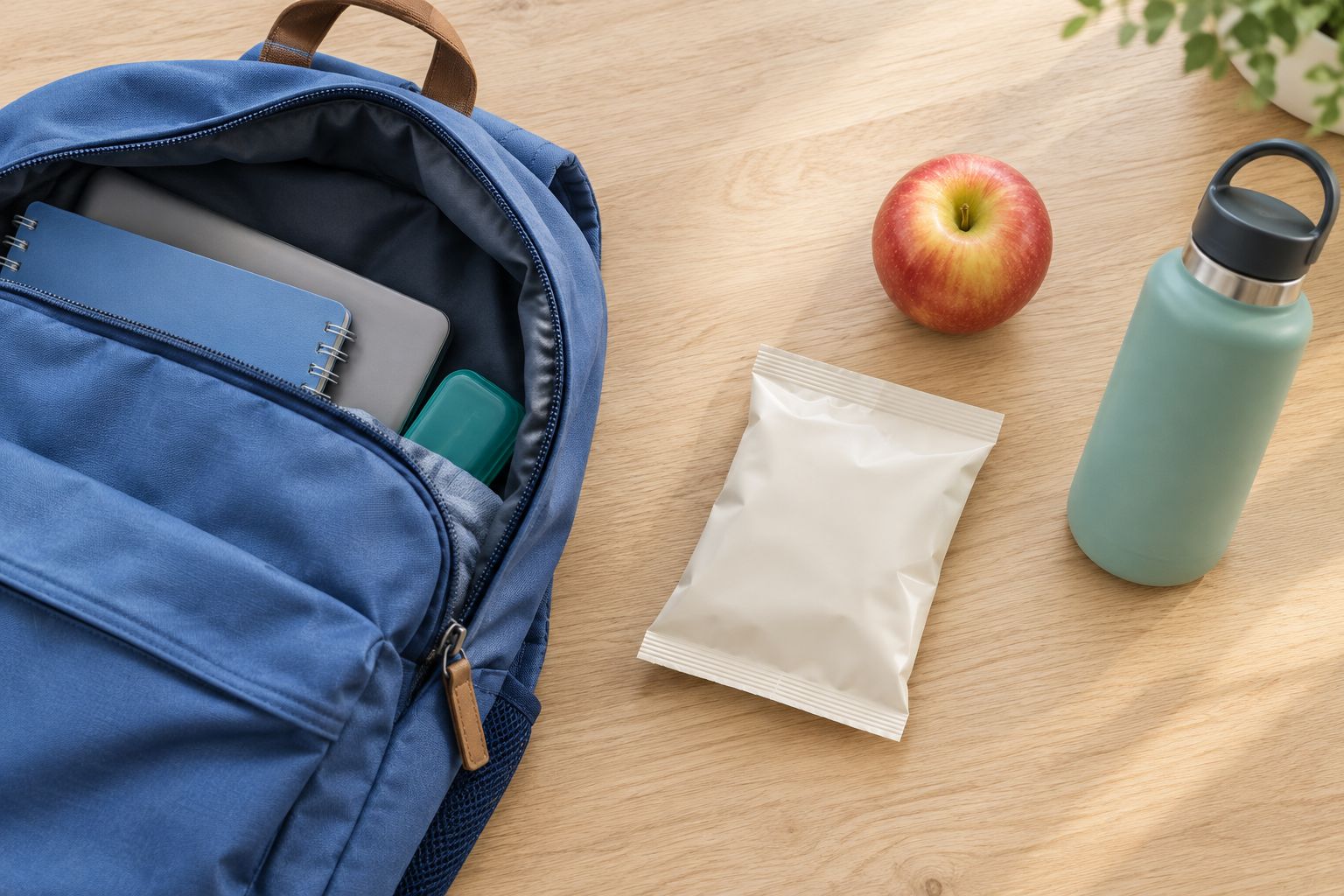
6. Agree on a no-sharing routine
Make the rule simple: your child eats their own approved snack and does not trade food. Explain it calmly before the trip, then ask supervising adults how they will support that routine during the group’s snack break.
For younger children, practical rehearsal helps you discover confusing moments. Ask what they would do if a friend offers a cracker or if their snack falls on the ground. The answer should point them toward the designated adult, not toward a replacement from someone else’s bag.
If the class asks families to contribute food for everyone, tell the teacher which individual arrangements your child needs. Do not label a shared contribution as suitable for all allergies. Different children have different restrictions, even within the same classroom.
- Explain that snacks stay with their assigned child.
- Practice declining a trade in simple, friendly words.
- Identify the adult your child should ask for help.
- Arrange any replacement food with the teacher in advance.
7. Confirm the adult handoff before departure
A suitable snack does not replace the child’s allergy emergency plan. Before the bus leaves, confirm that the responsible adults have the required instructions and that prescribed medication arrangements follow the school’s procedures.
For your final 2026 check, cover 3 details: the approved snack, the supervising adult, and the emergency-plan arrangements. Keep this conversation separate from preferences such as whether your child likes apple or strawberry better. Food choices and emergency responsibilities both matter, but they are different tasks.
If the trip changes—such as a different lunch stop or an added shared-food activity—check the arrangements again. The goal is a clear handoff, not a long note that no one can use during a busy departure.
- Confirm the approved snack with the responsible adult.
- Follow school procedures for the written allergy plan.
- Confirm prescribed medication arrangements with school staff.
- Explain whom your child should approach if something feels wrong.
Compare field-trip snack options
For 2026 packing, compare both the food and the work needed to send it. No option in this table is suitable for every child. Each choice still needs to match the child’s allergy plan, current ingredient information, age, and school rules.
| Option | Best for | Practical advantage | Key limitation |
|---|---|---|---|
| Suitable whole fruit | Parents who prefer to prepare food themselves | You choose and handle the fruit directly | The specific fruit must be suitable, and washing or cutting adds preparation |
| Nature's Turn freeze-dried fruit snacks | Parents seeking a packaged 100% fruit choice | No added sugar; a packaged option to review for the trip | Fruit ingredients and current allergen information still need individual review |
| Individually packaged crackers | Children who prefer a familiar savory snack | Original packaging keeps ingredient details with the food | Ingredients vary; wheat, milk, sesame, or other allergens need checking |
| Homemade snacks | Families with a suitable recipe and a clear preparation routine | You choose the ingredients | Home preparation requires cross-contact precautions and information for school staff |
Whole fruit is a straightforward starting point when the fruit itself suits your child. Packaged options keep a printed label close at hand. Homemade food gives you control over the recipe, but it also makes you responsible for explaining what went into it.
Choose the easiest suitable option—not the option with the longest list of claims. A snack that takes extra preparation is not automatically better, and a convenient pouch is not automatically allergy appropriate.
Common mistakes parents make with field-trip snacks
Treating “fruit” as an allergy guarantee
A fruit-only ingredient list answers what the snack contains; it does not answer every allergy question. Check the particular fruit, current package information, and your child’s plan. Do not describe any fruit snack as safe for every child.
Confusing school permission with individual suitability
A permitted classroom snack can still contain something your child must avoid. School rules and individual allergy requirements are separate checks. Complete both before packing, even when another parent recommends the food.
Removing packaging to make the bag tidier
A neatly filled container loses useful information when the original label stays at home. Keep the wrapper when practical, or use the school’s approved method for providing ingredient details. Make sure the child’s name does not cover the label.
Sending an unfamiliar backup
A spare snack only solves a problem if it meets the same requirements as the main snack. Choose an approved backup before the trip and tell the supervising adult where it is. Do not rely on food offered by another family.
Focusing on the snack but forgetting the handoff
Packing the right food is only part of preparation. Confirm the supervising adult and the school’s allergy-plan arrangements as well. Your child should know who can help during snack time and throughout the trip.
FAQ
What are the best allergy friendly snacks for a school field trip?
The best allergy friendly snacks match your child’s specific allergies, current food labels, and the school’s trip rules. Start with a familiar approved food, then choose packaging and storage that fit the outing.
Are freeze-dried fruit snacks suitable for children with allergies?
Freeze-dried fruit snacks require the same individual allergy checks as other foods. Review the specific fruit ingredients, current package statements, and your child’s allergy plan; fruit-only does not mean suitable for everyone.
Does no added sugar mean a fruit snack is sugar-free?
No added sugar does not mean sugar-free. Fruit contains naturally occurring sugar, so a no-added-sugar fruit snack still contains sugar from the fruit.
Can I send Nature's Turn snacks on a field trip?
You can choose Nature's Turn snacks when the current product information meets your child’s allergy requirements and the school permits them. The brand sells 100% fruit freeze-dried snacks with no added sugar, but those claims do not establish allergy suitability.
Should I keep school snacks in their original packaging?
Keep snacks in their original packaging when practical and consistent with school instructions. The wrapper keeps ingredient and allergen information available to supervising adults; label the outer bag without covering those details.
Does a peanut restriction mean a snack meets every child’s allergy needs?
A peanut restriction does not address every child’s allergy needs. Check your child’s specific allergens separately, including ingredients outside the United States’ major-allergen list when relevant.
What should I ask the teacher before a field trip?
Ask about food restrictions, snack timing, storage, and the adult responsible for your child’s arrangements. Also confirm the school’s procedures for the written allergy plan and prescribed medication.
One last thing
Practice with the actual package before your 2026 field trip. Ask your child to find their snack, open it, and explain what they should do if someone offers a trade. A quick rehearsal reveals packing problems while you still have time to fix them.
Keep the food familiar and the instructions simple. That is more useful than adding another snack to an already crowded backpack.