


How to pair no added sugar snacks with plain yogurt
Editorial Team
Pair no added sugar snacks with plain yogurt by choosing fruit without added sweeteners, spooning it over unsweetened yogurt, and keeping crunchy toppings separate until eating. For school-day packing in 2026, keep the yogurt cold even when the fruit topping needs no refrigeration. Start with a familiar fruit flavor, then let your child decide whether to stir it in or keep it on top.
TL;DR
- Pair no added sugar snacks with plain yogurt; check both labels for added sweeteners.
- Naturesturn freeze-dried fruit snacks suit parents wanting a 100% fruit topping without added sugar.
- Keep freeze-dried fruit separate until serving when your child wants crunch.
- No added sugar does not mean sugar-free; fruit and dairy yogurt contain naturally occurring sugars.
- Keep yogurt cold and check current labels and school allergy policies before packing.
How do you pair no added sugar snacks with plain yogurt?
Choose the yogurt first, add fruit for flavor, and decide when you want the topping to soften. Plain yogurt brings tang and creaminess; fruit adds its own sweetness. Freeze-dried fruit adds crunch at first, then absorbs moisture as it sits in the yogurt.
For a school lunchbox, pack the yogurt and fruit in separate, closed containers. Add a spoon your child can use comfortably. If crushed toppings are a recurring problem, these tips for packing freeze-dried apples without crushing them also help you think through container placement.
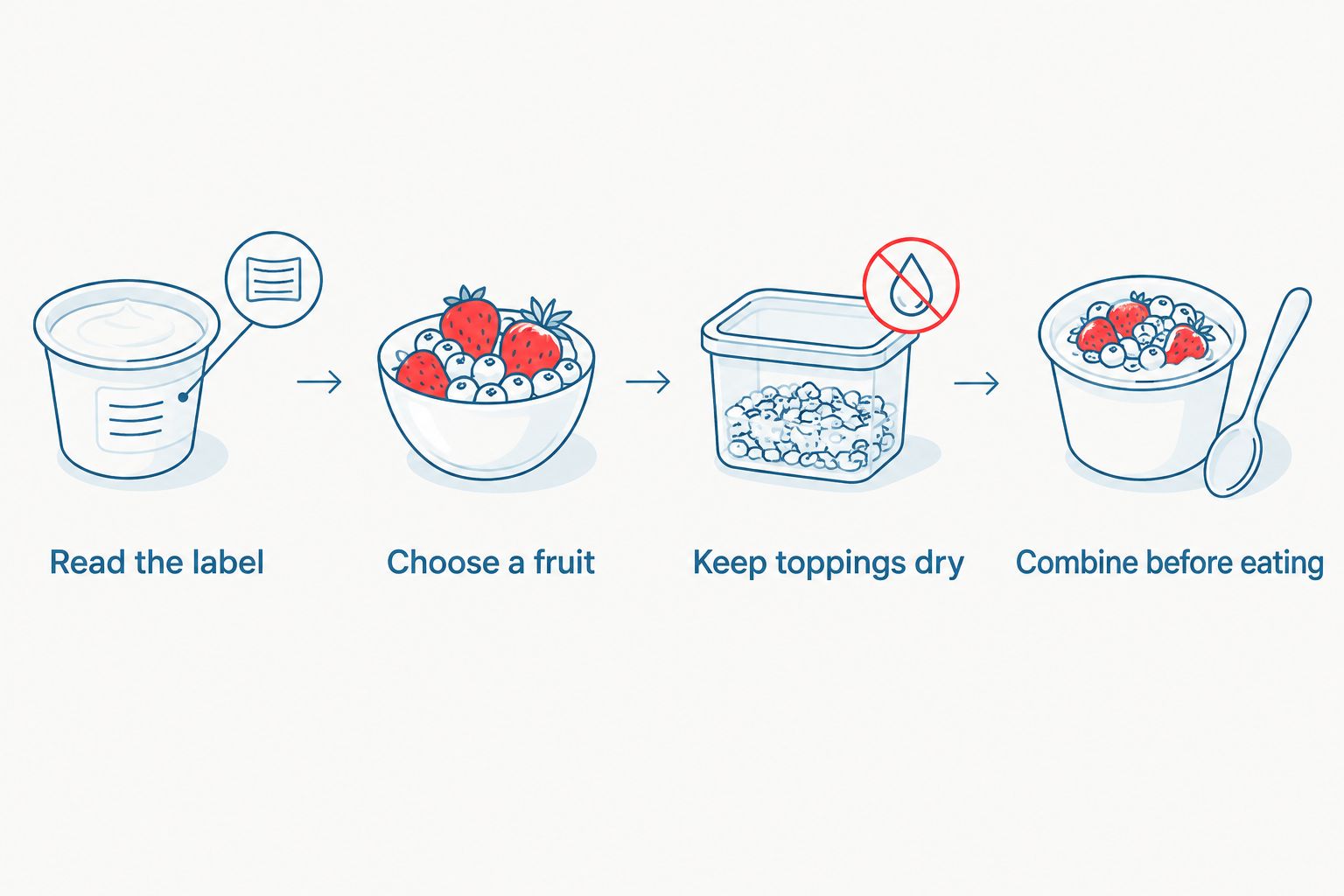
- Read the yogurt label. Look for plain, unsweetened yogurt, then check the ingredients and Added Sugars line rather than relying on the front of the container.
- Choose a fruit your child already likes. Familiar flavors make it easier to work out whether the yogurt's tang or the topping's texture needs adjusting.
- Keep the topping dry. Pack freeze-dried fruit separately if crunch matters. Seal the container so it stays away from moisture in the lunchbox.
- Combine at eating time. Sprinkle, stir, or dip according to your child's preference. Let the fruit soften if a crisp topping isn't the texture they enjoy.
The sequence matters more than a complicated recipe. You can change the fruit without changing the whole packing routine.
Why this matters for a school-day snack
A yogurt-and-fruit snack has different packing needs from a bag of fruit crisps on its own. The dry topping can travel without refrigeration, but that does not make the yogurt shelf-stable. Treat the assembled snack as refrigerated food.
For your 2026 school routine, solve the practical questions before trying more flavors: Can your child open the containers? Is there time to stir? Will the yogurt stay cold until the snack break? A pairing that works at the kitchen table still needs to work at school.
Keep expectations simple, too. Fruit can make plain yogurt taste sweeter, but it does not remove the tang completely. Start with a small serving your child is comfortable trying rather than packing an unfamiliar bowl and hoping for the best.
Which fruit topping fits your child's preferences?
The best starting point is the fruit your child already enjoys. These options offer different flavors and textures, not a ranking of which fruit is healthiest. Check the individual package before choosing any topping for a child with food allergies.
| Fruit topping | Best for | What it adds | What to watch |
|---|---|---|---|
| Freeze-dried strawberry crisps | Children who enjoy berry flavors | Strawberry flavor and an initially crisp topping | Strawberry tartness can add to yogurt's tang; pieces soften after mixing |
| Freeze-dried banana crisps | Children who already enjoy bananas | Familiar banana flavor with a dry, crisp starting texture | The texture differs from fresh banana and changes as it absorbs moisture |
| Fresh fruit | Children who prefer juicy or soft toppings | Fresh flavor without waiting for dried fruit to soften | Some fruit needs washing, cutting, or protection from bruising |
| Frozen fruit, thawed under refrigeration | Children who like fruit stirred throughout yogurt | Soft fruit that mixes readily into the yogurt | Released juice can make the yogurt thinner |
Naturesturn freeze-dried fruit snacks are best for parents who want a 100% fruit yogurt topping with no added sugar. The trade-off is texture: fruit crisps won't stay crisp indefinitely once mixed into a wet food.
There is no need to disguise an unfamiliar flavor with several other toppings. Offer the yogurt and fruit side by side first. Your child can taste them separately, dip a piece, or mix a little at a time.
For a crunchy topping: combine just before eating
Keep freeze-dried fruit in a dry, closed container until the yogurt is ready. Sprinkle it over the surface rather than stirring it through immediately. This gives your child a chance to enjoy the contrast between crisp fruit and creamy yogurt.
The advantage is control: your child decides how much fruit goes into each spoonful. The drawback is an extra container to open and return home. Practice that small task before sending the combination to school.
Avoid packing a dry topping loose beside wet fruit or a leaking container. Moisture changes its texture before lunchtime. A separate compartment only helps if it actually keeps the wet and dry foods apart.
For a softer topping: stir the fruit into the yogurt
Stir freeze-dried fruit into plain yogurt when your child prefers softer pieces and fruit flavor throughout the bowl. The fruit absorbs moisture, so the result will differ from eating the crisps straight from the bag. That change is useful when softness is the goal.
The drawback is losing the original crunch. If your child dislikes the mixed texture, keep the components separate next time instead of adding more toppings to cover it up.
Try the combination at home before making it a regular lunchbox snack. Use the same containers and spoon you plan to pack. You'll learn more from watching your child open and eat the snack than from making the bowl look perfect.
Why the flavor and texture vary
A yogurt pairing can taste different even when you use the same fruit. Check these factors before deciding your child simply doesn't like plain yogurt:
- Yogurt choice: Plain yogurts differ in tang and thickness. Read the label and choose a texture your child enjoys.
- Fruit choice: Different fruits bring different balances of sweetness and tartness. Familiar fruit is a practical starting point.
- Preparation: Whole pieces, broken pieces, and crushed fruit feel different on the spoon. Choose a size and texture appropriate for your child.
- Mixing time: Freeze-dried fruit starts crisp and softens after contact with yogurt. Add it later for crunch or earlier for softness.
- Moisture: Juicy fresh fruit and thawed frozen fruit can loosen the yogurt. Keep them separate if your child prefers a thicker base.
Change the factor that caused the problem. If the yogurt is too tangy, changing only the size of the topping won't address that. If the snack is too soft, packing the same ingredients separately is a more direct fix.
How do you check no added sugar snacks in 2026?
Read the ingredients and the Added Sugars line on both packages. A fruit topping without added sugar does not cancel out added sweeteners in the yogurt. Likewise, plain yogurt does not tell you what is in a separate topping.
No added sugar and sugar-free are different claims. Fruit contains naturally occurring sugars, and plain dairy yogurt contains lactose, a naturally occurring milk sugar. A bowl can have no added sugar and still contain total sugars.
Naturesturn describes its freeze-dried fruit snacks as 100% fruit with no added sugar. Check the current package for the specific flavor you choose, especially when reviewing ingredients or allergen information. Do not treat a short ingredient list as proof that a snack suits every child.
There is also no need to turn the label check into a rule that every family snack must follow. For this pairing, the goal is straightforward: choose ingredients that match your preference for no added sweeteners and that your child enjoys eating.
How do you keep yogurt cold in a lunchbox?
Use an insulated lunch bag with cold sources, and refrigerate the yogurt when school storage allows. Freeze-dried fruit can stay in its separate dry container. The topping's storage needs do not change the yogurt's food-safety needs.
USDA food-safety guidance sets the refrigerator temperature at 40°F or below. Perishable food should not sit at room temperature for more than 2 hours, or more than 1 hour when temperatures exceed 90°F. These are food-safety limits, not a suggested time to leave yogurt unchilled.
For 2026 school packing, check when the snack will actually be eaten. An afternoon club snack faces a longer wait than a morning classroom break. If you cannot keep the yogurt safely cold, send an appropriate shelf-stable snack separately rather than packing yogurt without a cold source.
Remember the trip home, too. Don't assume leftover yogurt stayed safe simply because the container came back unopened. Follow food-safety guidance and discard perishable food that has not remained safely cold.
Can you prepare the yogurt and fruit the night before?
You can portion the yogurt into a closed container and refrigerate it the night before. Keep the dry fruit sealed separately, then pack both when you assemble the lunchbox. This preserves the choice between a crunchy topping and a stirred-in snack.
Mixing everything ahead is also an option when you deliberately want softened fruit. Keep the mixture refrigerated and expect the texture to change. It is not the best approach when your child is looking forward to crisp pieces.
What if your child doesn't like plain yogurt?
Start by finding out what your child dislikes: tang, thickness, temperature, or mixed textures. Serve a little fruit alongside the yogurt rather than insisting that everything be stirred together. Your child can try a dip without committing to a whole bowl.
Fruit is not guaranteed to make plain yogurt appealing to every child. If the combination remains unwelcome, let the fruit be a separate snack and choose another suitable food for the lunchbox. A practical routine leaves room for preferences.
FAQ
What are the best no added sugar snacks to pair with plain yogurt?
Fruit without added sweeteners is a straightforward pairing for plain yogurt. Start with a familiar flavor, then choose fresh, thawed frozen, or freeze-dried fruit according to the texture your child likes.
Does no added sugar mean my child's yogurt snack is sugar-free?
No added sugar does not mean sugar-free. Fruit contains naturally occurring sugars, and plain dairy yogurt contains lactose; check both packages for total and added sugars.
Can I stir freeze-dried fruit into yogurt before school?
You can stir freeze-dried fruit into yogurt before school if you want it to soften. Keep the yogurt safely cold, and pack the fruit separately instead when crunch matters.
Is Naturesturn fruit suitable as a plain yogurt topping?
Naturesturn freeze-dried fruit snacks can be used as a plain yogurt topping and are described as 100% fruit with no added sugar. Check the current flavor's label and choose a piece size and texture appropriate for your child.
Can I pack yogurt without an ice pack if the fruit is shelf-stable?
Shelf-stable fruit does not make yogurt safe to pack without temperature control. Use an insulated lunch bag with cold sources, or refrigerate the yogurt until eating.
Is dairy-free yogurt automatically suitable for a school allergy policy?
Dairy-free yogurt is not automatically suitable for every school allergy policy or every child. Check its ingredients, allergen information, and the school's requirements before packing.
Should I crush freeze-dried fruit before adding it to yogurt?
Crush freeze-dried fruit if your child prefers smaller pieces mixed throughout the yogurt. Choose preparation and texture for your child's eating abilities; crushing alone does not establish that a food is safe for every child.
One last thing
Try changing when you add the fruit before changing what you buy. The same topping can provide crunch when sprinkled just before eating or a softer texture when stirred in earlier. That small adjustment can solve a texture problem without adding another ingredient.
For your 2026 lunchbox routine, make the successful version easy to repeat: yogurt kept cold, fruit packed the way your child likes it, and containers they can open. A snack doesn't need to be elaborate to be enjoyable.