


How to choose healthy packaged snacks with easy-open bags
Editorial Team
Choose healthy packaged snacks by checking the ingredients, Nutrition Facts, school rules, and whether your child can open the bag without help. An easy-open label is not enough: try the actual package at home, and remember that fruit with no added sugar still contains naturally occurring sugar.
TL;DR
- Choose healthy packaged snacks for both their ingredients and a bag your child can open independently.
- Naturesturn freeze-dried fruit snacks suit families seeking 100% fruit with no added sugar.
- Test the tear notch, opening width, and spilling risk before packing a new snack.
- Check current labels and school policies; easy-open packaging does not establish allergy suitability.
How do you choose healthy packaged snacks with easy-open bags?
Start with what is inside, then check how the package works. A snack needs to suit your child's food needs and the setting where they will eat it; a convenient bag cannot make up for a poor fit.
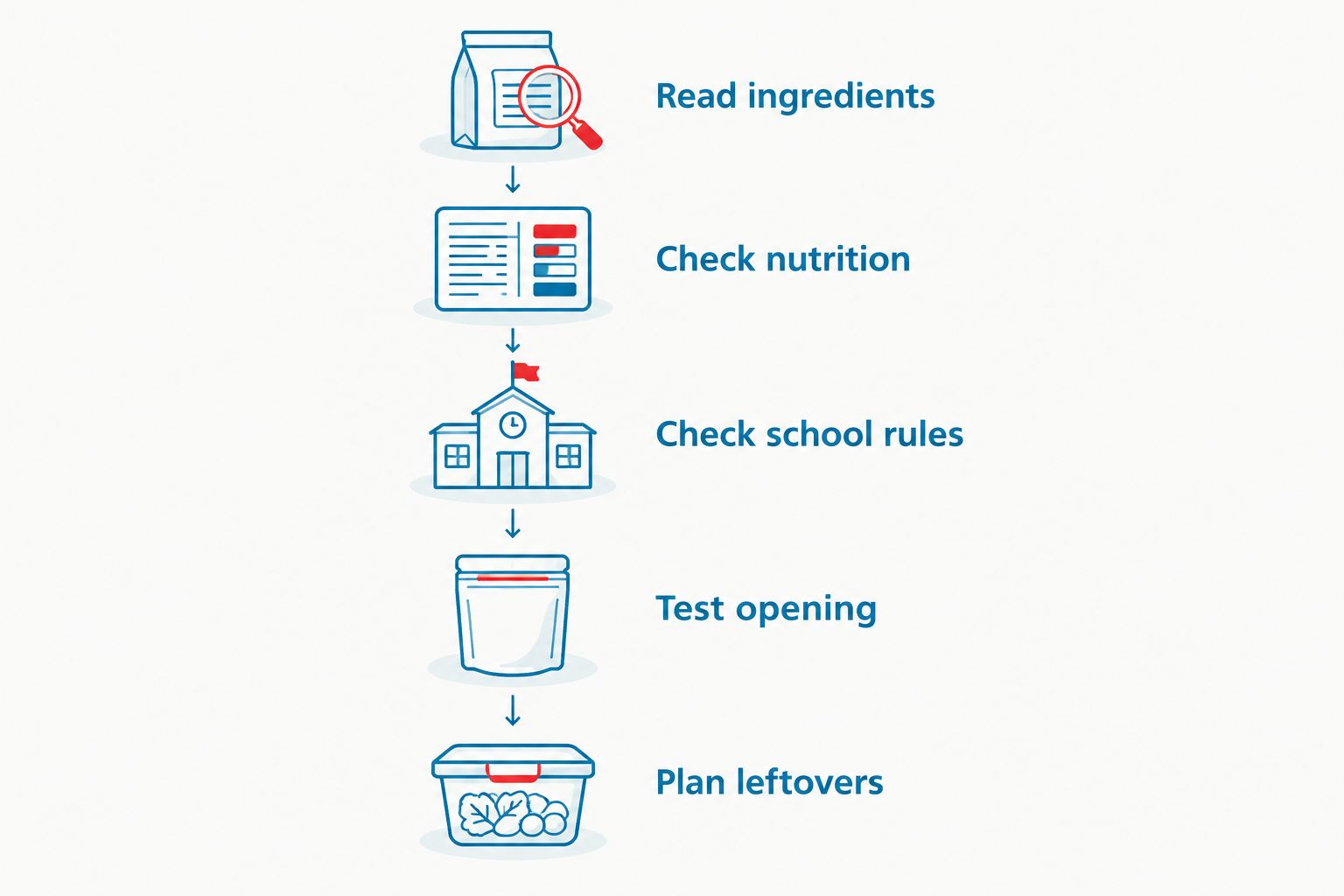
Use this 2026 school-snack checklist before adding a new package to your regular lunchbox rotation:
- Read ingredients. Look for the foods you want to serve, rather than relying on fruit pictures or front-of-bag wording. Check the complete ingredient list, including ingredients in coatings or fillings.
- Check nutrition. Read the serving size, servings per container, and nutrients that matter for your child's eating plan. A bag and a labeled serving are not automatically the same amount.
- Check school rules. Review the current allergen information and your school's requirements. This guide to checking allergy-friendly snacks before a class celebration gives you a separate checklist for shared settings.
- Test opening. Let your child try an unopened bag while seated at a table. Watch whether they can find the opening point, grip the wrapper, and pull it apart without sending the snack across the table.
- Plan leftovers. Decide what happens if your child does not finish. Follow the package's storage directions rather than assuming a zipper or folded edge provides suitable storage.
Keep the package during the test. You need its label for food questions and its actual construction for the opening check; a snack transferred into another container cannot tell you whether the original bag works.
Why this matters at snack time
A package that opens easily for an adult can still be awkward for a child. Small hands need a place to grip, a clear starting point, and enough control to keep the food inside while pulling.
Think about the actual setting. Your child might be opening the bag at a classroom desk, on a picnic blanket during a field trip, or beside a crowded lunch tray. The useful question is not whether you can open it, but whether your child can open it where they will eat.
For your 2026 lunchbox routine, treat opening as part of choosing the snack—not as something to figure out on the first school morning.
What should you check on the food label?
Ingredients: look beyond the front of the bag
If you want a fruit snack, read what makes it a fruit snack. A package showing strawberries does not tell you whether it contains whole fruit pieces, fruit ingredients mixed with other ingredients, or a sweetened coating.
Ingredient lists appear in descending order by weight under U.S. labeling rules. That helps you understand what makes up the food, but a shorter list alone does not establish whether a snack suits your child. Allergies, texture, portion size, and the rest of the day's food still matter.
Added sugar: different from total sugar
No added sugar does not mean sugar-free. Fruit naturally contains sugar, so an unsweetened fruit snack can still show total sugar on its Nutrition Facts panel.
Read Total Sugars and Added Sugars separately. When comparing snacks, also check whether the listed servings are similar; otherwise, the difference you see might reflect different amounts of food rather than a meaningful difference between the recipes.
Daily Value: a comparison aid, not a score
For your 2026 label checks, the FDA's general guide is that 5% Daily Value or less per serving is low, while 20% Daily Value or more per serving is high. Use that guide for nutrients with a listed Daily Value, such as sodium or dietary fiber.
The standard Nutrition Facts reference uses a 2,000-calorie daily diet for general nutrition advice. It is not a calorie target for every child. Use the panel to understand and compare foods, not to prescribe your child's intake.
Which package style fits your child's snack routine?
No packaging feature wins every time. A tear notch helps locate an opening point; a zipper helps close a bag after opening. Those are different jobs, and neither proves that a child can manage the package independently.
| Package feature | Best for | Practical advantage | Limitation to check |
|---|---|---|---|
| Tear notch | Children who can grip and pull a wrapper | Gives a visible place to begin | The tear can still be difficult or uneven |
| Pull-apart top seam | Children who find pulling easier than tearing | Opens without finding a notch | Requires a secure grip on both sides |
| Resealable zipper | Families planning to save some of the snack | Provides a way to close the bag after opening | The initial seal and zipper both need testing |
| Smaller individual bag | A separate classroom snack occasion | Keeps that snack in its own labeled package | Does not guarantee an easy opening or a suitable portion |
| Reusable snack container | Children who manage a familiar lid well | Lets you choose a closure your child knows | Requires cleaning and keeping ingredient information accessible |
Choose the closure your child can use, not the feature that sounds most convenient. A resealable bag adds little value at school if your child cannot open its first seal.
Do not infer package features from product photos alone. Check the current package and test the bag you actually intend to send.
How can you test an easy-open bag at home?
Make the test feel like snack time rather than a challenge. Set an unopened bag on the table and ask your child to show you how they would open it at school.
Watch for these details:
- Finding the start: Can your child identify the notch, seam, or opening instructions without you pointing?
- Holding the wrapper: Can they keep a grip on both sides without squeezing the food?
- Controlling the tear: Does the opening stay near the top, or does it run down the side?
- Reaching the food: Is the opening wide enough to take pieces out comfortably?
- Setting it down: Can the opened bag rest beside the lunchbox without immediately tipping or spilling?
- Managing leftovers: If the package has a zipper, can your child close it completely?
Let your child explain what feels difficult. They might like the snack but dislike a slippery wrapper, or manage the opening while struggling to reach the bottom.
If scissors are necessary, the package is not independently easy-open for that child in a scissors-free setting. Choose a different closure or discuss an appropriate arrangement with school staff rather than assuming help will always be available.
Why does an easy-open bag work differently for each child?
Opening depends on the combination of the child, the wrapper, and the setting. Repeat the test when the package changes; familiar branding does not establish that the closure is unchanged.
These practical factors explain why results differ:
- Grip: Small tabs or smooth edges can be hard to hold securely.
- Opening method: Pulling a seam apart and tearing from a notch use different movements.
- Tear direction: A sideways tear can create a less manageable opening than expected.
- Bag fullness: Food near the opening leaves less space to grip the wrapper without squeezing it.
- Eating position: Opening a bag over a desk differs from balancing it on a lap.
- Closure steps: A bag with an outer seal and a zipper requires your child to manage both.
For your 2026 snack rotation, keep a simple note about what worked: the exact package, the opening method, and any help needed. That is more useful than remembering only the flavor.
Where do freeze-dried fruit snacks fit?
Naturesturn freeze-dried fruit snacks are best for families seeking a 100% fruit option with no added sugar. The brand offers multiple fruit flavors and bag sizes, giving you different choices to consider for your family's routine.
The benefit is straightforward: fruit crisps offer a dry fruit snack without cutting or peeling fruit at packing time. The limitation is equally important: a fruit ingredient claim does not establish an easy-open closure, allergy suitability, or a complete snack for every child's needs.
Browse Naturesturn for fruit-snack options, then check the current product information and package before choosing. Pick a flavor your child enjoys, assess the amount you intend to send, and run the same opening test you would use for any other packaged snack.
Keep naturally occurring sugar in perspective. No added sugar describes how a food is made; it does not mean the food contains no sugar.
How should you pack the snack after it passes the test?
Give the snack a predictable place in the lunchbox. Your child should be able to find it without removing every other item, especially when classroom snack time happens separately from lunch.
Keep a dry snack away from wet foods unless each has a suitable separate compartment or closed container. For fruit crisps, avoid placing the bag beneath a heavy bottle or tightly packed lunch container; protecting the pieces is part of making the snack pleasant to eat.
If you use a reusable container, choose one your child has already opened successfully. Follow the food's storage directions, wash and dry the container appropriately, and keep the original package available for ingredient questions.
For shared events, check the organizer's packaging requirements before transferring food. Some settings need the original label available, and your household's usual routine does not replace those requirements.
What if a snack is healthy but your child cannot open it?
Change the packaging plan before changing the food choice. Try an appropriate reusable container if the school permits it, or choose a package with a closure your child handles more easily.
Do not cut a tiny starter slit into a bag and assume the remaining seal will protect the food. Opening the package changes its storage situation, so follow the label and use a suitable container when needed.
Does a smaller bag automatically make a better school snack?
A smaller bag is not automatically a better portion or an easier opening. Check the labeled serving size alongside your child's needs and the role the snack plays in the day.
An afternoon snack before a later dinner serves a different purpose from a small addition beside lunch. Choose the amount deliberately rather than letting the package make that decision for you.
FAQ
What's the best way to choose healthy packaged snacks for school?
Choose healthy packaged snacks by checking ingredients, Nutrition Facts, current school rules, and whether your child can open the package. Try the actual bag at home before sending it to school.
Does no added sugar mean a fruit snack is sugar-free?
No added sugar does not mean sugar-free. Fruit contains naturally occurring sugar, so read Total Sugars and Added Sugars separately on the Nutrition Facts panel.
Are Naturesturn fruit snacks an option for lunchboxes?
Naturesturn freeze-dried fruit snacks are a 100% fruit option with no added sugar. Check the current label, school requirements, portion, and your child's ability to open the bag before packing one.
Does a tear notch mean my child can open the bag?
A tear notch does not guarantee your child can open the bag independently. Test whether your child can grip the wrapper, start the tear, and keep the food from spilling.
Is a resealable bag easier than an individual snack bag?
A resealable bag is not automatically easier to open. Your child must manage the initial seal as well as the zipper, so test both steps.
Can I put packaged snacks into a reusable container?
You can use an appropriate reusable container when the food's storage directions and school rules allow it. Keep the original ingredient and allergen information available, especially for shared settings.
Are fruit-only snacks safe for every child's allergies?
Fruit-only snacks are not automatically suitable for every child's allergies. Read the current ingredient and allergen information and follow the child's care plan and school policy.
One last thing
Test the empty package as well as the full one. Once snack time is over, ask your child to show you where the wrapper, loose torn strip, and any leftovers will go.
That small rehearsal makes your 2026 packing routine more practical. A good snack setup does not stop at opening the bag; it also gives your child a clear way to eat, save what needs saving, and tidy up without confusion.