


No added sugar snacks for family breakfast on the go
Editorial Team
Family breakfast planning with no added sugar snacks is choosing portable foods without added sweeteners to make busy mornings easier. For parents, the useful choice also needs to fit a child's appetite, school rules, and the time between leaving home and eating.
TL;DR
- Nature’s Turn no added sugar snacks are best for families wanting a ready-to-pack, 100% fruit option.
- No added sugar does not mean sugar-free; fruit contains naturally occurring sugar.
- Pair breakfast fruit with another food your child eats, rather than treating every fruit snack as a complete meal.
- Keep crunchy fruit separate from wet foods, and keep perishable breakfast items cold.
Why no added sugar snacks matter for families
A useful 2026 breakfast plan starts with the morning you actually have. A child eating at the kitchen table needs a different setup from a parent carrying breakfast to work or a student eating after arrival at school.
Choose for the eating situation first, then check the label. A snack with a short ingredient list still needs suitable packaging, an appropriate texture, and a realistic place in breakfast.
If refrigeration is your main constraint, start with these lunchbox snacks for days without a fridge. Keep that same practical question in mind for breakfast: what will remain suitable until your family eats it?
No added sugar is a useful selection rule, not a complete nutrition score. Fruit contributes naturally occurring sugar, while other breakfast foods bring different ingredients and nutrients. You do not need to remove sweetness from breakfast to avoid adding sweeteners.
How to build a grab-and-go family breakfast
Choose the snack's breakfast role
Start with foods already in your kitchen. Decide whether you are packing an entire breakfast, adding fruit to something substantial, or bridging the gap until a planned meal.
An apple beside toast has a different job from an apple packed alone. Likewise, a small container of fruit does not automatically replace the breakfast your child normally eats. Use familiar combinations and adjust based on appetite and what comes home uneaten.
Before buying anything new, make a simple packing plan:
- Name the eating place: home, school breakfast area, or another permitted setting.
- Decide whether the fruit is a side or part of a larger breakfast.
- Choose a familiar accompanying food, such as plain yogurt or toast.
- Match portions and food textures to your child's age and eating skills.
- Check whether a spoon, napkin, or help opening the container is needed.
Read the label beyond the front claim
When you review your breakfast staples in 2026, turn the package around. The ingredient list and Nutrition Facts panel answer different questions; a front-of-pack phrase does not replace either one.
No added sugar is not the same as sugar-free. On a U.S. Nutrition Facts label, Total Sugars includes naturally occurring and added sugars. Added Sugars identifies the added portion. Plain fruit can contain total sugar without having sweeteners added.
Honey, maple syrup, and agave are added sweeteners when you stir them into breakfast. They do not become naturally occurring fruit sugar because they sound familiar or come from plants.
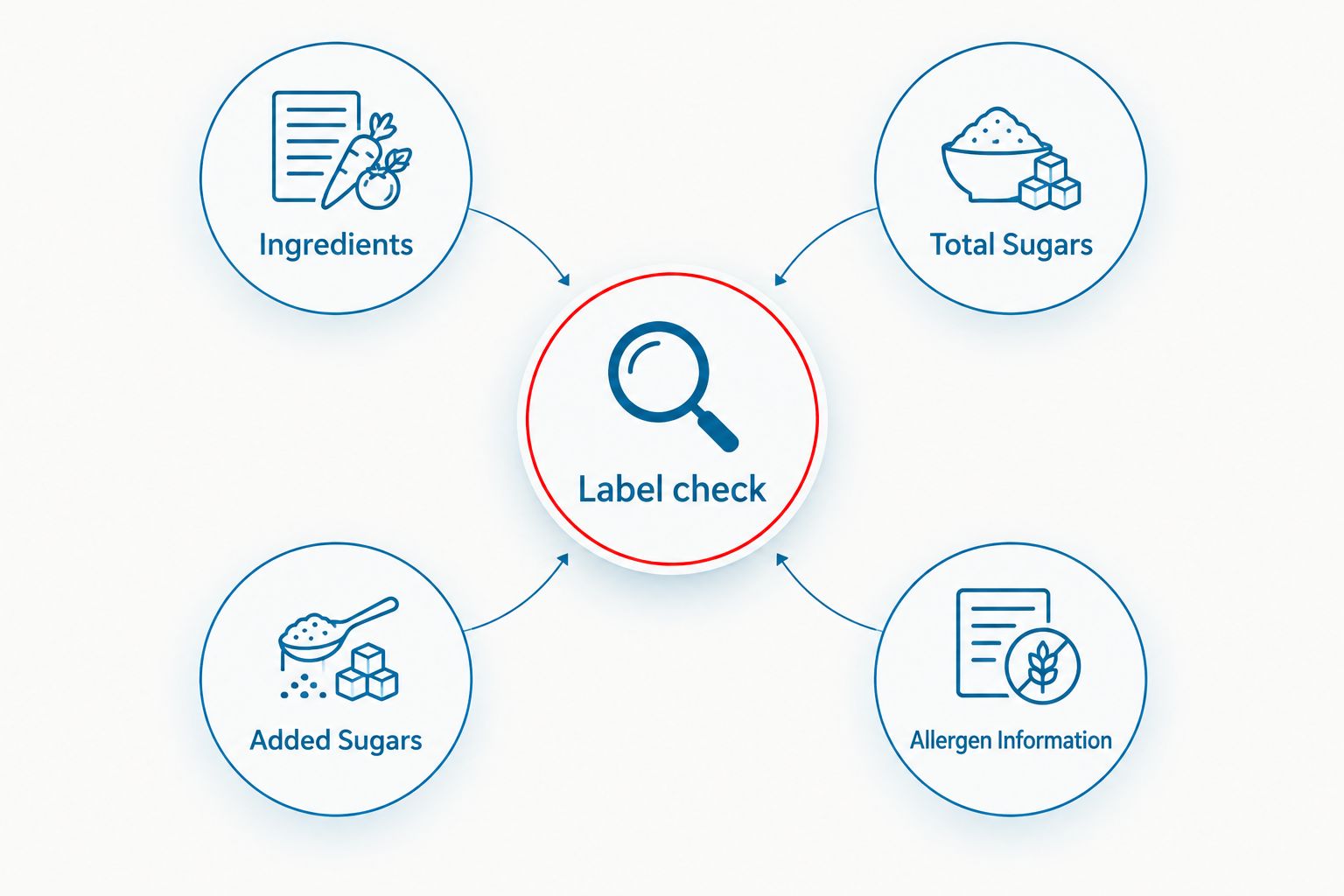
Use this label check before a snack enters your regular rotation:
- Ingredients: Check what the food contains, including sweeteners and ingredients your family avoids.
- Total Sugars: Read this as the total, not as proof that sugar was added.
- Added Sugars: Check this separately from Total Sugars.
- Serving Size: Compare the listed amount with what you actually pack.
- Allergen Information: Review the current package and your school's requirements.
Match the fruit format to your morning
The simplest starting point is fruit you already have. Wash and prepare it as appropriate, then choose a container that protects it. Whole fruit avoids a separate package, while cut fruit needs more preparation and suitable storage.
For a ready-to-pack alternative, Nature’s Turn no added sugar snacks are made with 100% fruit. The freeze-dried strawberry crisps offer a strawberry option when you want fruit without washing or cutting it that morning.
Freeze-dried fruit brings a crisp texture rather than fresh fruit's juicy bite. That difference matters: children who enjoy one format do not automatically enjoy the other. The pieces also need protection from crushing and moisture.
Choose the format around the job it needs to do:
- Use familiar fresh fruit when preparation and storage fit your schedule.
- Choose freeze-dried fruit when you want a dry, ready-to-pack fruit component.
- Try an unfamiliar texture at home before sending it for school breakfast.
- Keep the original package available for ingredient and allergen checks.
- Follow the package's storage instructions, including after opening.
Keep crunchy and wet foods separate
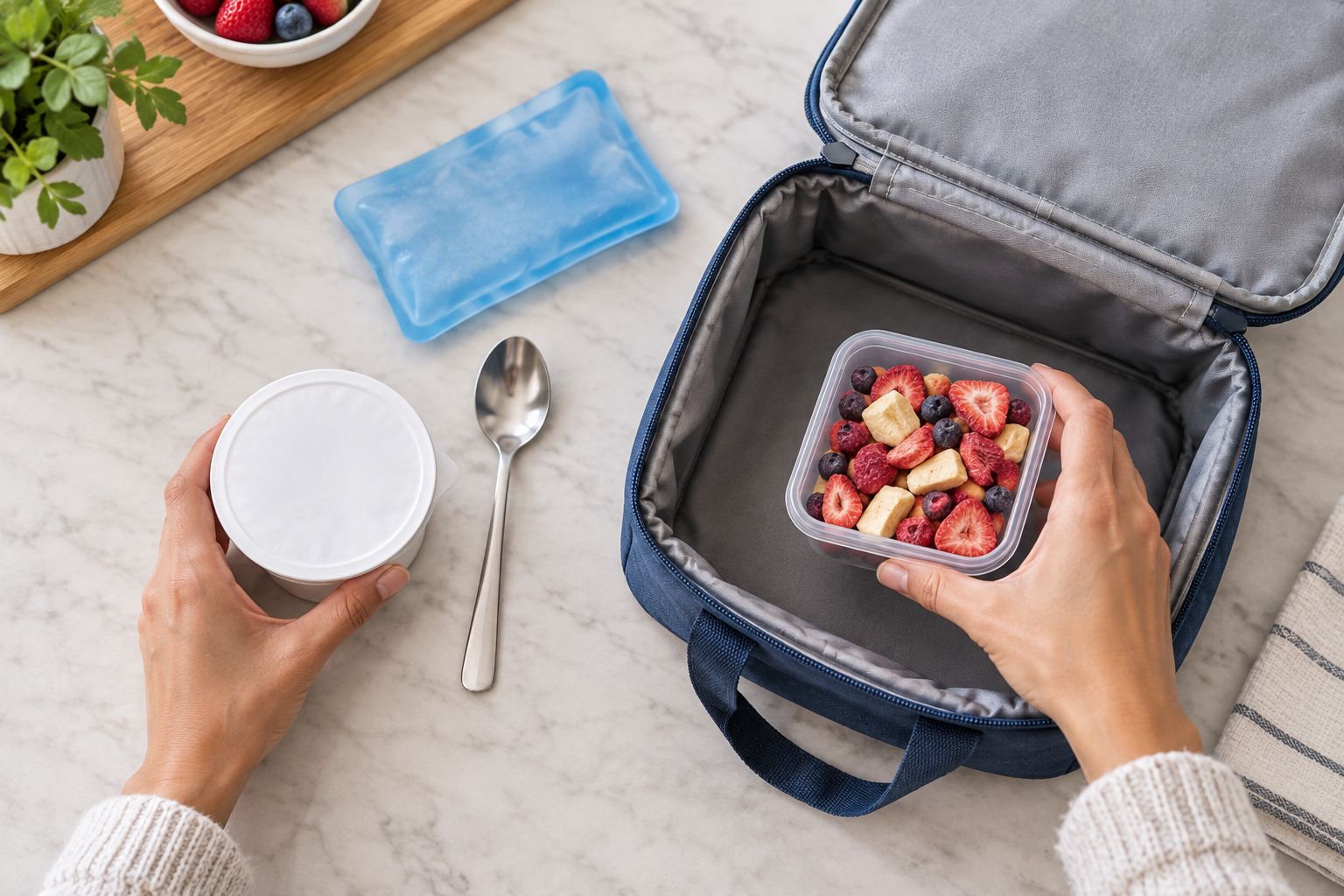
Pack breakfast components separately before trying a more elaborate recipe. Plain yogurt and fruit can travel in the same lunch bag without sharing the same container.
Freeze-dried fruit absorbs moisture, so adding it to yogurt ahead of time changes its texture. That is fine if your child likes softer fruit. If crunch is the point, add the fruit just before eating.
The same rule helps with cereal and dry oat mixtures: pack the dry portion away from milk, yogurt, and juicy cut fruit. Separating components also lets your child eat them individually instead of rejecting a whole mixed breakfast.
Make separation easy to repeat:
- Close dry-food containers securely before placing them in the bag.
- Protect fragile fruit pieces from heavier containers.
- Pack a spoon when the breakfast includes yogurt or oatmeal.
- Add crunchy toppings at eating time rather than the night before.
- Ask whether your child prefers separate foods or a mixed bowl.
Plan cold storage before leaving home
A shelf-stable fruit component does not make the rest of breakfast shelf-stable. Yogurt, milk, cooked eggs, and other perishable foods still need appropriate temperature control.
USDA food-safety guidance for perishable foods sets a room-temperature limit of 2 hours, shortened to 1 hour when temperatures exceed 90°F. Those are safety limits, not a recommended plan for leaving breakfast in a warm bag. Keep cold foods at 40°F or below and use suitable cold storage during transport.
For a school breakfast, check what happens after drop-off. A refrigerator at home does not help a yogurt container left in a backpack until much later. Follow product storage directions and any school-specific food rules.
Build the storage plan around the whole breakfast:
- Identify every item that needs refrigeration.
- Pack perishable foods in an insulated bag with adequate cold sources.
- Use school refrigeration when available and permitted.
- Choose foods with suitable storage requirements when cold storage is unavailable.
- Discard perishable food that has exceeded safe time and temperature limits.
Set up a repeatable morning routine
Keep a short 2026 breakfast rotation rather than searching for a new idea every evening. A few combinations your family actually eats are more useful than an ambitious plan that depends on daily preparation.
Try a simple pattern: fruit plus a familiar breakfast food, with storage and utensils already decided. Plain yogurt with fruit works when you can maintain cold storage. Toast and a separate fruit portion suit a different setup. Neither needs an extra drizzle of syrup to qualify as breakfast.
Give children a choice within the plan. Asking which familiar fruit they want is easier to act on than asking an open-ended breakfast question while everyone is finding shoes.
Prepare the parts that do not need last-minute attention:
- Group dry breakfast components in a designated packing spot.
- Set out clean containers and utensils the evening before.
- Keep refrigerated foods cold until packing time.
- Offer familiar flavor choices rather than an unlimited menu.
- Review leftovers and adjust the next breakfast's portion or format.
Compare breakfast snack options for 2026
The best option fits your storage, preparation time, and child's preferences. These are breakfast components, not interchangeable complete meals. Pair them according to what your family normally eats.
| Option | Best for | Practical advantage | Key limitation |
|---|---|---|---|
| Fresh whole fruit | Families who want a familiar fruit side | Straightforward to serve without a recipe | Needs washing or preparation as appropriate; some fruit bruises easily |
| Plain yogurt with fruit | Families with reliable cold storage | Combines a spoonable breakfast food with fruit | Needs refrigeration, a spoon, and attention to milk-allergen requirements |
| Homemade dry oat or cereal mix | Parents who want control over the mixture | Lets you choose ingredients and keep wet foods separate | Requires label checks across every ingredient; texture must suit the child |
| Nature’s Turn freeze-dried fruit crisps | Families wanting ready-to-pack, 100% fruit | No added sugar and no washing or cutting needed | Fragile pieces need protection; fruit alone does not automatically make a complete breakfast |
For a homemade mixture, check the cereal or oat product itself before adding anything. A mix does not become a no-added-sugar choice simply because its fruit has no added sugar.
Common mistakes parents make
Treating no added sugar as sugar-free
Fruit still contains naturally occurring sugar. Use no added sugar to describe the absence of added sweeteners, not the absence of all sugar. Keep that distinction clear when explaining breakfast choices to children, too.
Packing only the fruit component
A fruit snack is convenient, but convenience does not determine whether breakfast is enough. Look at the whole meal and your child's usual appetite. If fruit repeatedly comes home alongside requests for more breakfast, adjust the combination rather than changing only the flavor.
Assuming a sealed bag answers allergy questions
Packaging does not establish that a food meets a particular child's allergy needs or school policy. Check the current ingredient list, allergen information, and any required guidance from the child's care team. Never describe a snack as safe for every child.
Planning breakfast around eating during travel
Packable does not mean appropriate to eat while walking, playing, or riding to school. Plan a seated, supervised eating opportunity appropriate to your child's age. Check bus and school rules rather than assuming food is permitted during the trip.
FAQ
What are the best no added sugar snacks for family breakfast in 2026?
The best no added sugar snacks fit your family's eating schedule, storage, and preferences. Fresh fruit, plain yogurt with fruit, and freeze-dried fruit are useful components; choose an accompanying food when needed rather than assuming fruit alone is a complete breakfast.
Does no added sugar mean a fruit snack is sugar-free?
No added sugar does not mean sugar-free. Fruit contains naturally occurring sugar, so check Total Sugars and Added Sugars separately on the Nutrition Facts label.
Are Nature’s Turn fruit crisps a no added sugar option?
Nature’s Turn fruit crisps are made with 100% fruit and no added sugar. They still contain the naturally occurring sugar in fruit; check the current package for product-specific nutrition and allergen information.
Can I put freeze-dried fruit into yogurt the night before?
You can mix freeze-dried fruit into yogurt ahead of time if you want a softer texture. Keep the yogurt refrigerated, and pack the fruit separately if your child prefers it crunchy.
Does freeze-dried fruit need a cold pack for school breakfast?
Store freeze-dried fruit according to its package directions rather than treating it like refrigerated fresh-cut fruit. A cold pack is still needed for perishable accompanying foods such as yogurt or milk.
Does adding honey keep breakfast free of added sugar?
Adding honey adds sugar to breakfast. Honey, maple syrup, and agave are added sweeteners even when the rest of the meal contains only unsweetened ingredients.
How do I check whether a breakfast snack meets school allergy rules?
Compare the current package's ingredient and allergen information with the school's policy and your child's individual requirements. No added sugar and 100% fruit claims do not establish suitability for every allergy.
One last thing
Decide whether your child wants crunch before you pack. The same freeze-dried fruit gives a different eating experience when served dry or stirred into yogurt. That small preference can make the difference between a breakfast your child enjoys and one that comes home untouched.
Nature’s Turn can fill the ready-to-pack fruit role; keep the rest of breakfast, cold storage, and school requirements in the plan.