


Healthy lunchbox snacks for days without a fridge
Editorial Team
Parents’ healthy lunchbox snacks are foods chosen to help children eat well at school while staying safe until snack time. On days without a fridge, choose snacks that do not need chilling—or use an insulated bag with cold sources for anything perishable.
TL;DR
- Naturesturn freeze-dried fruit snacks suit parents seeking healthy lunchbox snacks made with 100% fruit and no added sugar.
- Whole fruit, freeze-dried fruit, and suitable crackers offer no-fridge options; check each package’s storage instructions.
- No added sugar does not mean sugar-free: fruit contains naturally occurring sugar.
- Perishable snacks still need cold storage, even when the school has no fridge.
Why healthy lunchbox snacks matter for parents
A school snack has to work beyond your kitchen. Your child needs to open it, eat it during the available break, and carry it without spills or squashed fruit. A food that works at home does not automatically work in a warm backpack.
Naturesturn freeze-dried fruit snacks are best for parents who want a 100% fruit, no-added-sugar lunchbox option. They offer a fruit choice without washing, peeling, or refrigeration; their crisp texture differs from fresh fruit, so try them at home before packing them for school.
For your 2026 school-day routine, separate two questions: does this food suit your child, and can it stay safely packed until they eat it? Ingredient checks answer the first. Storage instructions and the packing setup answer the second.
School policies matter, too. A snack containing familiar ingredients still needs checking against classroom rules and your child’s individual needs. No single snack is safe or suitable for every child.
How to pack snacks for school days without a fridge
Check storage needs before choosing snacks
Start with what you already have. Read the package’s storage instructions, look at the food’s condition, and decide whether it belongs in an ordinary snack bag or an insulated lunch bag. Do not treat every packaged food as shelf-stable.
USDA guidance for packed lunches recommends keeping perishable food at 40°F or below and using at least 2 cold sources in an insulated bag. Its food-safety guidance limits unrefrigerated perishable food to 2 hours, or 1 hour above 90°F. These limits apply to food safety, not how long a snack stays pleasantly crisp.
For a 2026 school day without reliable cooling, the simplest approach is to select foods whose labels permit room-temperature storage. Fresh cut fruit, yogurt, and cheese need a different packing plan from a whole apple or a sealed bag of freeze-dried fruit.
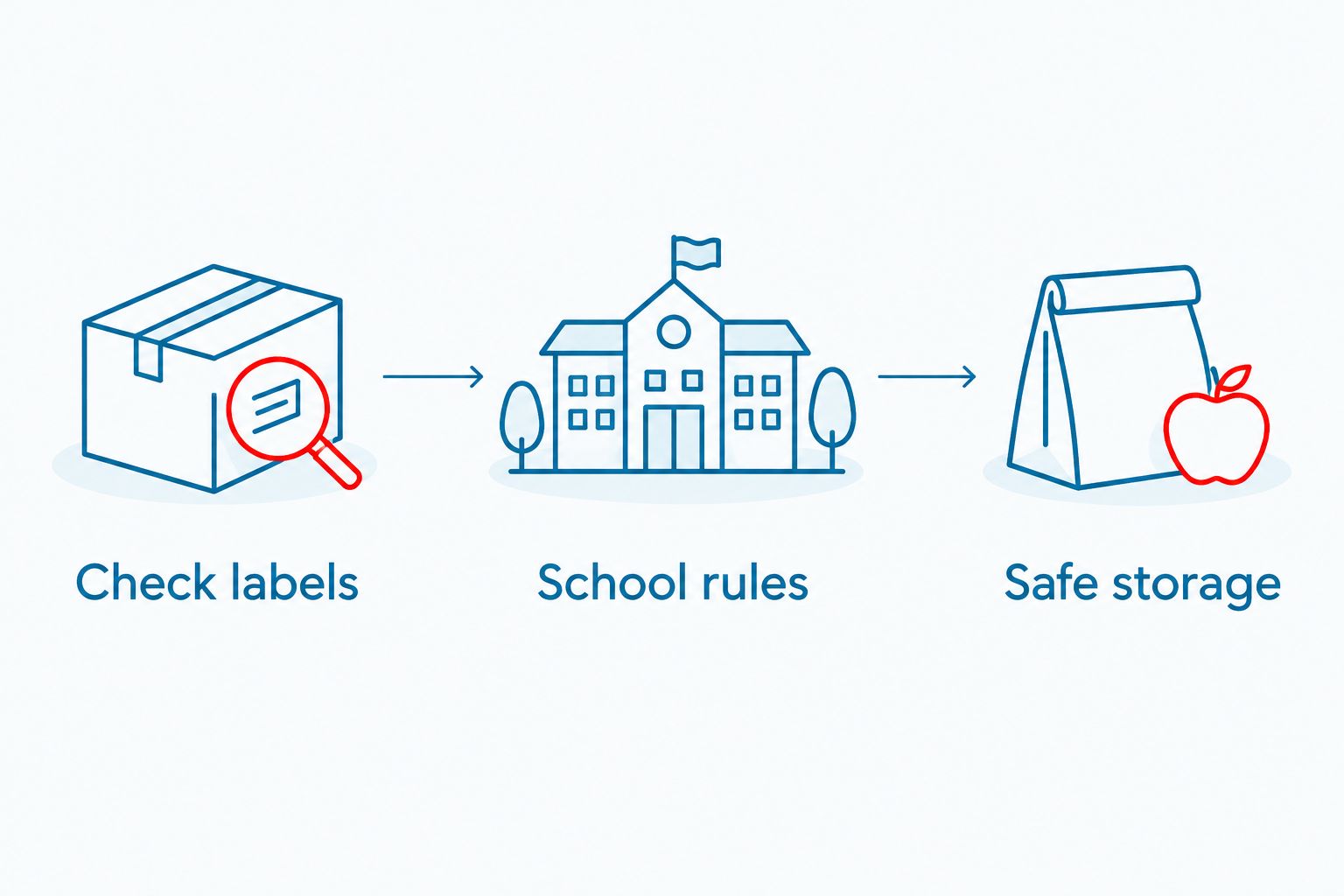
Use this quick sorting routine before building your snack list:
- Check labels: Follow storage directions, including instructions after opening.
- School rules: Confirm classroom food restrictions before buying.
- Safe storage: Put perishable foods in an insulated bag with cold sources.
- Set aside damaged packages and fruit showing spoilage.
Read ingredients without confusing sugar claims
Compare the ingredient list and Nutrition Facts panel on snacks you already buy. A fruit picture on the front does not tell you whether a snack is fruit, a sweetened fruit product, or something else. Turn the package over.
No added sugar is not the same as sugar-free. Fruit contains naturally occurring sugar, including when it is freeze-dried. On the Nutrition Facts panel, Total Sugars and Added Sugars describe different things; read both rather than treating one front-of-pack phrase as the whole answer.
Naturesturn describes its freeze-dried fruit snacks as 100% fruit with no added sugar. That makes the ingredient message straightforward, but you should still check the current product information for the specific flavor you choose.
Keep the decision practical rather than turning snack shopping into a nutrition quiz:
- Read the full ingredient list, not just the front label.
- Distinguish naturally occurring fruit sugar from added sugar.
- Review the serving size when comparing different packages.
- Check allergen information and any relevant advisory statements.
- Avoid treating a short ingredient list as proof of suitability for every child.
Choose a fruit format your child can manage
Start by offering a familiar fruit at home. Notice whether your child likes it whole, prefers a softer texture, or enjoys a crisp bite. The best-packed snack still comes home untouched if the texture is a surprise.
Whole fruit avoids the extra handling involved in slicing and packing. Choose a piece your child can comfortably manage, wash it appropriately, and protect it from getting crushed. Do not assume every whole fruit works equally well for every age or eating ability.
For a ready-to-pack alternative, Naturesturn’s Freeze-Dried Fruit Crisps Lunchbox Snack Variety Pack contains strawberry, apple, and pear in small, single-serve bags. It reduces portioning work, but the crisp texture and individual packaging are differences to consider—not reasons to replace all fresh fruit.
Build your shortlist around what your child actually eats:
- Test an unfamiliar texture at home before sending it to school.
- Choose fruit your child can eat without adult preparation.
- Use single-serve bags when they simplify the morning routine.
- Protect softer whole fruit from heavy lunchbox items.
- Follow age-appropriate feeding guidance for size, shape, and texture.
Pair the fruit with a suitable companion
Use foods you already keep at home to build a snack combination. Fruit can sit alongside suitable whole-grain crackers or another shelf-stable food your child enjoys. You do not need a specially marketed lunchbox product for every part of the snack.
Think about what the snack is supposed to do. A short morning break and an after-school activity are different situations. Your child’s appetite, the time until the next meal, and the school’s snack arrangements should guide what you pack—not the size of the compartment alone.
A fruit snack is not a complete lunch. If the lunchbox also contains refrigerated foods, keep the whole storage plan in view rather than assuming the shelf-stable fruit makes everything else safe.
Choose combinations with these checks:
- Pair fruit with a food your child already knows and eats.
- Check the companion food’s storage instructions separately.
- Use nut or seed products only when individual needs and school rules permit.
- Pack water alongside the snack when school arrangements allow.
- Adjust the amount based on appetite and what returns uneaten.
Pack for crunch, opening, and backpack travel
Try your existing containers before buying new ones. Ask your child to open the lid or wrapper while you watch; a package that needs an adult’s help at home will not become easier during a busy school break.
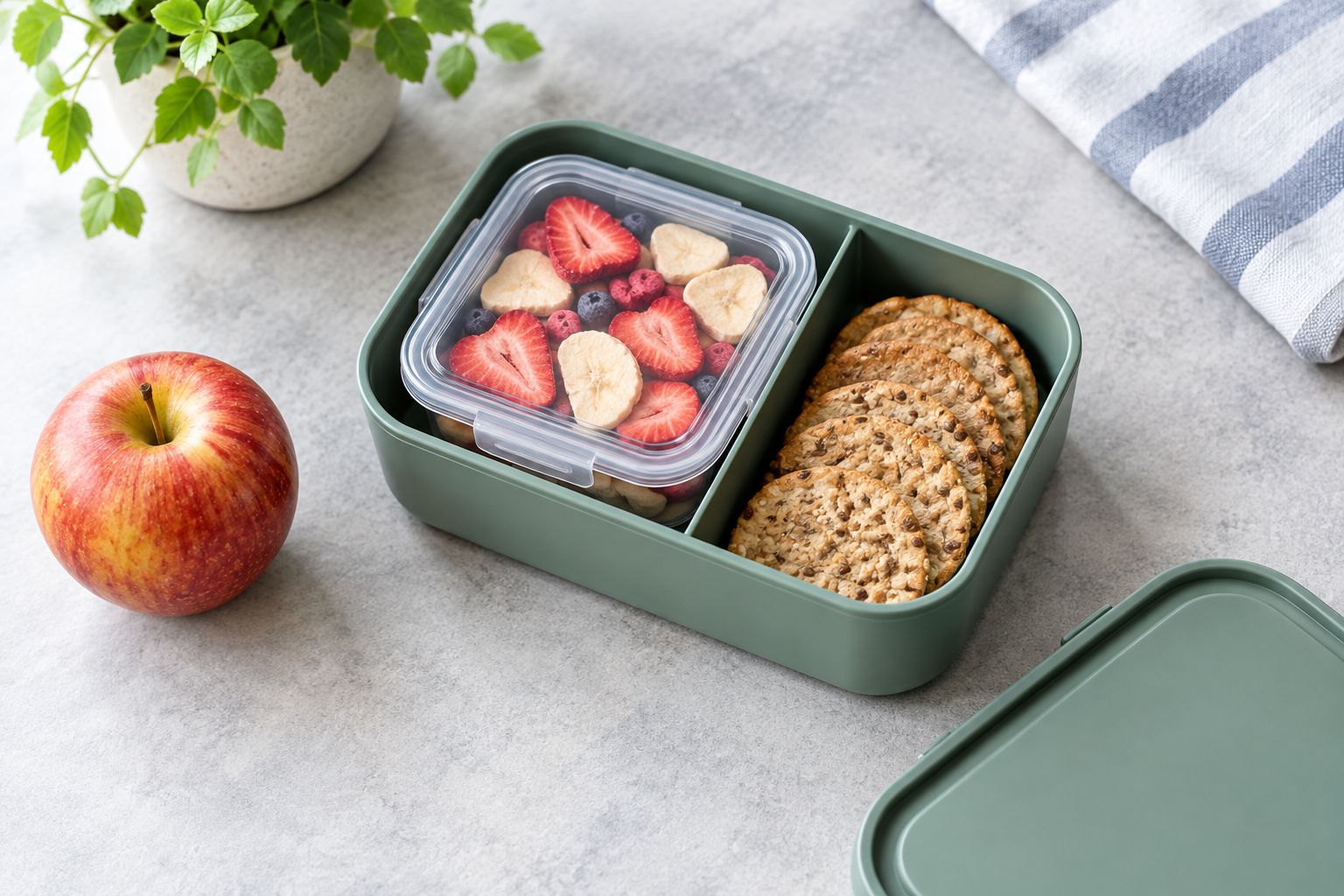
Freeze-dried fruit has a crisp texture, and exposure to moisture affects that crunch. Keep it sealed until eating, follow package directions after opening, and avoid placing loose pieces beside wet foods. A separate dry compartment also keeps crackers from getting damp.
For your 2026 packing routine, choose a setup that survives the actual trip: walking, bus rides, a crowded cubby, and the lunchbox tipping sideways. Room-temperature storage does not mean leaving food in a hot parked car.
Make the physical packing check simple:
- Keep dry snacks separate from wet ingredients.
- Close containers securely and check for leaks.
- Put crushable foods away from heavy bottles.
- Practice opening wrappers and lids at home.
- Keep the snack accessible without unpacking the entire lunchbox.
Confirm classroom rules and individual needs
Read the school’s current food policy yourself. Then check the specific snack’s label rather than relying on a category name such as fruit snack, cracker, or granola bar. Policies and product information answer different questions; you need both.
A fruit-only ingredient list does not establish that a product meets every allergy-related requirement. If your child has a food allergy, use their care plan and current manufacturer information to guide decisions. Ask the school how snacks are handled, including classroom sharing and celebrations.
Recheck these details for the 2026 school year and whenever you change products. Packaging you recognize is not a substitute for reading the package you are sending today.
Before a new snack goes into the bag:
- Check the current ingredient and allergen information.
- Read relevant statements about shared equipment or facilities.
- Confirm whether classroom rules differ from cafeteria rules.
- Follow your child’s individual allergy or feeding plan.
- Remind your child not to share food when that is part of their plan.
Review what comes home and simplify the routine
Start with a short list of accepted snacks and rotate within it. Write the choices on a kitchen note or keep them together in a designated cupboard area. A simple system helps you avoid rebuilding the snack decision every morning.
Look at what comes home before adding more variety. Uneaten fruit might mean the portion was too large, the package was difficult to open, or your child did not enjoy the texture. Ask a neutral question instead of assuming they dislike all fruit.
Use those answers to improve the next lunchbox. Keep favorites in rotation, introduce unfamiliar foods at home, and avoid buying a large assortment solely because the flavors sound appealing to you.
Finish the routine with these checks:
- Ask which snack your child enjoyed and what was difficult.
- Notice whether containers or wrappers came home unopened.
- Adjust portions without pressuring your child to finish.
- Store unopened snacks according to package directions.
- Clean and fully dry reusable containers before packing again.
Compare no-fridge lunchbox snack options
Choose by storage needs first, then texture and convenience. These options solve different packing problems; none replaces checking the current label or your child’s needs.
| Option | Best for | Storage requirement | Key limitation |
|---|---|---|---|
| Whole fruit, such as an apple or banana | Children who enjoy familiar fresh fruit | Keep clean, protected, and away from excessive heat | Can bruise; shape and texture need to suit the child |
| Freeze-dried fruit crisps | Parents wanting fruit without cutting or chilling | Follow the label; keep dry and sealed | Crisp texture differs from fresh fruit and changes with moisture |
| Suitable whole-grain crackers | A dry companion to fruit | Follow package directions | Ingredients, allergens, and added sugar vary by product |
| Nut or seed butter with crackers | Children whose needs and school rules permit it | Check the specific product’s instructions | School restrictions and individual allergies can rule it out |
| Yogurt, cheese, or fresh cut fruit | Lunchboxes with a reliable cooling setup | Use an insulated bag and cold sources | Not a no-cooling option simply because it fits in a lunchbox |
The advantage of shelf-stable choices is simpler packing. The trade-off is a narrower selection of textures and foods than a properly chilled lunchbox allows. If your child strongly prefers refrigerated snacks, plan the cooling rather than trying to make those foods fit a no-cooling day.
Common mistakes parents make with lunchbox snacks
- Treating no fridge as no cooling needed. Yogurt, cheese, and fresh cut fruit still need a safe cold-storage plan. An ordinary backpack is not a refrigerator.
- Calling no-added-sugar fruit sugar-free. Fruit’s natural sugar remains present. Use the label’s actual wording when comparing snacks or discussing them with your child.
- Packing an unfamiliar texture on a rushed morning. Freeze-dried fruit is crisp, not juicy like fresh fruit. Let your child try it at home first.
- Assuming fruit-only means approved for every classroom. Check the specific product information, school policy, and individual care requirements separately.
- Choosing convenient packaging your child cannot open. Practice before school and choose another suitable container or snack if opening it is frustrating.
FAQ
What are healthy lunchbox snacks that don’t need a fridge?
Whole fruit, freeze-dried fruit, and suitable shelf-stable crackers are practical choices when their storage instructions permit room-temperature packing. Check ingredients, school rules, and whether your child can manage the food’s texture and packaging.
Are Naturesturn fruit crisps a good school snack?
Naturesturn fruit crisps suit families looking for a 100% fruit snack with no added sugar. Check the current flavor-specific label and school policy, and let your child try the crisp texture at home first.
Does no added sugar mean fruit snacks are sugar-free?
No added sugar does not mean sugar-free. Fruit contains naturally occurring sugar, so check Total Sugars and Added Sugars separately on the Nutrition Facts panel.
Can I pack yogurt or cheese without a school fridge?
You can pack yogurt or cheese without a school fridge if you provide reliable cold storage. USDA packed-lunch guidance recommends an insulated bag with at least 2 cold sources and keeping perishable food at 40°F or below.
Is freeze-dried fruit better than fresh fruit for lunchboxes?
Freeze-dried fruit is easier to pack without cutting or chilling, while fresh fruit offers a different texture and eating experience. Choose the format your child enjoys and can manage; neither needs to replace the other.
Are fruit-only snacks safe for a nut-free classroom?
A fruit-only ingredient list does not by itself establish suitability for a nut-free classroom. Check current allergen and manufacturing information, then follow the school’s policy and your child’s individual care plan.
How do I keep freeze-dried fruit crunchy in a lunchbox?
Keep freeze-dried fruit dry and sealed until snack time. Follow the package’s instructions after opening and separate it from wet foods to limit moisture exposure.
One last thing
Test the lunchbox, not just the snack. Before adding a new option to your 2026 rotation, pack it in the container your child will use and have them open it at home. That small check catches a practical problem an ingredient list cannot: a snack your child likes but cannot reach or open independently.