


How to keep freeze-dried mango crisp in a lunchbox
Editorial Team
Keep freeze dried mango crisp in a lunchbox by leaving it in its unopened package until snack time, or packing a portion in a clean, completely dry, airtight container. Keep it separate from yogurt, cut fruit, sauces, and other moist foods; a divided lunchbox alone does not necessarily keep moisture out. For school lunches in 2026, protect the fruit from both dampness and crushing without changing how you chill the rest of the meal.
TL;DR
- Keep freeze dried mango sealed and separate from moist lunchbox foods to protect its crunch.
- Nature’s Turn freeze-dried fruit snacks suit parents seeking 100% fruit with no added sugar.
- Use a completely dry, airtight container for portions taken from an opened bag.
- Keep perishable lunch foods chilled; protect mango with separate packaging rather than removing the ice pack.
Why this matters
A lunchbox can hold a dry snack and a damp lunch just inches apart. Yogurt, freshly washed berries, a leaking drink, or condensation can introduce moisture that changes freeze-dried fruit from crisp to soft. The useful distinction is sealed versus exposed—not simply cold versus warm.
If you are packing freeze-dried mango crisps, keep the fruit in its own moisture-resistant package rather than scattering it into an open compartment. That small packing choice lets your child enjoy the crunchy texture separately from the rest of lunch.
Crushing is a different problem. A sealed pouch can still get flattened underneath a drink bottle, so the best packing routine protects against moisture and pressure. You do not need an elaborate lunchbox setup; you need a dry enclosure and a sensible spot for it.
How do you keep freeze-dried mango crisp in a lunchbox?
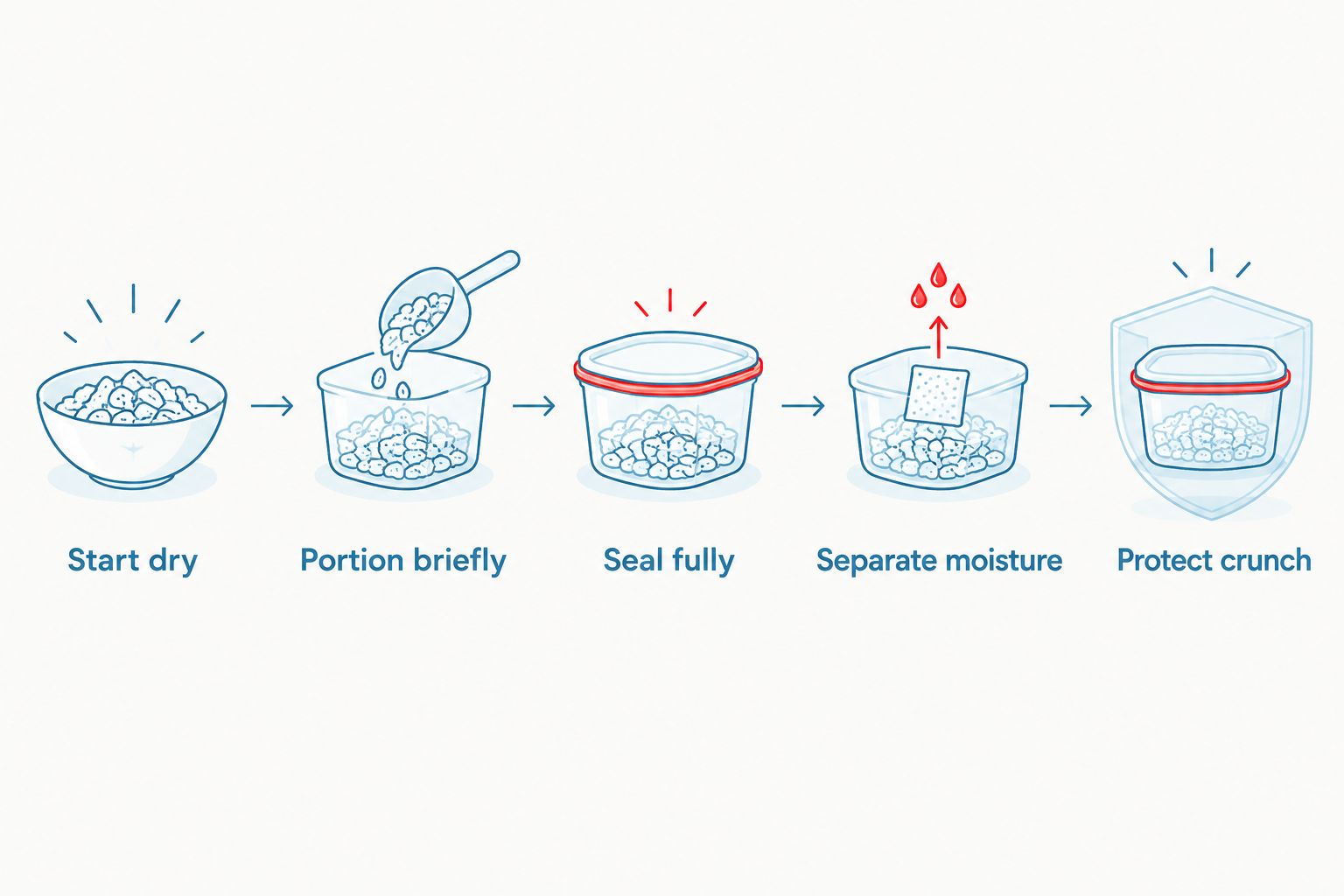
Leave freeze-dried mango sealed until your child is ready to eat it. If you portion it yourself, use the following steps to keep moisture out and make the snack easy to open at school.
Start dry
Choose a clean container with an airtight lid, and check that the inside, lid, and sealing rim are completely dry. A container straight from the dishwasher or drying rack deserves a quick inspection before you add the mango. Water tucked into a lid groove still counts.
Use dry hands and a dry utensil when handling the fruit. Avoid portioning it beside splashing dishwater or directly over a steaming pot. The goal is simple: do not introduce moisture before the snack even reaches the lunchbox.
Portion briefly
Open the fruit bag, remove the amount you want to pack, and close the remaining fruit promptly according to the package directions. Do not leave the bag open while you finish sandwiches, fill bottles, or clean up breakfast. Give the mango its own quick packing task.
Choose a portion that fits your child's appetite and the product's serving information. There is no need to fill a large container just because it has room. A smaller suitable container also keeps the snack from getting lost among the rest of lunch.
Seal fully
Close the lid all the way around, checking that no fruit piece sits across the sealing edge. A lid that looks closed on one side can still be loose on the other. If you use a food-storage bag, check the entire closure rather than pressing only the middle.
Follow the original package's storage instructions for any fruit left at home. Folding an opened bag is not the same as making an airtight seal. If the package cannot be securely resealed, use an appropriate dry, airtight storage container.
Separate moisture
Put the sealed mango beside—not inside—foods such as yogurt or cut fruit. A neighboring compartment is useful for organization, but it is not a substitute for the mango's own closed package. Shared air and leaking liquids can still reach an uncovered snack.
Keep sauces and dips in their own securely closed containers. If your child likes mango with yogurt, pack the two separately and suggest combining them at eating time. That preserves the crisp texture until the pairing is ready.
Protect crunch
Place the sealed snack where a heavy bottle or lunch container will not flatten it. If you choose a flexible pouch, a rigid lunchbox compartment can help protect it from pressure. Avoid squeezing the fruit into a crowded space just to close the lid.
Finally, check that your child can open the package or container. Practice at home if a lid is unfamiliar. A snack that stays crisp but requires adult help your child cannot get is not a practical school-day choice.
Which packing method works best?
An unopened package avoids extra handling before school. A dry, airtight container gives you control over the portion and offers protection from crushing, but it needs careful drying and closure. An open compartment is convenient to fill, yet it leaves the mango exposed to the rest of lunch.
| Packing method | Best for | Advantage | Limitation |
|---|---|---|---|
| Unopened original package | Parents minimizing morning handling | Keeps the fruit enclosed until eating | Flexible packaging still needs protection from crushing |
| Dry, airtight rigid container | Parents portioning from an opened bag | Separates the fruit and protects its shape | The lid and sealing rim must be completely dry and fully closed |
| Sealed food-storage bag | Parents needing a flexible portion container | Keeps the snack separate when securely closed | Offers less protection from pressure than a rigid container |
| Open lunchbox compartment | Fruit your child will eat immediately | Easy to see and reach | Exposes the fruit to moisture from neighboring foods |
For a school morning, choose sealed packaging over an open compartment. Pick the enclosure your child can manage, then check the seal before it goes into the bag. A complicated container is not automatically a better one.
As you refresh your lunch-packing routine in 2026, inspect containers you already own before buying replacements. Check lids, seals, and drying habits. Switching containers will not solve a problem caused by putting damp lids back on dry fruit.
Why freeze-dried mango loses its crunch
Freeze-dried fruit absorbs moisture from its surroundings. Keeping mango crisp means limiting that contact after the fruit leaves its sealed package. These are the packing factors to check:
- Moisture already in the container: Water left after washing touches the fruit directly. Dry the lid as carefully as the base.
- An incomplete closure: A loose lid or partly closed bag leaves an opening for moisture. Check the full sealing edge.
- Contact with wet foods: Yogurt, dips, and juicy cut fruit change the texture when they touch the mango. Keep them separate until eating.
- Time left exposed: An open bag or uncovered portion remains in contact with surrounding air. Close it promptly rather than leaving it out during lunch preparation.
- Condensation or leaks: Dampness around a cold item or spilled drink becomes a problem if it reaches the fruit. Give the mango its own closed enclosure.
Pressure can break mango into smaller pieces, but that is not the same as moisture making it soft. If the snack comes home as crisp crumbs, review where it sits in the lunchbox. If it comes home soft, check dryness, sealing, and contact with other foods first.
Should freeze-dried mango go next to an ice pack?
Freeze-dried mango does not need chilling for lunchbox packing when stored according to its package directions. However, do not remove the ice pack if other lunch foods need to stay cold. The mango's packaging and the rest of the lunch's temperature serve different purposes.
Place the sealed fruit where it will not sit in leaked liquid or collect moisture inside an open container. Keeping an unopened pouch beside a chilled lunch is different from leaving loose mango against a damp surface. Separation is the practical fix.
Build your 2026 lunchbox routine around the whole meal, not just the fruit snack. Keep perishable foods chilled as required, check bottles and containers for leaks, and enclose the mango separately. Crisp fruit is not a reason to compromise food safety elsewhere in the lunchbox.
Can you pack freeze-dried mango the night before?
You can pack freeze-dried mango the night before in its unopened package or a completely dry, airtight container. Follow the product's storage directions and keep the enclosed snack away from moisture. Do not leave a portion uncovered in an assembled lunchbox overnight.
A simple approach is to prepare the sealed fruit separately from refrigerated lunch components, then add it during your morning packing check. That gives you a chance to confirm the lid is closed and the lunchbox has no leaks. Keep refrigerated foods refrigerated until it is time to pack them appropriately.
If your child tends to bring unfinished snacks home, send a manageable portion rather than expecting an opened container to remain crisp indefinitely. Treat a returned portion according to its condition and the package's storage guidance. Texture alone is not a food-safety test.
Choosing fruit snacks for your 2026 lunch routine
Nature’s Turn freeze-dried fruit snacks suit parents who want 100% fruit with no added sugar. The brand offers fruit crisps in multiple flavors and bag sizes, so the useful choice is between a familiar flavor and a format that fits your packing routine. No added sugar does not mean sugar-free: fruit contains naturally occurring sugar.
For mango-focused variety, the tropical pack explicitly includes mango, pineapple, banana, and a Tropical Fruit blend. For a broader pantry rotation, the ultimate pack contains fifteen flavors in single-serve bags. Neither format removes the need to check current labels, your child's dietary needs, and school snack policies.
Nature’s Turn freeze-dried fruit options
| Product | Best for | What the product information states | Packing trade-off |
|---|---|---|---|
| Freeze-Dried Fruit Crisps Tropical Variety Pack (1.20oz) 4-Pack | Families wanting mango alongside other tropical flavors | Mango, pineapple, banana, and a Tropical Fruit blend; 4 bags at 1.20 ounces each | A variety pack is not mango-only; opened portions still need dry, sealed storage |
| Freeze-Dried Fruit Crisps, Ultimate Variety Pack (0.53oz) 36-Pack | Families rotating fruit flavors through school lunches | Fifteen flavors in 36 single-serve bags at 0.53 ounces each | A broader assortment requires checking which flavors your child likes |
The tropical pack's 1.20-ounce bags and the ultimate pack's 0.53-ounce bags offer different packing formats. Choose based on the labeled serving information and your child's needs, not on a promise that a particular bag size suits every child. The 4-bag and 36-bag formats also make different pantry choices.
Fruit snack options

Mango, pineapple, banana, and a Tropical Fruit blend. Real fruit, nothing else.
$19.99

Fifteen flavors in a box of 36 single-serve bags. Real fruit, nothing else.
$79.99
What should you check before sending mango to school?
Check the current ingredient list and allergen information for the specific product you are packing. A short ingredient list does not establish that a snack is suitable for every child. Follow your child's dietary guidance and the school's rules, including any requirements about original packaging.
For the 2026 school year, check the school's current policy rather than relying on what was allowed previously. If staff need to see the label, keep the snack in its original package as directed. Do not describe a fruit snack as universally allergy-safe.
At home, let your child try the texture and opening method before sending the snack to school. Pack an amount they can comfortably manage, and give a simple instruction: keep it closed until snack time. That is more useful than expecting a child to remember a long list of storage rules.
FAQ
What's the best way to keep freeze dried mango crunchy in a lunchbox?
Keep freeze dried mango in its unopened package or a completely dry, airtight container until eating. Separate it from moist foods and protect it from heavy items that can crush it.
Can I put freeze-dried mango in the same compartment as yogurt?
Keep freeze-dried mango separate from yogurt if you want it to stay crisp. Pack each in its own closed container and combine them only when your child is ready to eat.
Does freeze-dried mango need an ice pack?
Freeze-dried mango does not need an ice pack when stored according to its package directions. Keep the ice pack for other lunch foods that require chilling, and protect the mango in separate sealed packaging.
Can I pack freeze-dried mango the night before school?
You can pack freeze-dried mango the night before in an unopened package or a completely dry, airtight container. Follow the package's storage instructions and do not leave the fruit exposed to moisture.
Why did my freeze-dried mango get soft in the lunchbox?
Freeze-dried mango gets soft when it absorbs moisture. Check for a damp container, an incomplete seal, contact with wet food, or liquid leaking into the snack.
Are Nature’s Turn freeze-dried fruit snacks sugar-free?
Nature’s Turn freeze-dried fruit snacks are not sugar-free: fruit contains naturally occurring sugar. The brand describes its fruit snacks as 100% fruit with no added sugar.
Is freeze-dried mango safe for every school lunch?
No snack is suitable for every child or every school policy. Check the current product label, your child's dietary needs, and school rules before packing freeze-dried mango.
One last thing
Check the lid before you blame the ice pack. A dry container base does not help if its lid still holds water from washing, and a good lid does not help if a mango piece prevents it from closing.
Make that your final lunchbox check: dry inside, fully sealed, separate from wet foods, and protected from crushing. Then let your child open the mango at snack time. Keeping the crunch is mostly about keeping moisture out—not adding another complicated task to your morning.