


How to pack freeze-dried apples without crushing them
Editorial Team
Pack freeze dried apples loosely in a clean, completely dry, rigid container with a secure lid, and keep heavy lunchbox items from pressing against it. If you use a sealed snack bag, place the whole bag inside the container rather than squeezing it into a tight compartment. Protecting the apples from pressure prevents crushing; keeping them away from moisture helps preserve their crisp texture.
TL;DR
- Freeze dried apples travel best in a rigid container that protects them from lunchbox pressure.
- Keep apple crisps separate from wet foods, and never force the lid closed over the fruit.
- A sealed snack bag needs outside protection; flexible packaging alone does not stop crushing.
- Naturesturn offers 100% fruit snacks with no added sugar; fruit still contains naturally occurring sugar.
How to pack freeze-dried apples without crushing them
Use a rigid container, leave the apples loose, and give the container its own space. A flexible pouch keeps the fruit contained, but it bends when a water bottle or lunchbox lid pushes against it. A hard-sided container puts a physical barrier between those everyday pressures and the fragile pieces inside.
For snacks such as Naturesturn’s All Natural Apple Crisps, the packing method matters as much as where you put the snack. Use this routine for your 2026 school-day packing plan.
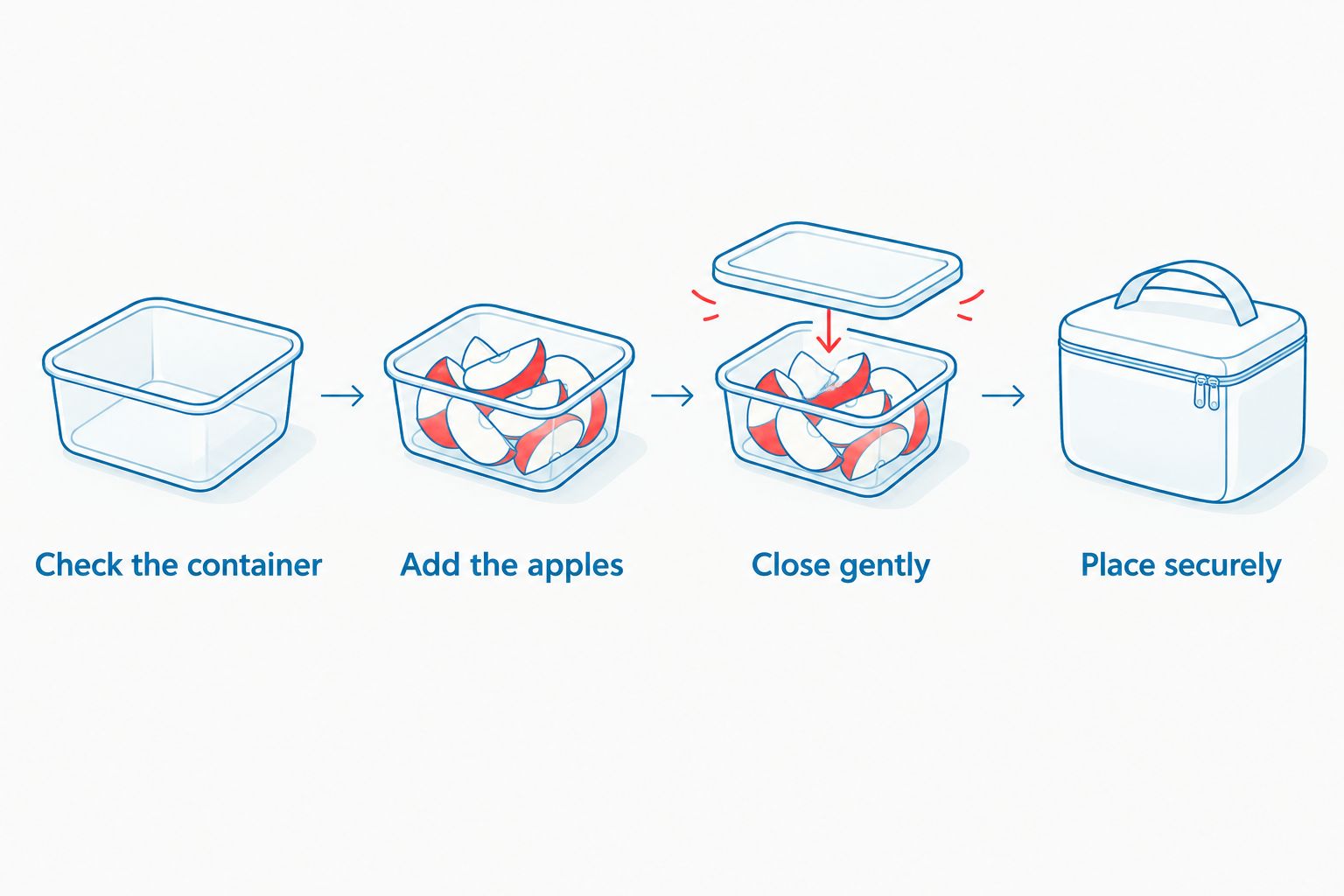
Check the container
Choose a food-storage container with rigid sides and a lid your child can open. Check that it fits in the lunchbox without forcing the outer lid shut. A container that needs to be wedged into place starts the trip under pressure.
Wash the container according to its care instructions, then let it dry completely. Pay attention to the lid rim and corners, where water can remain after washing. Dry apple pieces should not go into a container that still feels damp.
Add the apples
Place the pieces inside gently rather than pressing them down to make room. If you are keeping a snack in its unopened pouch, set the pouch inside without folding it tightly around the fruit.
Keep pieces below the closing edge. If the lid touches or traps them, remove some fruit or choose a different container. The aim is a comfortable fit, not the fullest possible box.
Close gently
Close the lid without pushing against the apples. Check that no pieces sit across the rim, and keep the container level while you close it.
For fruit transferred from a larger bag, close the original package promptly and follow its storage instructions. Do not leave the pantry bag open while you finish making the rest of lunch.
Place securely
Set the container where it cannot be flattened by a drink bottle, food jar, or tightly packed lunchbox lid. Keep it away from leaking foods and check that neighboring containers close properly.
Close the lunchbox once before putting it in the backpack. If you have to press down hard, rearrange the contents. The lunchbox should close around the snack, not compress it.
Why this matters for school snacks
A snack that leaves home in crisp pieces is easier to enjoy when it reaches the classroom that way. Crumbs are harder to pick up, and a damp apple crisp loses the texture your child expected. Packing for both pressure and moisture addresses those separate problems.
For your 2026 lunchbox routine, think about the entire trip: packing, carrying, unpacking, and opening the snack. A secure container helps during transport, but an awkward lid creates a different problem at snack time. Let your child practice opening the container at home before sending it to school.
The apples themselves need no peeling or slicing at packing time. That convenience does not replace the school’s food rules or the storage directions on the package. Check both when choosing a snack for your child.
Which container works best for freeze dried apples?
A rigid, securely closing container is the best choice when avoiding crushed pieces is your priority. A divided lunchbox also works when its apple compartment stays dry and its lid closes without pressing on the fruit.
The right choice depends on your existing lunchbox, not on buying the most elaborate container. Compare these everyday options before adding another item to your kitchen cupboard.
| Packing option | Best for | Advantage | Limitation |
|---|---|---|---|
| Rigid container with a secure lid | Loose apple pieces | Shields fruit from direct pressure | Takes up space and needs washing |
| Sealed snack pouch inside a rigid container | Keeping an unopened portion together | Adds crush protection without transferring the fruit | Uses more lunchbox space than the pouch alone |
| Dry, divided lunchbox compartment | Families already using a compartment lunchbox | Keeps the apples separate without another small box | Protection depends on the compartment and lid design |
| Flexible bag alone | Packing where nothing presses on the snack | Fits into small spaces | Does not shield fragile fruit from squeezing |
A flexible bag is not a substitute for a hard shell. If your child carries a lunchbox alongside books or sports gear, give the fruit its own protective container rather than hoping the backpack stays loosely packed.
An oversized container is not automatically better, either. Choose one that holds the portion comfortably without making you squeeze the rest of lunch around it. Test the fit with the actual lunchbox before making it part of the daily routine.
Why packing results vary
The same apple crisps can arrive differently depending on what happens around them. These are the packing factors to check when your child brings home a container full of small pieces or fruit that has lost its crunch.
- Outside pressure: A drink bottle, food jar, or tight lunchbox lid pushes through flexible packaging. Use a rigid barrier and rearrange heavy items.
- Overfilling: Fruit caught beneath the lid breaks as the container closes. Leave the closing edge clear.
- Damp containers: Water left after washing brings moisture directly into contact with the apples. Dry the base, corners, and lid before filling.
- Wet neighboring foods: Cut fruit, dips, and yogurt need their own securely closed containers. Keep apple crisps separate until eating time.
- Rough handling: Dropping or shaking the lunchbox moves fragile pieces around. A protective container helps, but it does not make the fruit unbreakable.
- Open packaging: Leaving the original bag open exposes the remaining fruit to moisture in the air. Follow the package’s closing and storage directions.
When you adjust your 2026 packing routine, fix the visible problem first. Crushed pieces call for less pressure and better protection. Soft pieces call for a closer look at moisture and how the package was closed.
Can I pack freeze-dried apples the night before?
Pack freeze-dried apples the night before in a completely dry, securely closed container, following the product’s storage instructions. Keep the container closed until snack time rather than repeatedly opening it while you assemble lunch.
Prepare the apple container separately from chilled foods. The next morning, place it in the lunchbox without opening it again, and keep cold foods handled according to their own food-safety needs. An apple snack does not change how you should pack yogurt, sandwiches, or other perishable foods.
If an unopened single-serve pouch suits your routine, put it into its protective container ahead of time. That removes the morning transfer step without leaving a flexible pouch exposed to pressure.
Can I put freeze-dried apples next to yogurt or fresh fruit?
Keep freeze-dried apples in a separate, dry container when packing yogurt or fresh fruit. Mixing them ahead of time puts the crisp pieces in contact with moisture and changes their texture.
If your child likes apple pieces as a topping, pack the ingredients separately and combine them at eating time. Check that your child can manage the containers and that the arrangement fits the school’s snack rules.
The same approach works for applesauce, dips, and other wet foods. A divided lunchbox only keeps the apples dry if moisture cannot travel between compartments, so check the lunchbox’s instructions rather than assuming every divider seals.
How do I stop a snack bag from getting crushed in a backpack?
Put the snack bag inside a rigid container before placing it in the backpack. Moving a flexible pouch to the top of the bag reduces some contact, but it does not provide a hard barrier against squeezing.
Give the lunchbox a space where books and other equipment do not press directly against it. Check the fit after everything is packed, not before the water bottle and homework folder go in.
For your 2026 school routine, ask your child where the lunchbox actually travels. A packing arrangement that works on the kitchen counter needs to work in the backpack, classroom storage area, and hands carrying it, too.
Choosing apple snacks for your family's routine
Naturesturn freeze-dried fruit snacks are a fit for families seeking 100% fruit with no added sugar. The brand offers multiple flavors and bag sizes, so choose around the portion and flavor your child enjoys rather than assuming every variety pack serves the same purpose.
No added sugar does not mean sugar-free. Fruit contains naturally occurring sugar, and you should read the current ingredient and nutrition information before making a choice. Check allergen information and school policies separately; no snack is suitable for every child.
| Naturesturn option | Best for | What the product information states | What to consider |
|---|---|---|---|
| Freeze-Dried Fruit Crisps Lunchbox Snack Variety Pack | Parents choosing small school-lunch bags | Includes strawberry, apple, and pear in single-serve bags | Includes flavors beyond apple; the bags still need crush protection |
| Freeze-Dried Fruit Crisps - Orchard Variety Pack | Families who enjoy orchard-fruit flavors | Includes apple, apple cinnamon, peach, and pear | Not an apple-only selection |
| Freeze-Dried Fruit Crisps, Ultimate Variety Pack (0.53oz) 36-Pack | Families seeking a broader flavor rotation | Contains 36 single-serve bags across 15 flavors | More variety than you need if your child only wants apples |
The Ultimate Variety Pack lists 0.53 oz bags, 36 bags, and 15 flavors. Those details describe the assortment, not how much your child should eat. Choose portions around your child’s needs and the school’s snack schedule.
The lunchbox and orchard options connect most directly to an apple-focused routine. Whichever you choose, protect the bag or loose pieces using the same dry-container method.
Apple-containing snack options

Strawberry, apple, and pear in small, single-serve bags sized for school lunches.
$24.99

An orchard-fruit selection with apple, apple cinnamon, peach, and pear.
$35.99
A quick lunchbox check for 2026
Before the lunchbox leaves the kitchen, check the places where pressure and moisture enter. You do not need a complicated system; a repeatable check keeps the practical details from getting lost in the morning rush.
- The apple container and lid are completely dry.
- No apple pieces cross the closing rim.
- The lid closes without pressing on the fruit.
- Wet foods sit in their own securely closed containers.
- The water bottle does not squeeze the apple snack.
- Your child can open the container without help.
- The snack follows current school policies and your child’s dietary requirements.
If the lunchbox feels crowded, change the layout before changing the snack. Moving a bulky container or using a better-fitting apple container often addresses the packing problem directly.
FAQ
What's the best way to pack freeze dried apples without crushing them?
Pack freeze dried apples loosely in a clean, completely dry, rigid container with a secure lid. Keep pieces below the closing rim and stop heavy lunchbox items from pressing against the container.
Can I leave freeze-dried apples in their original snack bag?
Yes, you can keep an unopened snack bag intact and place it inside a rigid container. The flexible bag alone does not protect the fruit from squeezing.
Should I squeeze the air out of a bag of apple crisps?
Do not squeeze the bag against the apple crisps to make it smaller. Follow the package's closing instructions and use a rigid outer container for crush protection.
Do freeze-dried apples need refrigeration in a lunchbox?
Follow the product's storage instructions; dry freeze-dried fruit snacks do not need refrigeration for everyday packing. Other lunchbox foods still need their own appropriate temperature control.
Can I mix apple crisps into yogurt before school?
Keep apple crisps separate from yogurt if you want them to stay crisp. Combine them at eating time, with the yogurt packed according to its food-safety needs.
Are freeze-dried apple snacks sugar-free?
Freeze-dried apple snacks are not sugar-free because apples contain naturally occurring sugar. No added sugar describes added ingredients, not the absence of fruit sugar.
Are Naturesturn fruit snacks suitable for every school?
Naturesturn fruit snacks are not automatically suitable for every school or child. Read current product labels, check school policies, and follow your child's individual dietary guidance.
One last thing
Check the outside lunchbox lid, not just the apple container. A carefully packed snack still sits under pressure if you have to push the lunchbox closed.
Try the complete setup at home and let your child open it. That simple check catches both a crowded lunchbox and a tricky lid before snack time at school.