


Healthy lunchbox snacks for school bus rides home
Editorial Team
Parents’ healthy lunchbox snacks are simple foods packed to help children handle after-school hunger, including the trip home. For school bus days, the right choice depends on eating rules, food storage, and what your child can comfortably manage—not just what fits in a lunchbox.
TL;DR
- Healthy lunchbox snacks need a permitted eating time, suitable storage, and packaging your child can manage.
- Naturesturn freeze-dried fruit snacks suit families seeking 100% fruit with no added sugar.
- No added sugar does not mean sugar-free; fruit contains naturally occurring sugar.
- If bus eating is prohibited, save the snack for an approved place before boarding or after arrival.
Why healthy lunchbox snacks matter for bus-riding families
An after-school snack has a different job from the fruit you pack for lunch. It needs to last until dismissal, survive a crowded backpack, and still be easy to reach when your child is allowed to eat.
Plan around the permitted eating moment first, then choose the food. A snack that works at a supervised dismissal table does not automatically work on a moving bus. Ask the school or transportation office about eating rules rather than relying on what another family does.
For your 2026 school-day routine, start with foods your child already enjoys. Familiar flavors and manageable packaging keep the plan practical. If refrigeration is the main challenge, this guide to healthy lunchbox snacks for days without a fridge covers that packing decision in more detail.
Build an after-school snack routine that works
Check when your child is allowed to eat
Start with the school’s rules, not a shopping list. Confirm whether children can eat before boarding, whether any eating is permitted during transportation, and where snacks should stay during the ride.
If bus eating is prohibited, pack for an approved snack break or for arrival at home. Your child should not feel responsible for choosing between hunger and following the rules. Explain the plan in everyday language: this snack stays closed until the agreed place and time.
Also check how the school handles food allergies and medical exceptions. A transportation rule and an individual care plan are separate matters; follow the arrangements agreed with school staff.
- Ask the school or transportation office about food rules.
- Choose an approved eating location before packing.
- Follow your child’s school health or allergy plan.
- Tell your child when the snack should stay closed.
- Recheck the rules when transportation arrangements change.
Match the snack to the wait and storage conditions
Look at the whole day, from packing in the morning to eating after dismissal. A food that needs refrigeration at lunch still needs safe storage if your child saves it for later.
USDA food-safety guidance calls for keeping cold perishable foods at 40°F or below. Perishable food should not remain unrefrigerated for more than 2 hours, or 1 hour when temperatures exceed 90°F. Those limits are not a promise that a lunch bag will stay cold until dismissal.
For an afternoon snack without reliable cold storage, choose a food whose label permits room-temperature storage. Do not judge food safety by whether something smells fine. When you pack refrigerated food, use suitable cold storage and follow the product’s directions.
- Identify whether the food requires refrigeration.
- Read storage instructions before adding it to the rotation.
- Use an insulated bag and appropriate cold sources for perishables.
- Do not save lunch leftovers for later without safe storage.
- Keep the after-school snack separate from foods meant for lunch.
Choose a familiar fruit format
You do not need a special product to build a useful snack routine. Start with a familiar fruit that suits your child’s eating skills, the approved eating setting, and the available storage. Prepare it as needed for your child rather than treating any shape or texture as suitable for everyone.
For a packaged option that skips fruit preparation, Naturesturn freeze-dried fruit snacks suit families seeking 100% fruit with no added sugar. The Freeze-Dried Fruit Crisps Lunchbox Snack Variety Pack includes strawberry, apple, and pear in small, single-serve bags. Its practical limit is texture: fruit crisps need protection from crushing, and a child who prefers soft fruit might not enjoy them.
Start your 2026 snack rotation with a flavor your child recognizes. Save unfamiliar textures for a relaxed snack at home, where you can see whether your child enjoys and manages them comfortably.
- Offer a familiar fruit before trying a new flavor.
- Match food preparation to your child’s eating skills.
- Compare fresh, freeze-dried, and other packaged formats.
- Read each product’s ingredients and storage directions.
- Try unfamiliar textures at home before packing them.
Read ingredients and allergy information separately
An ingredient list answers what is in a snack. Allergy information and your child’s care plan answer different questions. Keep those checks separate, even when the front of a package looks simple.
Naturesturn describes its freeze-dried fruit snacks as 100% fruit with no added sugar. That does not mean sugar-free: fruit contains naturally occurring sugar. It also does not establish that a snack meets every child’s allergy needs or every school’s requirements.
Read the current package when you buy, especially when changing flavors or formats. For your 2026 packing checklist, keep these checks distinct: ingredients, allergy information, storage directions, and school rules. If information is unclear, contact the manufacturer and follow your child’s established care plan before packing the food.
- Read the full ingredient list, not only front-label claims.
- Check current allergen statements and precautionary information.
- Compare the package with your child’s care plan.
- Confirm that the snack meets school requirements.
- Avoid calling no-added-sugar fruit snacks sugar-free.
Pack for easy access and less damage
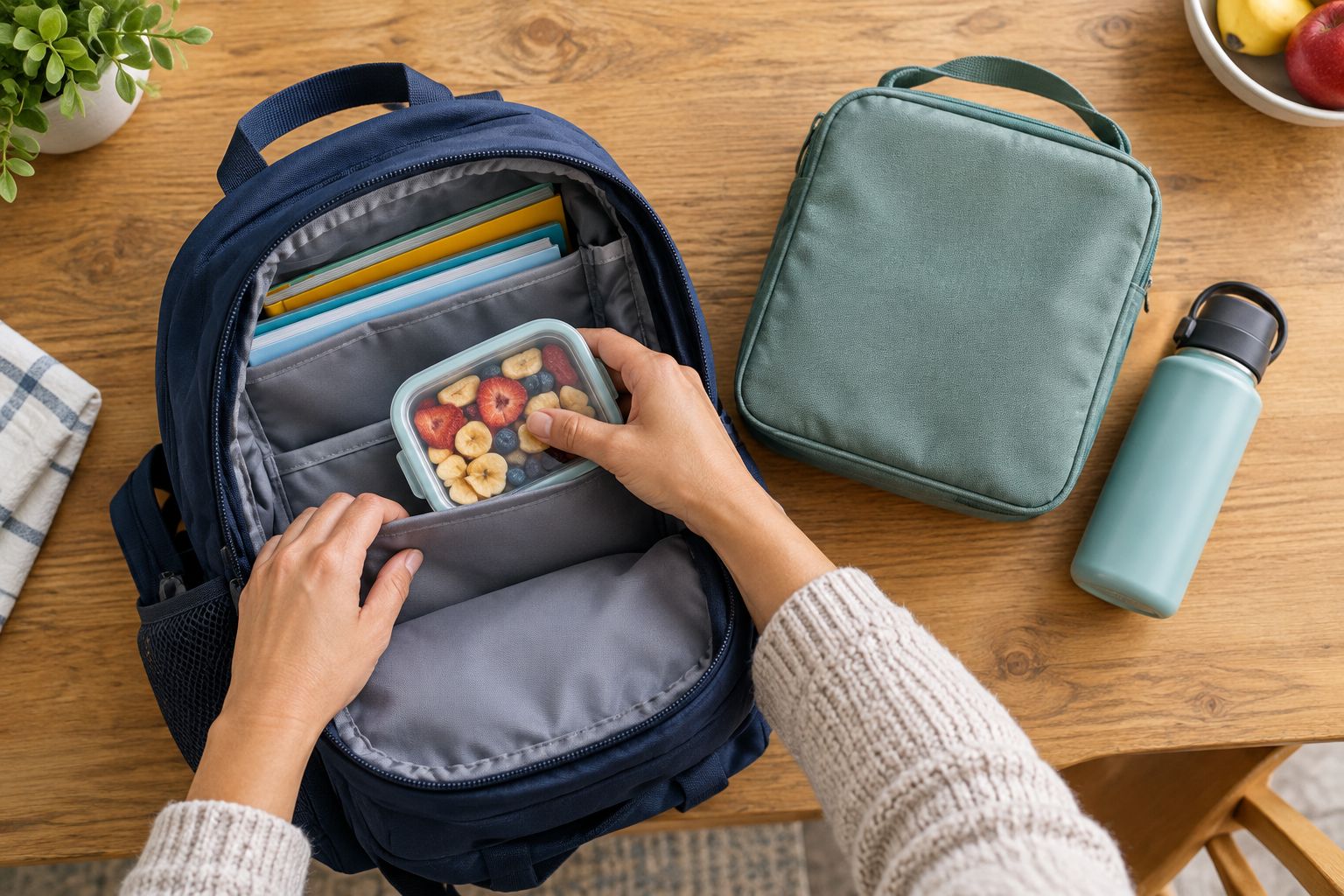
Put the afternoon snack somewhere your child can find it without emptying the backpack. A separate compartment or recognizable container helps distinguish it from lunch food, while a protective container can keep delicate snacks away from heavy books.
Keep dry, crisp foods away from wet foods and condensation. Follow package directions after opening, and do not assume an opened bag will stay crisp until dismissal. If your child needs help with a seal or lid, practice at home and choose packaging that works in the approved eating setting.
A useful 2026 packing routine has a clear sequence: check the rules, choose the food, protect it, and place it where your child expects it. Repeat the same arrangement until it feels familiar.
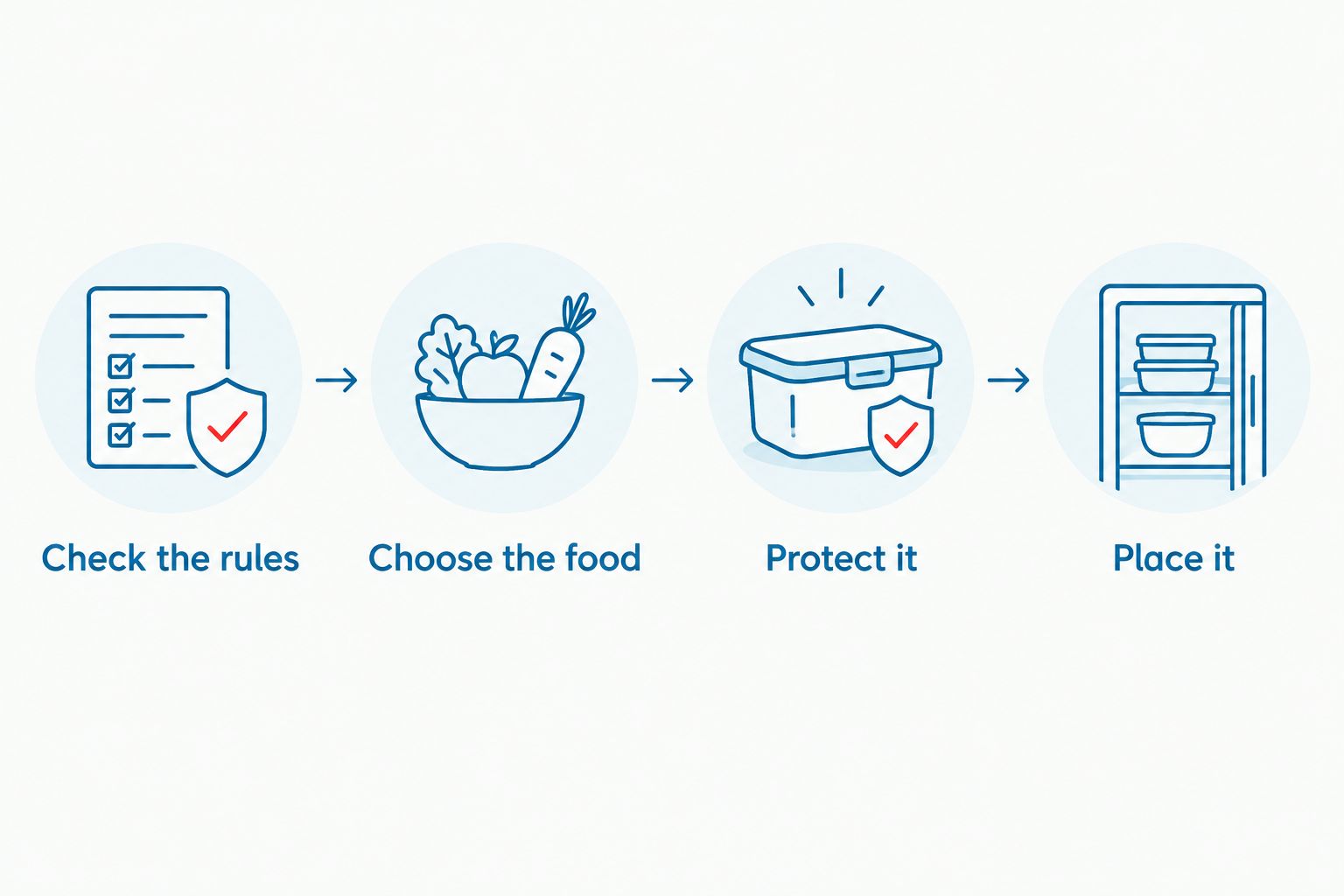
Use the packing routine to remove small obstacles, not to add another complicated task to the morning. A snack your child can locate and open is more practical than an elaborate combination that needs adult assembly.
- Reserve a consistent spot for the afternoon snack.
- Protect fruit crisps from books and heavy containers.
- Separate dry snacks from wet foods and condensation.
- Practice opening the package or container at home.
- Keep anything needing utensils for an appropriate seated setting.
Adjust the snack using what comes home
Check the backpack together after school. An unopened snack does not automatically mean your child disliked it: there might not have been an approved eating opportunity, the package might have been difficult to open, or lunch might have been enough.
Ask a specific question instead of replacing everything at once. Was the fruit crushed? Was the flavor too unfamiliar? Did your child remember where you packed it? Change the part that caused trouble and keep the rest of the routine familiar.
For the rest of 2026, let your child help choose among foods that meet your household and school requirements. Keep the decision manageable, and avoid turning an uneaten snack into a test of good behavior.
- Ask when your child had a chance to eat.
- Check whether the packaging caused a problem.
- Notice crushed, damp, or repeatedly returned food.
- Adjust the format before abandoning a familiar flavor.
- Revisit the plan when dismissal or aftercare changes.
Compare snack options for the trip home
The best option matches the eating setting, not just the ingredient list. Start with what your child can comfortably eat and what you can store correctly until the approved snack break.
The table compares useful formats rather than ranking foods as universally better or worse. Each option has a practical benefit and a packing limitation.
| Option | Best for | Practical benefit | Key limitation |
|---|---|---|---|
| Fresh fruit, prepared for your child | Families who prefer familiar fresh textures | You control preparation and the amount packed | Preparation and cold-storage needs depend on the fruit and format |
| Naturesturn freeze-dried fruit snacks | Families seeking packaged 100% fruit with no added sugar | Ready-to-pack fruit crisps without fruit preparation | Crisps need protection from crushing; review current labels for individual needs |
| Unsweetened fruit puree pouch | Children who already manage pouches comfortably | A soft-fruit format without a separate spoon | Caps, squeezing, and spills need consideration; follow storage directions |
| Plain crackers | Children who prefer a dry, savory snack | Easy to separate into a container | Crumbs, ingredients, and allergen information vary by product |
| Refrigerated yogurt | An approved seated snack break with reliable cold storage | A familiar spoonable option | Requires safe temperature control and suitable packaging or utensils |
Try the chosen format at home before making it part of the school routine. Watch how your child handles the package, texture, and cleanup rather than assuming a portable snack is automatically easy to eat.
Common mistakes parents make with after-school snacks
Treating a packed snack as permission to eat on the bus
A food’s portability does not override transportation rules. Confirm the approved eating time and explain it to your child before the snack goes into the backpack.
Saving a refrigerated lunch item without checking storage
Leftover yogurt or another perishable food still needs safe temperature control after lunch. Pack a separate afternoon option when you cannot maintain the required storage conditions.
Assuming fruit-only means suitable for every child
A short ingredient list is useful information, not a universal safety claim. Check the current label, your child’s needs, and school requirements; assess texture and preparation separately.
Trying a new flavor during a rushed school day
An unfamiliar snack adds another decision when your child is tired and the setting is busy. Explore new flavors at home, then pack the ones your child enjoys and handles comfortably.
Packing delicate snacks beneath heavy items
A good snack can come home uneaten because it arrived crushed. Give fruit crisps a protected spot instead of placing the bag beneath books, bottles, or heavy lunch containers.
FAQ
What are the best healthy lunchbox snacks for the bus ride home?
The best healthy lunchbox snacks match your child’s eating skills, the school’s rules, and the storage available until dismissal. Familiar fruit or a suitable packaged snack can work for an approved eating break; if bus eating is prohibited, save it for an allowed location.
Can my child eat a snack on the school bus?
Your school or transportation office sets the rules for eating on the bus. Confirm the policy directly and follow any individual arrangements agreed with school staff.
Are freeze-dried fruit snacks sugar-free?
No, freeze-dried fruit contains naturally occurring sugar from fruit. No added sugar means sugar has not been added; it does not mean the finished food contains no sugar.
What can I pack when the after-school snack cannot stay cold?
Choose a snack whose current label permits room-temperature storage. Do not substitute a room-temperature bag for the cold storage required by yogurt or other perishable foods.
Is a fruit-only snack safe for every child with food allergies?
No, a fruit-only ingredient list does not establish suitability for every child with food allergies. Check current ingredients and allergy information against your child’s care plan and school requirements.
How do I stop freeze-dried fruit from getting crushed in a backpack?
Place the snack in a protected compartment or suitable rigid container away from heavy items. Keep dry fruit crisps separate from wet foods and condensation, and follow package storage directions.
What should I do if the afternoon snack keeps coming home unopened?
Ask whether your child had an approved chance to eat and could find and open the snack. Adjust the timing, packaging, or food based on that answer rather than assuming the snack was disliked.
One last thing
Practice the whole snack routine at home—not just the eating part. Have your child find the snack in the packed bag, open it while seated, and put the packaging away. That small rehearsal shows you whether the plan works before a busy dismissal puts it to the test.