


Does freeze-dried fruit have as much fiber as fresh fruit?
Editorial Team
Yes, freeze-dried fruit contains fiber, and freeze-drying generally preserves the fiber in the original fruit because it removes water rather than straining away the fruit’s solids. It can provide a similar amount of fiber to the fresh fruit it came from, but equal weights, equal scoops, and different package servings are not equivalent comparisons.
TL;DR
- Does freeze dried fruit have fiber? Yes—compare serving sizes before comparing fiber grams.
- Fresh fruit supplies water; freeze-dried fruit keeps fiber in a lighter, crunchy form.
- Naturesturn freeze-dried fruit snacks suit parents seeking 100% fruit with no added sugar.
- Use the current Nutrition Facts label, not the bag’s size, to judge fiber.
Why this matters
A small bag of fruit crisps looks very different from a bowl of fresh strawberries. That difference can make you wonder whether the crunch comes at the expense of fiber. The important change is water removal—not automatic fiber removal.
For school lunches, the useful question is how much fiber your child gets from the portion you actually pack. A snack’s fruit ingredients, serving weight, and fiber line tell you more than its appearance. For the broader nutrition picture, see is freeze-dried fruit healthy?.
Does freeze-dried fruit have as much fiber as fresh fruit?
Freeze-dried fruit generally retains the original fruit’s fiber, but an exact gram-for-gram serving claim requires matching product information. Compare the same fruit and account for the water removed. A serving of fresh apples and a serving of freeze-dried strawberries cannot establish whether drying changed the fiber.
Fiber is part of the fruit’s solid structure. Freeze-drying removes water through a process in which frozen water becomes vapor under reduced pressure. It does not work like juicing, which can separate juice from fiber-containing pulp.
| What you’re comparing | Fresh fruit | Freeze-dried fruit |
|---|---|---|
| Fiber | Contains fiber in the fruit’s solids | Generally retains fiber in those solids |
| Water | Supplies water along with fruit solids | Has much of its water removed |
| Equal weight | Includes substantial water weight | Contains more concentrated fruit solids |
| Equal scoop | Depends on fruit size and how pieces fit | Depends on piece size, breakage, and air gaps |
| Best for | Families wanting juicy fruit at snack time | Families wanting a dry, portable fruit snack |
| Main trade-off | Washing, cutting, and storage needs vary by fruit | Fragile pieces need protection from moisture and crushing |
Neither form wins every lunchbox job. Fresh fruit brings juiciness; freeze-dried fruit brings a crisp texture and convenient packing. Choose the form your child can comfortably eat, then check the portion rather than assuming the servings match.
The same original fruit is the fairest comparison
Imagine a portion of strawberries before drying and those same strawberries afterward. The dried pieces weigh less because water has left, not because the fruit’s fiber has simply disappeared.
That is different from comparing a full bowl of fresh strawberries with a small handful of crisps. The two portions might represent different amounts of original fruit. Without matching serving information, their size alone cannot tell you which provides more fiber.
Equal weight answers a different question
By weight, dried fruit generally has more concentrated fiber and naturally occurring sugar than fresh fruit. Both become concentrated when water is removed. That does not mean the drying process added either one.
This is why a weight-based comparison can be useful for understanding concentration but less useful for deciding what to put in a lunchbox. Your child eats a portion, not an abstract equal-weight comparison. Start with the amount you intend to serve.
How to compare fiber on a fruit-snack label in 2026
For your 2026 snack shopping, use the Nutrition Facts panel on the package you are buying. Product names and front-of-bag claims cannot replace the fiber amount listed for a defined serving.
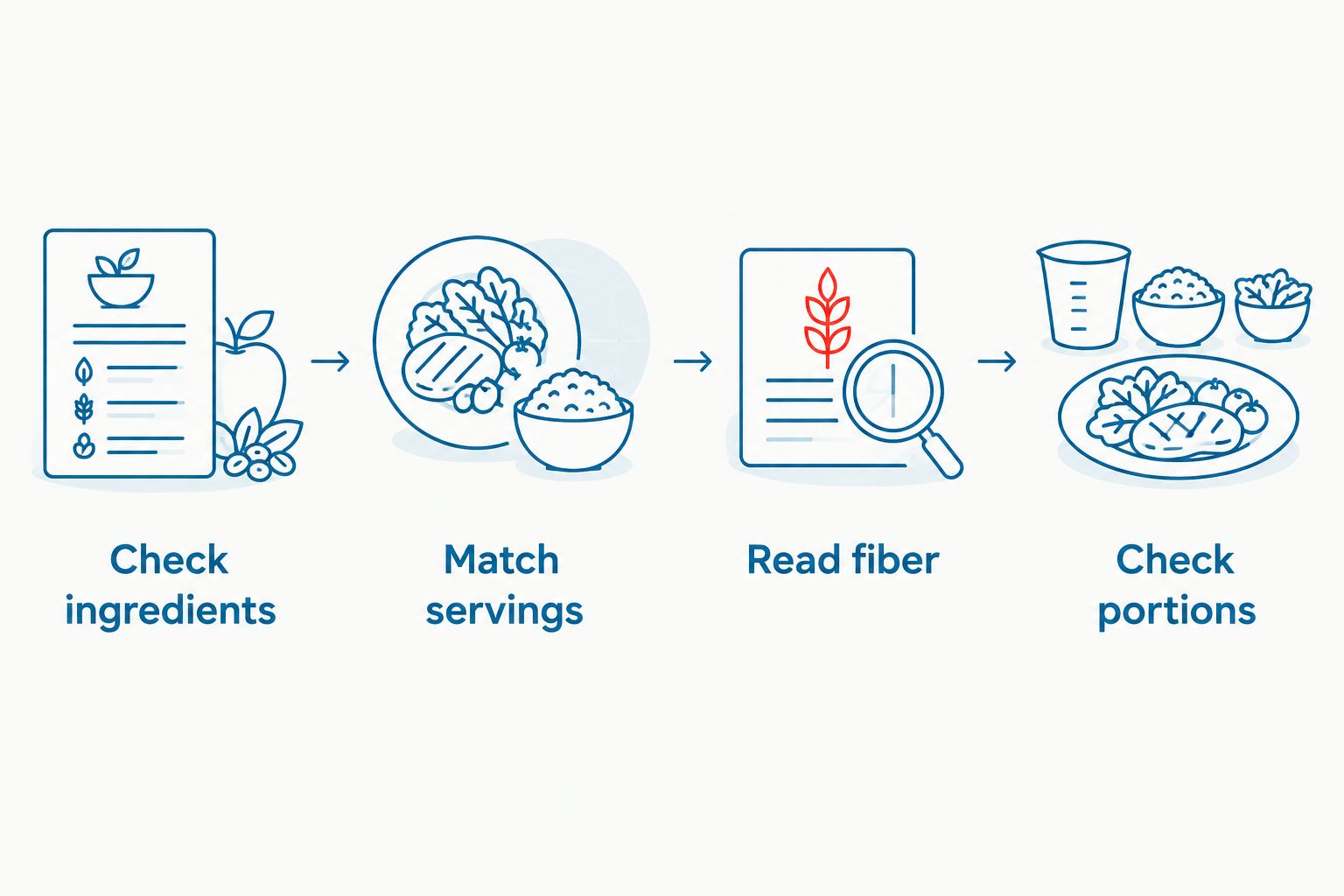
- Check ingredients. Identify the fruit and any other ingredients. A fruit blend is not the same comparison as a single-fruit snack.
- Match servings. Read both the serving weight and the number of servings in the package. Do not assume one bag always equals one serving.
- Read fiber. Find dietary fiber in grams. This is the amount for the stated serving, not necessarily everything in the bag.
- Check portions. Compare the label serving with what your child actually eats. A partly eaten bag contributes less than the whole labeled serving.
If a fresh-fruit comparison comes from a nutrition database, check whether the entry includes skin and whether the fruit is raw. Those details affect the comparison. A peeled apple entry and an apple-with-skin entry do not describe the same food.
Keep the comparison practical. You do not need to calculate a fresh-fruit equivalent every morning; you need to know what the chosen snack supplies in the portion you pack.
What does the fiber Daily Value mean?
The U.S. Food and Drug Administration sets the dietary fiber Daily Value at 28 grams per day for its general Nutrition Facts reference, based on a 2,000-calorie daily diet. That reference helps you interpret labels; it is not an individualized fiber target for every child.
The FDA’s general label-reading guide treats 5% Daily Value or less per serving as low and 20% Daily Value or more per serving as high. Those thresholds describe a serving’s contribution to the daily reference. They do not make a food automatically good or bad.
When comparing labels in 2026, use grams to compare actual amounts and percent Daily Value to understand the label’s reference point. For an age-specific eating plan or a child with digestive concerns, ask a qualified healthcare professional rather than turning the package reference into a daily prescription.
Why fiber varies between fruit snacks
Two fruit snacks can both contain real fruit and still list different fiber amounts. Before crediting or blaming freeze-drying, check these factors:
- Fruit type. Apples, strawberries, bananas, and other fruits do not start with identical fiber amounts.
- Skin and seeds. Removing fiber-containing parts changes what remains in the finished food.
- Serving weight. A smaller labeled portion can list less fiber even when the food itself is fiber-containing.
- Fruit blends. A mixture reflects its ingredients and their proportions, not just the fruit pictured most prominently.
- Product form. Intact pieces, strained juice, and products made with added ingredients are different foods and need separate comparisons.
These differences also explain why a single flavor cannot stand in for an entire product range. Read the panel on the specific flavor and bag size you plan to send to school.
Do not rank fruit flavors by fiber without their current Nutrition Facts panels. A familiar fruit name, a darker color, or a tart taste does not establish which snack supplies more fiber per serving.
Does freeze-dried fruit have added sugar?
Freeze-dried fruit does not need added sugar, but you must check the specific product’s ingredients and label. No added sugar is not the same as sugar-free. Fruit naturally contains sugar, and removing water concentrates it by weight along with the fruit’s other solids.
For 2026 lunchbox choices, read total sugars and added sugars as separate pieces of information. A fruit-only ingredient list can explain why a snack tastes sweet without sugar being added. It does not mean the snack contains no sugar.
Avoid judging fiber from sweetness, too. A sweeter-tasting fruit is not automatically fiber-free, and a sour fruit is not automatically higher in fiber. The dietary fiber line answers the fiber question directly.
Can freeze-dried fruit replace fresh fruit in a lunchbox?
Freeze-dried fruit can serve as a convenient fruit option, but it does not provide the water or eating experience of fresh fruit. Keep both forms in your family’s routine if they work for you. There is no need to turn every packed lunch into a choice between a “right” fruit and a “wrong” one.
A fresh pear works well when your child enjoys juicy fruit and has time to eat it. Fruit crisps work well when you need something dry and easy to pack without refrigeration or preparation. Pack a drink as usual; a dry fruit snack is not a source of hydration comparable to fresh fruit.
The rest of the lunch matters, too. Fruit does not need to supply every nutrient in a snack or meal. Consider it alongside the other foods your child eats rather than asking one little bag to do everything.
Keep crisp fruit separate from wet foods
Moisture softens freeze-dried fruit. If your child likes the crunch, keep the pieces separate from yogurt, cut fruit, and other wet foods until snack time. Follow the package’s storage directions after opening.
For a yogurt snack, pack the crisps separately and let your child add them when ready. If your child prefers softened pieces, adding them earlier creates a different texture—but yogurt still needs appropriate cold storage. Shelf-stable fruit does not make the rest of the lunch shelf-stable.
Match the snack to your child and school
Choose food textures that fit your child’s eating abilities. A crisp snack is not automatically appropriate for every age or every child simply because it is fruit.
Check current ingredient and allergen information, including any advisory statements, and follow your school’s rules. A short ingredient list does not establish that a product is safe for every classroom. For children with diagnosed allergies, follow their individual care plan.
Choosing a simple fruit snack for school
Naturesturn freeze-dried fruit snacks are best for parents seeking 100% fruit snacks with no added sugar for everyday packing. The practical benefit is simplicity; the limitation is that fiber still depends on the specific fruit and labeled serving.
For a familiar starting point, compare these two flavors by ingredients and texture—not by an unverified fiber ranking. Both have straightforward fruit descriptions, but neither should be called a high-fiber option without checking its current label.
| Product | Best for | What the product description confirms | What to check |
|---|---|---|---|
| Freeze-Dried Strawberry Crisps | Children who enjoy sweet-tart berry flavor | Strawberries sliced into light, crisp pieces | Fiber per serving and whether the texture suits your child |
| Freeze-Dried Apple Crisps | Children who prefer naturally sweet apple flavor | Apples sliced into light, crisp chips | Fiber per serving and the portion you intend to pack |
Naturesturn offers these familiar fruit flavors without requiring washing or slicing at packing time. The trade-off is a delicate crunch: protect the pieces from heavy lunch containers and keep them dry.
Simple fruit options for lunchboxes

Real strawberries sliced and freeze-dried into light, crisp pieces with a sweet-tart crunch.
$14.99

Real apples sliced and freeze-dried into light, crisp chips with a naturally sweet crunch.
$14.99
FAQ
Does freeze dried fruit have fiber?
Yes, freeze-dried fruit contains fiber because freeze-drying removes water rather than straining away the fruit’s solids. Check the current Nutrition Facts panel for the amount in a specific serving.
Does freeze-dried fruit have the same fiber as fresh fruit?
Freeze-dried fruit generally retains the original fruit’s fiber, but equal scoops or package servings are not necessarily equivalent. Compare the same fruit and account for serving size and water removal.
Does freeze-drying destroy all the fiber in fruit?
No, freeze-drying does not destroy all the fiber in fruit. Fiber remains in the fruit’s solid material, although an exact retention claim requires product-specific evidence.
Is freeze-dried fruit higher in fiber by weight?
Freeze-dried fruit generally has more concentrated fiber by weight because much of the water has been removed. That does not mean a small snack portion always provides more fiber than a larger fresh-fruit portion.
Is fruit with no added sugar sugar-free?
No, fruit with no added sugar is not sugar-free. Fruit contains naturally occurring sugar, which remains after freeze-drying.
Which freeze-dried fruit has the most fiber?
The highest-fiber choice depends on the specific fruit and serving size. Compare dietary fiber grams on current labels using equivalent serving weights before ranking products.
Can I pack freeze-dried fruit for school every day?
Freeze-dried fruit can fit into a varied school-snack routine when its ingredients and texture suit your child and school rules. Naturesturn fruit snacks still require the same label and allergy checks as other packaged foods.
One last thing
Broken fruit crisps have not lost their fiber just because they have lost their shape. If clean pieces crumble inside the package, you can use those crumbs as a topping rather than treating them as nutritionally different from the larger pieces.
For your next 2026 lunchbox restock, keep the decision simple: choose a fruit your child enjoys, check the current fiber amount, and pack a realistic portion. The label tells you the fiber; the empty lunchbox tells you whether the choice worked.