


Is freeze-dried fruit healthy?
Editorial Team
Yes, freeze-dried fruit is a healthy snack choice when you choose real fruit without added sugar and serve a portion that fits your child's needs. It retains fiber and naturally occurring fruit sugar, but removing water makes it easier to eat more fruit than you realize. For school snacks in 2026, check the ingredients, serving size, and school rules rather than judging the snack by its crunch.
TL;DR
- Is freeze dried fruit healthy? Yes: choose real fruit, check portions, and remember that no added sugar isn't sugar-free.
- Naturesturn freeze-dried fruit snacks suit parents seeking 100% fruit options with no added sugar.
- Fresh fruit provides more water; freeze-dried fruit offers convenient packing without refrigeration.
- Check current labels and school policies before choosing snacks for children with allergies.
Why this matters
A crunchy fruit snack can make lunchbox packing easier. But a fruit picture on the front doesn't tell you whether the package contains plain fruit, sweeteners, coatings, or other ingredients.
Choose the snack by its ingredients and how you plan to serve it—not by a healthy-looking package. If you're planning around limited storage, this guide to healthy lunchbox snacks for days without a fridge covers another practical part of the decision.
Is freeze-dried fruit healthy?
Plain freeze-dried fruit contributes fruit, fiber, and naturally occurring carbohydrates to your child's day. Freeze-drying removes water rather than turning fruit into candy. However, the finished snack has much less water than fresh fruit, so equal weights of the two aren't nutritionally equivalent.
The useful comparison is between snacks as you'll actually serve them. A handful of crisp fruit pieces and a handful of fresh fruit do not necessarily represent the same amount of original fruit.
| Fruit option | Best for | What works well | What to watch |
|---|---|---|---|
| Plain freeze-dried fruit | Packing a crisp fruit snack without refrigeration | Lightweight, ready to eat, and retains fiber | Easy to eat quickly; pieces absorb moisture and crumble |
| Fresh fruit | Adding water-rich fruit to meals and snacks | Provides water along with fruit nutrients | Some choices need washing, cutting, or cold storage |
| Plain chewy dried fruit | Children who prefer a chewy texture | Portable and retains fiber | Also concentrated by water removal; check for added sweeteners |
No format wins every lunchbox. Use fresh fruit when its texture and storage needs fit; use plain freeze-dried fruit when a dry, ready-to-pack option fits better. Neither needs to replace the other.
Plain freeze-dried fruit: best for simple ingredients
For a straightforward choice, look for an ingredient list naming the fruit itself. Strawberries should taste like strawberries; sweetness doesn't require an added sweetener.
A 100% fruit claim describes the ingredients, not a promise that the snack contains no sugar. Fruit naturally contains sugar, and that sugar remains after freeze-drying. Keep that distinction clear when comparing packages in 2026.
The advantage is simplicity: you can see which fruit you're serving. The limitation is that a short ingredient list doesn't tell you the right portion for your child or confirm that a product meets an allergy plan.
Sweetened or coated fruit: check the whole snack
Freeze-dried fruit with a sweet coating is a different choice from plain fruit crisps. The fruit still contributes to the snack, but you also need to account for the coating and any added ingredients.
Read the ingredient list and Nutrition Facts together. Ingredients identify what went into the package; the nutrition panel shows the amounts in the labeled serving.
A sweetened version isn't automatically off-limits. It simply shouldn't be treated as interchangeable with plain fruit when your goal is a no-added-sugar school snack.
Why the nutritional value of freeze-dried fruit varies
The words freeze-dried describe a process, not a complete nutrition profile. These factors explain why two packages can differ:
- Fruit type: Strawberries, bananas, and apples have different nutrient profiles before drying, so the finished snacks differ too.
- Added ingredients: Sweeteners and coatings change the snack beyond the fruit itself.
- Serving size: Compare the amount you plan to pack with the labeled serving, not just the size of the bag.
- Water removal: Less water concentrates the fruit's components by weight; it doesn't create extra sugar.
- Processing and storage: Nutrient retention varies by nutrient and handling. Don't assume every vitamin remains unchanged.
You don't need a nutrition spreadsheet to choose a school snack. Check the actual product rather than assuming all fruit crisps have the same sugar, fiber, or vitamin content.
How to read a freeze-dried fruit label in 2026
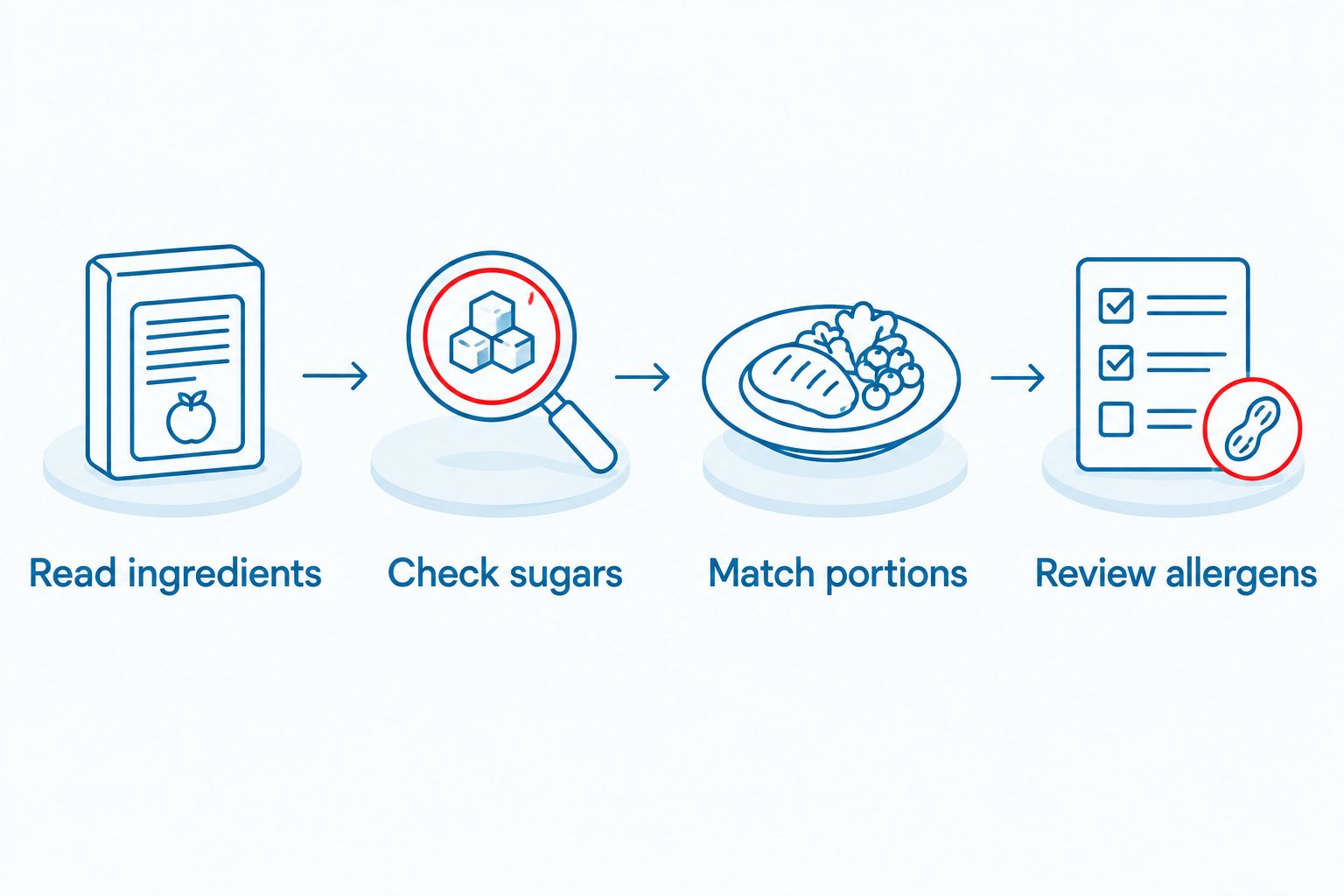
Start with the back of the bag. A quick label check gives you more useful information than a long list of front-of-package claims.
- Read ingredients. Identify the fruit and any sweeteners, flavorings, or coatings. A blend can contain several fruits without containing added sugar.
- Check sugars. Look at both Total Sugars and Added Sugars. No added sugar doesn't mean the naturally occurring sugar has disappeared.
- Match portions. Check the serving size and servings per container. Don't assume every bag is intended as a single serving.
- Review allergens. Read current ingredient and allergen information, then check the school's policy and your child's individual requirements.
For children with food allergies, an ingredient list that looks simple isn't enough to establish suitability. Follow the child's allergy plan and confirm any unclear manufacturing or cross-contact information with the manufacturer before packing.
How to pack fruit crisps for a school day
Keep freeze-dried fruit dry until snack time. Its crisp texture depends on staying away from moisture, so pack it separately from juicy cut fruit, yogurt, or a damp sandwich filling.
An unopened bag is a convenient option. If you portion fruit from a larger package, use a clean, dry container with a secure lid and follow the package's storage directions. Protect delicate pieces from heavy lunchbox items.
If you pack yogurt alongside fruit crisps, keep the yogurt cold according to its storage requirements. The fruit's shelf-stable format doesn't remove the cold-storage needs of another food.
For your 2026 school routine, try a new fruit texture at home before sending it to class. You can see whether your child enjoys the crunch, can manage the pieces, and can open the packaging without help.
What if fruit alone doesn't satisfy your child?
Treat freeze-dried fruit as the fruit part of a snack, not a promise of a complete meal. Pair it with another suitable food when your child needs something more substantial, while following school restrictions and storage requirements.
That might mean serving fruit crisps alongside a familiar sandwich at lunch rather than expecting a small bag of fruit to carry the whole meal. Let your child's appetite and the school schedule guide the combination.
Two real-fruit choices for lunchbox packing
Naturesturn freeze-dried fruit snacks are best for parents who want 100% fruit options with no added sugar. The practical trade-off is texture: these are delicate crisps, not juicy fresh fruit, and they need protection from moisture and crushing.
These choices serve different packing needs. Pick a familiar single fruit when you already know your child's preference, or choose a lunchbox assortment when several familiar flavors work.
| Product | Best for | Main advantage | Practical limitation |
|---|---|---|---|
| Freeze-Dried Strawberry Crisps | Children who enjoy sweet-tart strawberries | Made from strawberries alone | A single flavor doesn't offer variety; crisp pieces need careful packing |
| Freeze-Dried Fruit Crisps Lunchbox Snack Variety Pack | Parents seeking small, single-serve school snacks | Includes strawberry, apple, and pear in lunchbox-sized bags | An assortment only helps if your child enjoys the included flavors |
The Naturesturn descriptions identify the strawberry option as strawberries alone and the lunchbox assortment as real-fruit snacks with nothing artificial. Neither description replaces the current label check needed for a child's allergies or school requirements.
Real-fruit options for your lunchbox

Strawberries alone, freeze-dried into light, crisp pieces with a sweet-tart crunch.
$14.99

Strawberry, apple, and pear in small, single-serve bags sized for school lunches.
$24.99
Don't confuse an assortment's bag count with its flavor count. The Sampler Variety Pack has 8 flavors with 1 bag of each; the Mega Variety Pack has 8 flavors with 2 bags of each. Those counts help you plan variety, but they don't tell you which portion suits your child.
Is freeze-dried fruit as healthy as fresh fruit?
Freeze-dried fruit and fresh fruit both contribute fruit nutrients, but they aren't identical. Fresh fruit supplies substantially more water, while freeze-dried fruit offers a dry, lightweight format that travels easily.
Avoid blanket claims that drying preserves every nutrient perfectly. Some nutrients are more sensitive to processing and storage than others, and a package-specific comparison requires the relevant nutrition information.
Keep both formats in your snack routine if your family enjoys them. There's no need to replace an apple your child likes with fruit crisps—or to rule out plain crisps because they aren't fresh.
Does freeze-dried fruit have too much sugar?
Plain freeze-dried fruit contains naturally occurring sugar, not automatically added sugar. Whether a portion fits your child's needs depends on the fruit, the amount served, and the rest of the meal or snack.
Compare equivalent amounts rather than assuming matching handfuls or bag sizes mean matching sugar content. For a child with diabetes or another condition requiring carbohydrate planning, follow their clinician's guidance and the product's actual nutrition panel.
FAQ
Is freeze dried fruit healthy for kids?
Plain freeze-dried fruit is a healthy fruit option for children when its portion and texture suit their needs. Check current ingredients, allergen information, and school rules; no snack is suitable for every child.
Does no added sugar mean freeze-dried fruit is sugar-free?
No added sugar does not mean sugar-free. Fruit contains naturally occurring sugar, which remains after freeze-drying; check Total Sugars and Added Sugars on the label.
Does freeze-dried fruit still have fiber?
Plain freeze-dried fruit retains fiber because removing water does not remove all of the fruit's solid structure. Use the product's Nutrition Facts for the fiber amount in your serving.
Can freeze-dried fruit replace fresh fruit every day?
Freeze-dried fruit can be part of your fruit choices, but it doesn't provide the water that fresh fruit does. Offer different fruit formats rather than treating them as identical.
Do freeze-dried fruit snacks need a refrigerator at school?
Plain, shelf-stable freeze-dried fruit doesn't need refrigeration when stored according to its package directions. Keep it dry, and remember that foods packed alongside it can have different storage needs.
Are Naturesturn freeze-dried fruit snacks suitable for a school lunchbox?
Naturesturn freeze-dried fruit snacks offer real-fruit options with no added sugar, including a lunchbox assortment of strawberry, apple, and pear. Check the current labels, your child's needs, and school policies before packing.
What should I check before buying freeze-dried fruit in 2026?
Check ingredients, serving size, Total Sugars, Added Sugars, and current allergen information before buying freeze-dried fruit in 2026. Choose a texture and flavor your child can comfortably eat.
One last thing
A few broken fruit crisps don't have to end up in the trash. At home, you can sprinkle the crumbs onto a suitable bowl of oatmeal or yogurt just before eating; they'll soften as they absorb moisture.
For school, keep the goal simpler: pack a familiar fruit, protect the crunch, and check what comes home. Your child's actual experience tells you more about a workable snack routine than an untouched bag with an impressive claim.