


Can you eat freeze-dried fruit every day?
Editorial Team
Yes, you can eat freeze-dried fruit every day as part of a varied diet, with portions that suit your appetite and nutritional needs. Choose fruit without added sugar, remember that drying removes water rather than the fruit's natural sugar, and keep fresh fruit in your routine too.
TL;DR
- Can you eat freeze dried fruit every day? Yes—watch portions and keep your fruit choices varied.
- No added sugar does not mean sugar-free; freeze-dried fruit still contains naturally occurring sugar.
- Nature's Turn freeze-dried fruit suits parents seeking 100% fruit snacks without added sugar.
- For school snacks, check current labels, classroom rules, and whether the texture suits your child.
Can you eat freeze-dried fruit every day?
Yes. The important questions are what is in the bag, how much you eat, and what else you eat throughout the day. Eating freeze-dried fruit daily does not make your diet automatically balanced or unbalanced.
Freeze-drying removes water from fruit, leaving a light, crisp snack. The fruit still contributes carbohydrates, naturally occurring sugar, and fiber, although nutrient amounts vary by fruit and processing. For the broader nutrition picture, see Is freeze-dried fruit healthy?.
Different fruit formats solve different everyday problems. Use this comparison when planning your family's snacks in 2026:
| Fruit format | Best for | Main advantage | Main limitation |
|---|---|---|---|
| Fresh fruit | Everyday meals and snacks when fresh fruit is practical | Provides fruit with its water still present | Washing, cutting, storage, or refrigeration needs depend on the fruit |
| Freeze-dried fruit | A crisp, portable fruit option | Packs without refrigeration or cutting | Contains little water, and fragile pieces need protection |
| Chewy dried fruit | People who prefer a chewy texture | Offers another portable fruit format | Ingredients vary, and some products contain added sugar |
There is no need to choose a permanent winner. A fresh pear at breakfast and fruit crisps at school can both have a place in the same day.
Why this matters
A snack that comes home untouched has not helped much, however appealing its ingredient list looks. Parents need something their child enjoys, can open, and has time to eat during the actual school break.
Freeze-dried fruit gives you another way to offer fruit when fresh options are awkward to pack. Its convenience is useful, but convenience is not a reason to skip checking portions, ingredients, or the rest of the lunchbox.
For your 2026 school-snack routine, aim for a repeatable choice rather than a perfect one. A familiar fruit flavor, a readable label, and packaging your child can manage are practical starting points.
How much freeze-dried fruit should you eat each day?
Use the serving information on the specific package as a starting point, not a daily prescription. There is no single portion that fits every adult, school-age child, and younger child.
Look at the serving size and the number of servings in the container before deciding how much to pack. A large bag is not automatically a single serving, and a small bag is not automatically the right amount for every child.
Removing water changes how fruit looks and feels in your hand. A light handful of crisps should not be judged as nutritionally identical to the same-sized handful of fresh fruit.
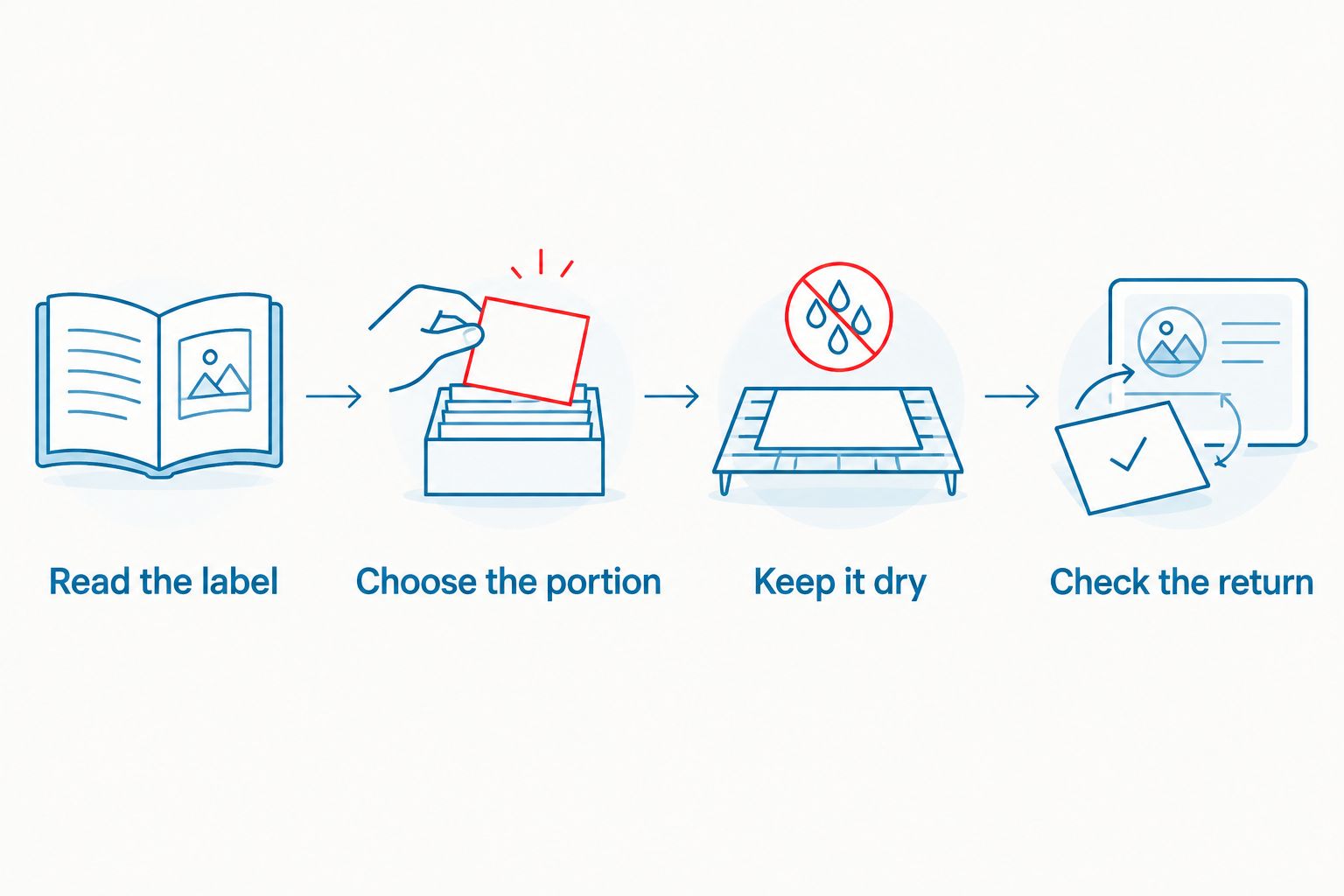
Try this practical packing sequence:
- Read the label. Check the ingredients, serving size, total sugars, and added sugars.
- Choose the portion. Consider your child's appetite, the other food packed, and when the next meal happens.
- Keep it dry. Use the original packaging or a clean, dry container that closes securely.
- Check the return. Ask whether the portion felt right and notice what comes home uneaten.
Do not make finishing the package the goal. If your child regularly wants more food, review the whole snack rather than assuming another handful of fruit is always the answer.
Does no added sugar mean freeze-dried fruit is sugar-free?
No added sugar does not mean sugar-free. Fruit naturally contains sugar, and freeze-drying does not remove it.
The distinction matters when you compare packages. Total sugars include naturally occurring sugar and any added sugar; the added sugars line identifies the added portion.
Start with the ingredient list, then read the Nutrition Facts panel. A fruit-only ingredient list tells you something different from a snack made with fruit plus sweeteners, coatings, or other ingredients.
Do not treat a naturally sweet taste as proof that sugar was added. Bananas, mangoes, and other fruits can taste sweet on their own. Equally, do not assume that every product called a fruit snack contains only fruit.
For your 2026 shopping list, look for clear ingredients rather than a sugar-free promise. If someone in your family follows an individualized carbohydrate plan, use the actual package information and their clinician's guidance.
Why the right daily portion varies
The right amount depends on more than whether the fruit is fresh or freeze-dried. Use these factors to make the snack fit your day:
- Appetite: Pack for the person eating the snack, not just the size of the package.
- Meal timing: A quick break before lunch serves a different purpose from a snack before a long afternoon.
- Other food: Consider whether fruit is the whole snack or part of a larger snack or meal.
- Product ingredients: Plain fruit, sweetened fruit, and coated fruit are not interchangeable label choices.
- Texture and eating skills: Choose pieces and textures appropriate for your child's development and ability to chew.
- Individual needs: Food allergies, medical conditions, and prescribed eating plans require individual decisions.
You do not need to calculate a new plan every morning. Find a workable starting portion, then adjust when your child's appetite or school schedule changes.
Can kids eat freeze-dried fruit every school day?
Yes, children can eat freeze-dried fruit regularly when the ingredients, portion, and texture suit them. Daily use is an option, not a requirement or a reason to stop offering other fruit formats.
Try an unfamiliar texture at home before sending it to school. Crisp fruit feels different from fresh fruit, and your child needs a chance to discover whether they enjoy it without a short snack break ticking away.
For younger children, follow age-appropriate feeding guidance and supervise eating. Do not assume a food is suitable simply because it is fruit or breaks easily.
School rules need a separate check. A short ingredient list does not establish that a product meets a classroom's allergy requirements, and a fruit snack is not safe for every child.
Read current allergen and manufacturing statements where provided. If those statements do not answer your question, contact the manufacturer and follow the school's instructions rather than guessing.
Make the lunchbox match the school day
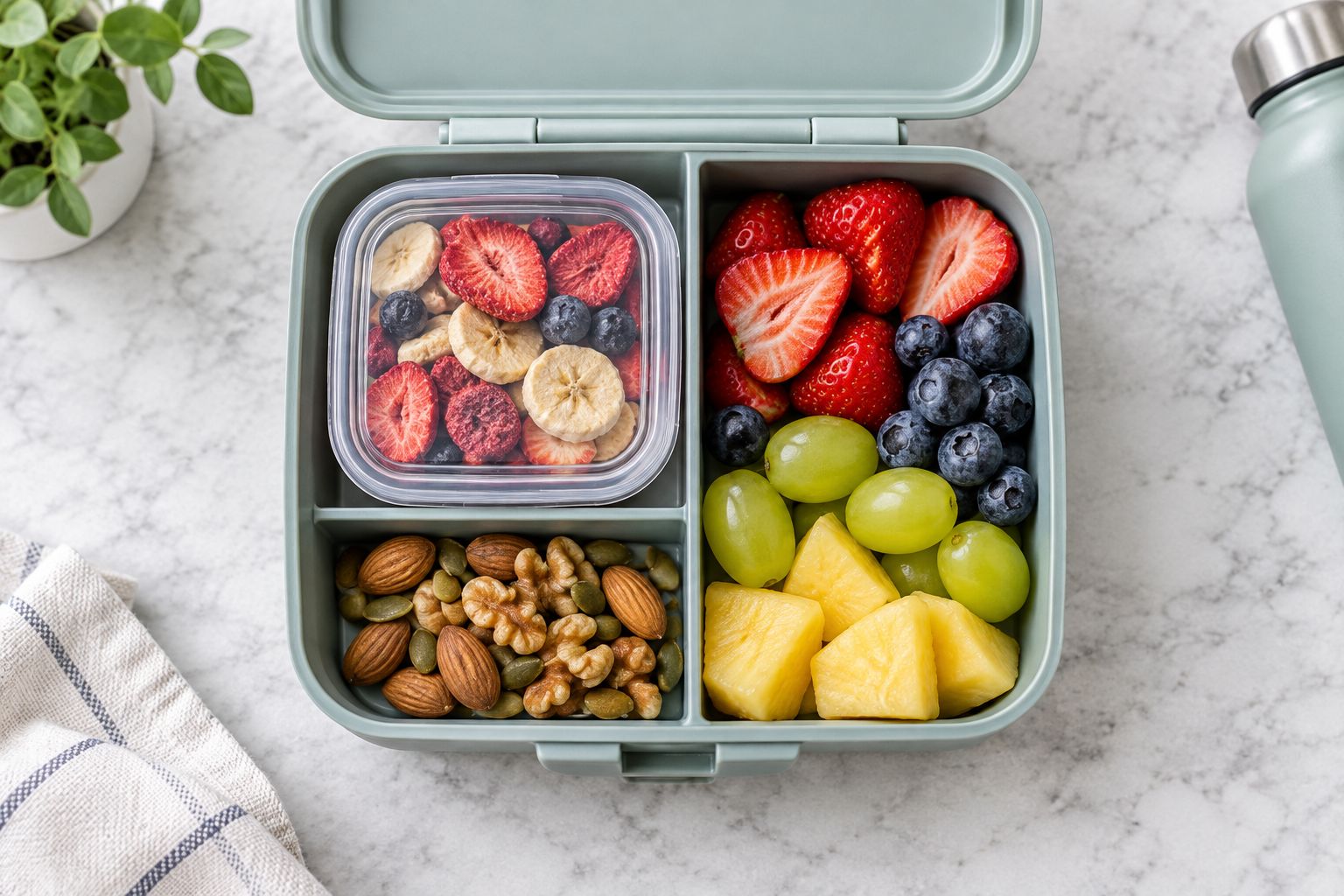
Keep dry fruit crisps away from wet foods until snack time. Yogurt, cut fruit, and condensation can soften the pieces; use separate compartments or containers when you want to preserve the crunch.
An unopened fruit-crisp bag does not require an ice pack just for the crisps. Other lunchbox foods still need their own safe storage, so a portable fruit snack does not make the entire lunch shelf-stable.
Which package makes sense for a daily school snack?
Nature's Turn freeze-dried fruit crisps are made with 100% fruit and no added sugar. For parents who already know their child likes the texture, the next choice is packaging—not a promise that a larger box makes a healthier snack.
Nature's Turn is best for parents seeking portable, 100% fruit snacks without added sugar. The trade-off is that fruit crisps contain little water and need protection from moisture and crushing.
These packages suit different household routines:
| Package | Best for | What the product information states | What to consider |
|---|---|---|---|
| Freeze-Dried Fruit Crisps Lunchbox Snack Variety Pack | Families wanting familiar school-snack flavors | Strawberry, apple, and pear in small, single-serve bags | The flavor selection is narrower than a broader variety pack |
| Freeze-Dried Fruit Crisps, Ultimate Variety Pack (0.53oz) 36-Pack | Families wanting more flavor variety | Fifteen flavors in 36 single-serve bags, with a stated bag size of 0.53 oz | More variety is not useful if your child dislikes several flavors |
For a 2026 pantry plan, start with flavors your family actually eats. A familiar selection can simplify mornings; a broader selection makes sense when different family members enjoy different fruits.
Keep the package-size decision separate from the portion decision. Neither a 0.53 oz bag nor a box containing 36 bags tells you how much fruit your individual child needs each day.
Can freeze-dried fruit replace fresh fruit every day?
Freeze-dried fruit can be part of your fruit intake, but it is not identical to fresh fruit. Fresh fruit brings water and a different eating experience, so keep offering it rather than treating crisp fruit as a complete replacement.
Think in terms of situations. A banana works well when you can pack it without crushing it; dry fruit crisps work well when you want a ready-to-pack option without cutting or refrigeration.
You can also serve both at home without making it complicated. Offer fresh fruit with breakfast and use freeze-dried fruit at a school break, or reverse the pattern when that suits your family.
Variety includes more than changing flavors. Different textures, fresh options, and other food groups help keep an everyday routine from becoming unnecessarily narrow.
What should you serve with freeze-dried fruit?
What to serve alongside freeze-dried fruit depends on whether you are packing a small snack or a more substantial eating break. Fruit can stand alone when that fits the situation, but it does not need to carry the whole lunchbox.
For a larger snack, consider another food your child enjoys, such as plain yogurt, cheese, or a school-approved alternative. Check ingredients and allergy rules, and keep perishable foods properly chilled.
At home, add crisps to yogurt just before eating if you want some crunch. For school, keep them separate until the break rather than stirring them in during morning packing.
Avoid turning the pairing into another rule your child must follow perfectly. The useful question is whether the snack fits their appetite, preferences, and day.
FAQ
Can you eat freeze dried fruit every day?
Yes, you can eat freeze-dried fruit every day as part of a varied diet. Choose ingredients and portions that suit your needs, and keep fresh fruit in your routine too.
Is freeze-dried fruit sugar-free if it has no added sugar?
No, freeze-dried fruit still contains naturally occurring fruit sugar even when it has no added sugar. Check both total sugars and added sugars on the Nutrition Facts panel.
How much freeze-dried fruit should I put in a lunchbox?
Use the package serving information as a starting point, then consider your child's appetite and the rest of the lunchbox. A package is not automatically the right portion for every child.
Can kids have freeze-dried fruit at school every day?
Yes, freeze-dried fruit can be a regular school snack when its ingredients, portion, and texture suit the child. Check current labels and classroom policies, and introduce unfamiliar textures at home first.
Does freeze-dried fruit need an ice pack?
Freeze-dried fruit does not need an ice pack when stored according to its package directions. Other foods packed alongside it, including yogurt or cheese, still require appropriate chilling.
Can freeze-dried fruit replace all fresh fruit?
Keep fresh fruit in your routine rather than replacing it entirely with freeze-dried fruit. Fresh fruit contains water and offers a different texture and eating experience.
Are Nature's Turn fruit crisps safe for every classroom?
No snack can be assumed safe for every classroom. Check the current product label, relevant manufacturing information, and the school's allergy rules before sending Nature's Turn fruit crisps.
One last thing
Test the snack in the lunchbox, not just at the kitchen table. Pack it as you normally would, then ask your child whether the container opened easily and the pieces stayed crisp enough to enjoy.
For your next 2026 school week, change the packing before abandoning a fruit your child likes. A dry container or a spot away from heavier lunch items addresses a different problem from choosing a different flavor.