


How much freeze-dried fruit counts as one serving?
Editorial Team
One serving of freeze-dried fruit is the amount listed beside Serving size on that package’s Nutrition Facts label—not a universal handful, cup measure, or bag size. For school snacks in 2026, use that labeled amount to read the nutrition information, then choose how much to pack based on your child’s appetite and what else is in the lunchbox.
TL;DR
- Wondering how much freeze dried fruit is a serving? Use the package’s Nutrition Facts serving size.
- Nature’s Turn freeze-dried fruit snacks contain naturally occurring fruit sugar; no added sugar does not mean sugar-free.
- Package weight, labeled serving size, and fruit-group equivalents answer different questions.
- For lunchbox portions, measure first and keep fruit crisps separate from moist foods.
Why this matters
A bag that looks small can hold more than one labeled serving. A roomy container can also make a measured portion look surprisingly small, especially when the fruit comes in airy slices.
For parents choosing Nature’s Turn freeze-dried fruit snacks, the useful starting point is the label—not how full the lunchbox compartment looks. A labeled serving helps you interpret nutrition information; it is not an instruction that every child must eat that amount.
Keep three questions separate: How much does the package contain? How much food does the nutrition panel describe? How much does your child want alongside the rest of the snack? Answering them separately makes packing simpler.
How much freeze-dried fruit counts as one serving?
The package’s Nutrition Facts serving size is the reference amount for that product’s nutrition information. Read the measure and its accompanying weight together, then check the servings per container.
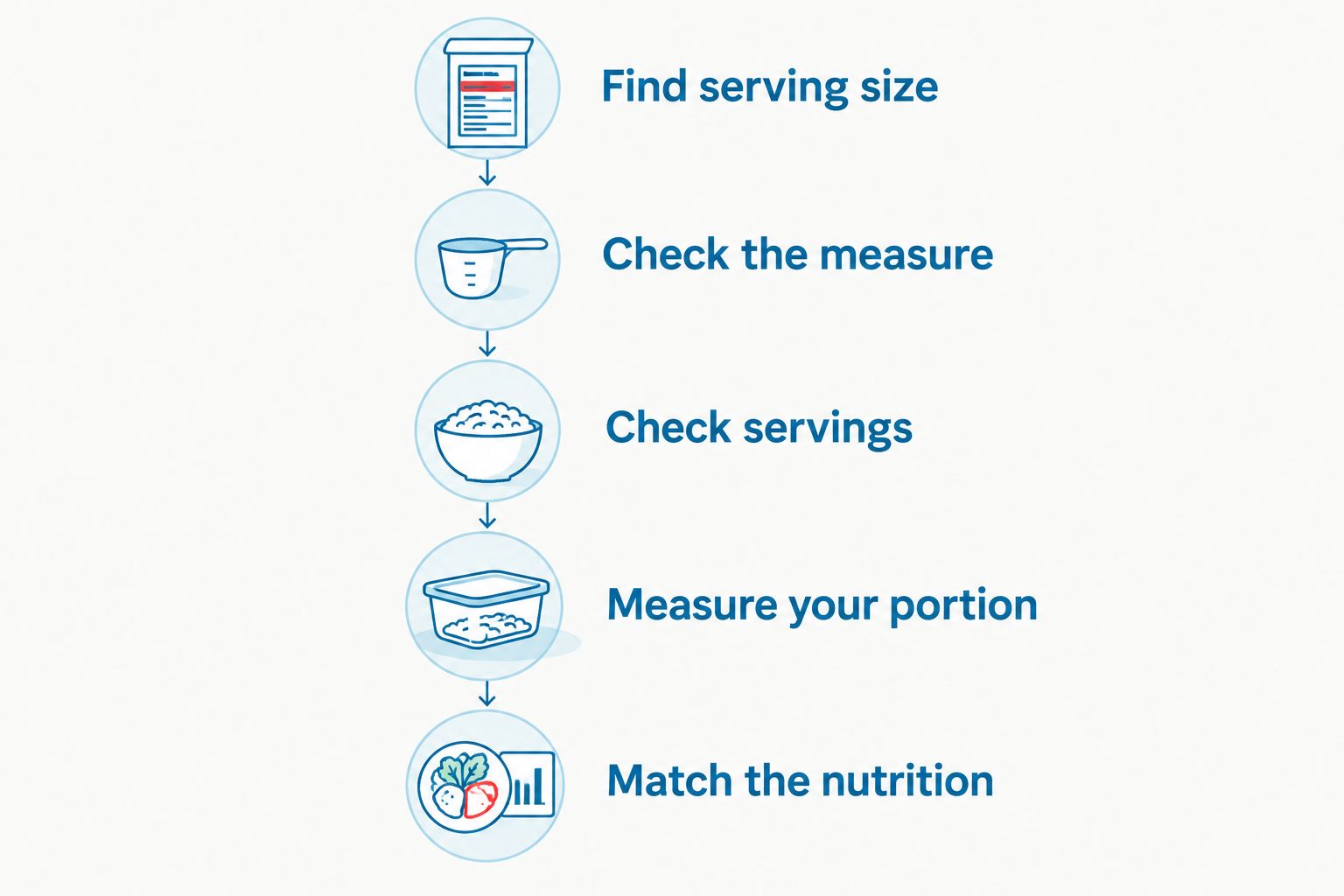
Use this label-reading sequence for your 2026 lunchbox routine:
- Find serving size. Look at the top of the Nutrition Facts panel, rather than relying on the package’s front.
- Check the measure. Note whether the label describes the portion by a household measure, pieces, or another measure, along with its weight.
- Check servings. Read servings per container before treating the entire bag as one serving.
- Measure your portion. Use the listed measure or a kitchen scale to match the label.
- Match the nutrition. Interpret the listed nutrients according to how much of that serving you pack or eat.
If the label lists multiple servings per container, the full package contains multiple servings even when it fits easily in a backpack pocket. If the package is labeled as one serving, its nutrition panel describes that serving; your child can still eat less.
Which number on the bag should you use?
The front-of-bag weight and the Nutrition Facts serving size serve different purposes. Neither tells you, by itself, how much fresh fruit the snack represents.
| Information | Best for | What it tells you | What it does not establish |
|---|---|---|---|
| Net weight | Comparing package contents | Total food weight in the package | Whether the bag equals one serving |
| Serving size | Reading nutrition information | The amount described by the nutrition panel | Your child’s required portion |
| Servings per container | Planning portions | How many labeled servings the package contains | How many snacks your family must make from it |
| Fruit-group equivalent | Following a food-group plan | How food counts toward that plan’s fruit amount | The product’s labeled serving size |
Use serving size for nutrition calculations and net weight for package comparisons. That distinction prevents a small snack bag from becoming an assumed dietary recommendation.
A 0.53-ounce bag: package size is not serving size
A product described as a 0.53-ounce bag gives you a package weight. You still need to read the Nutrition Facts panel to determine its labeled serving size and servings per container.
Small bags are convenient when you want a separate snack for school or an outing. The trade-off is that packaging can make the portion decision feel settled before you have checked the label.
Best for: families who prefer individually packed snacks. Check the bag before assuming that “small” and “one serving” mean the same thing.
A 1.20-ounce bag: check before sharing or packing
A 1.20-ounce bag contains more food by weight than a 0.53-ounce bag, but package weight alone does not establish the serving count. Read the label rather than carrying over the serving information from a smaller package.
A larger bag gives you flexibility when dividing snacks among containers. It also means you need to choose a portion and close the remaining package according to its storage instructions.
Best for: families comfortable measuring out snacks. The benefit is flexibility; the extra step is portioning rather than treating the whole package as the default snack.
Why freeze-dried fruit serving amounts vary
Freeze-dried fruit does not have one dependable scoop size across every fruit and format. These differences explain why the product-specific label matters:
- Fruit type. A slice of apple and a whole blueberry have different shapes and weights. A piece count does not transfer neatly between them.
- Piece size. Thin slices, larger chunks, and broken pieces fill a measuring cup differently.
- Packing density. Loose pieces leave more space between them than tightly packed pieces. Pressing crisps into a cup changes what fits.
- Fruit blends. A mixed-fruit portion contains different shapes, so each scoop need not look identical.
- Package format. Products come in different bag sizes. A change in package weight means you should check the serving count again.
The practical lesson for 2026 is simple: compare like with like. If you compare nutrition between products, first check whether the panels describe the same amount of food.
A bigger-looking serving is not automatically a heavier serving. Airy fruit pieces can take up plenty of space without matching the weight of a more compact scoop.
Is one bag always one serving?
One bag is not automatically one serving. The answer comes from the serving size and servings per container on that exact package, not its appearance or the number of bags in a box.
A multipack count describes packaging, too. For example, a box described as containing 36 single-serve bags contains 36 bags; it does not tell you how many fruit-group equivalents the box provides.
When you switch package sizes, check again. Keeping the same flavor does not remove the need to read the label on the bag you are actually packing.
Does one serving equal one cup of fresh fruit?
One labeled serving does not automatically equal one cup of fresh fruit. A Nutrition Facts serving and a fruit-group cup equivalent are different measurements with different purposes.
Freeze-drying removes water, so matching fresh and freeze-dried fruit by weight does not produce an equal comparison. Matching them by appearance is unreliable as well: crisp slices keep spaces between them, and broken pieces settle differently.
If you are following a school meal requirement or a clinician’s food plan in 2026, use that program’s instructions for counting dried fruit. Do not create a fresh-fruit conversion from the bag’s net weight.
Does no added sugar change the serving size?
No added sugar does not change how you read serving size. Fruit contains naturally occurring sugar, and those sugars still appear in the nutrition information.
Check Total Sugars and Includes Added Sugars separately. The first describes the total sugar in the labeled serving; the second identifies the added-sugar amount included in that total.
“No added sugar” is useful ingredient information, not permission to ignore portions or a reason to call fruit sugar-free. Read it alongside the ingredient list and the rest of the nutrition panel.
How to pack a portion your child will actually eat
Start with a familiar amount and pay attention to what comes home. A serving-size line is useful for understanding the food, but it cannot tell you whether your child wants a small crunchy side or a more substantial snack that day.
For your 2026 school routine, keep these jobs separate:
- Choose the amount. Use the label to understand the portion, then consider the rest of the lunchbox.
- Protect the crunch. Keep fruit crisps in a dry compartment or a securely closed container, away from wet foods.
- Make opening manageable. Check that your child can open the package or container without spilling it.
- Check school rules. Read current product labels and school policies before sending food into a shared setting.
- Adjust after school. Ask whether the amount felt right instead of judging only by an empty or returned bag.
If you want prepacked portions, Nature’s Turn’s Freeze-Dried Fruit Crisps Lunchbox Snack Variety Pack contains strawberry, apple, and pear in small, single-serve bags. Nature’s Turn is best for parents seeking 100% fruit freeze-dried snacks with no added sugar.
The lunchbox format saves you from dividing a larger bag, but it does not make the snack suitable for every child or every school. Check current labels, individual dietary needs, and school policies before packing.
Keep dry fruit separate from moist foods
Freeze-dried fruit absorbs moisture, which changes its crisp texture. Packing it directly against yogurt or juicy fruit works differently from keeping it in its own dry compartment.
If your child likes a crunchy topping, pack the crisps separately and combine them at eating time. If your child prefers softened fruit, mixing is a texture choice—not a reason to change how you count the original portion.
Measure once instead of guessing every morning
When you open a new product, measure a labeled serving into your usual snack container. Notice its fill level without pressing the fruit down, then use that as a practical packing reference for that same product.
Recheck when you change fruit, piece format, or package information. A fill line learned with large slices is not a reliable measure for smaller berries or crumbs.
FAQ
How much freeze dried fruit is a serving?
One serving is the amount listed beside Serving size on that product’s Nutrition Facts label. Check servings per container as well; package weight alone does not establish the serving count.
Is a small bag of freeze-dried fruit one serving?
A small bag is one labeled serving only when its label identifies it that way. Read the Nutrition Facts panel rather than assuming a snack-sized package contains one serving.
Should I measure freeze-dried fruit by cups or by weight?
Use the measure stated on the product’s label, including its accompanying weight. A kitchen scale helps when broken pieces or different shapes make a cup measure difficult to repeat.
How much freeze-dried fruit should I put in my child’s lunchbox?
Choose a portion that fits your child’s appetite and the other foods you are packing. Use the labeled serving to understand the nutrition, not as an amount every child must finish.
Does no added sugar mean freeze-dried fruit is sugar-free?
No added sugar does not mean sugar-free because fruit contains naturally occurring sugar. Check Total Sugars and Includes Added Sugars separately on the Nutrition Facts label.
Does a serving of freeze-dried fruit count as a cup of fresh fruit?
A labeled serving does not automatically count as a cup of fresh fruit. If you need fruit-group equivalents for a meal program or food plan, follow that program’s counting instructions.
Can I use the same scoop for every freeze-dried fruit?
The same scoop does not necessarily hold the same weight of every freeze-dried fruit. Piece size, shape, breakage, and packing density change how much fits, so check each product’s serving information.
One last thing
Crumbs still count as fruit in the portion you measure. If pieces break in the bag, their weight does not disappear—but they fit into a smaller space than intact slices.
That is a good reason to use the label’s weight when a scoop looks different near the bottom of the package. You do not need a bigger handful to compensate for smaller pieces.