


Can freeze-dried fruit replace fresh fruit for kids?
Editorial Team
Yes—freeze-dried fruit can replace fresh fruit at a snack or meal, but it should not replace every fresh-fruit option your child eats. Plain freeze-dried fruit still provides fruit nutrients and fiber; the main differences are the missing water, the crisp texture, and a smaller, lighter portion that is easy to keep eating. Use it as a convenient fruit option, not as a reason to stop offering fresh fruit.
TL;DR
- Can freeze dried fruit replace fresh fruit? Yes, for some snacks—not as your child’s only fruit option.
- Freeze-dried fruit retains naturally occurring sugar; no added sugar does not mean sugar-free.
- Fresh fruit supplies water that freeze-dried fruit does not; keep drinking water available.
- Naturesturn freeze-dried fruit snacks suit parents seeking 100% fruit, no-added-sugar lunchbox options.
Why this matters
A forgotten banana, a bruised peach, or an empty fruit bowl can change your morning packing plans. Freeze-dried fruit gives you another way to include fruit without washing, slicing, or keeping that snack refrigerated.
For your 2026 school routine, the useful question is not whether one form wins every time. It is whether the fruit fits your child’s needs and the day’s packing conditions. Our guide to whether freeze-dried fruit is healthy covers the broader nutrition question; here, the focus is replacing fresh fruit sensibly.
Can freeze-dried fruit replace fresh fruit for kids?
Freeze-dried fruit can take fresh fruit’s place sometimes, but the two forms are not identical. Removing water changes the weight, volume, and eating experience. It does not turn plain fruit into candy, and it does not make the fruit’s natural sugar disappear.
Use this comparison to decide what belongs in today’s lunchbox. Neither option needs to be the winner for every meal.
| What matters | Fresh fruit | Plain freeze-dried fruit |
|---|---|---|
| Best for | Juicy fruit at meals and snacks | Portable fruit when refrigeration or preparation is inconvenient |
| Water | Naturally contains water | Has had most of its water removed |
| Texture | Varies from soft and juicy to firm and crisp | Typically light and crisp |
| Sugar | Contains naturally occurring sugar | Contains naturally occurring sugar, concentrated by water removal |
| Fiber | Provides fiber; the amount depends on the fruit | Provides fiber; check the product’s serving information |
| Packing advantage | Offers a familiar, juicy eating experience | Needs no washing or slicing before eating |
| Packing limitation | Some fruits bruise or need preparation | Pieces can crush and lose crispness when exposed to moisture |
| Portion comparison | Weight includes the fruit’s water | The same weight represents more fruit solids |
The fairest comparison starts with the same fruit and a clearly defined serving. A handful of fresh strawberries and a handful of freeze-dried strawberries are not automatically equivalent portions.
Also, freeze-dried does not mean nutritionally unchanged. Nutrient retention varies with the fruit, processing, and storage. Avoid assuming that every vitamin remains in exactly the same amount.
What does freeze-drying change nutritionally?
Freeze-drying removes water from frozen food under reduced pressure. The result is a dry, lightweight fruit with a very different texture from the fresh version.
Fruit sugars and fiber remain, but comparisons become confusing when the serving sizes differ. Comparing equal weights makes dried fruit look more concentrated because fresh fruit’s weight includes much more water.
You do not need to calculate a fresh-fruit conversion at the breakfast counter. Read the serving size, consider the rest of the snack, and offer an amount suited to your child rather than treating a large bag as an automatic single portion.
When fresh fruit is the better fit
Fresh fruit is the better fit when you want a juicy food and the packing situation allows it. A child who enjoys a fresh pear’s texture does not need a crisp substitute simply because it is easier to store.
Fresh fruit also contributes water to the meal. That is a meaningful difference, especially when you are comparing a juicy fruit with its dried version.
Keep the practical trade-offs in view:
- Best for meals at home: Fresh fruit works well when washing, cutting, and serving are easy.
- Best for juicy texture: Fresh fruit offers an eating experience freeze-dried crisps cannot reproduce.
- Main limitation: Preparation and storage needs vary. Whole fruit and cut fruit do not always need the same handling.
For young children, prepare fresh fruit in an age-appropriate way. Firm pieces, round shapes, and a child’s chewing skills all matter; being fresh does not automatically make a food suitable to serve whole.
When freeze-dried fruit is the better fit
Freeze-dried fruit is the better fit when you need a ready-to-eat fruit option without refrigeration or cutting. Think of a school snack, an outing without a cooler, or a pantry backup when the fresh fruit has run out.
The convenience has limits. A crisp piece can break under a heavy container, and moisture can soften the texture. A dry snack also does not provide the water you would get from fresh fruit.
For your 2026 lunchbox setup, keep the choice simple:
- Best for pantry backup: Keep unopened packages according to their storage directions.
- Best for quick packing: Choose a portion your child can manage during the school’s snack break.
- Main limitation: Protect the fruit from moisture and crushing rather than dropping an open bag anywhere in the lunchbox.
Naturesturn freeze-dried fruit snacks are best for parents who want 100% fruit, no-added-sugar options for easy lunchbox packing. They still contain naturally occurring fruit sugar and do not replace the water in fresh fruit.
Why the right replacement varies
Your child’s best fruit choice depends on the situation, not just the processing method. These factors change how well a swap works:
- The fruit itself: A tart berry and a mild pear bring different flavors, even before drying.
- Your child’s texture preferences: Enjoying a crisp apple snack does not guarantee your child will enjoy fresh apple, or the reverse.
- The serving size: Water removal changes weight and volume, so compare labeled servings rather than matching handfuls.
- The rest of the snack: Fruit alongside another food serves a different role from fruit eaten alone.
- The packing conditions: Moisture, pressure from other containers, and access to refrigeration affect your choice.
- Your child’s needs: Allergies, chewing skills, and any individualized feeding advice take priority over convenience.
No single fruit format solves every lunchbox problem. Keep the option that works today without turning it into a permanent rule.
How do I make the swap in a school lunchbox?
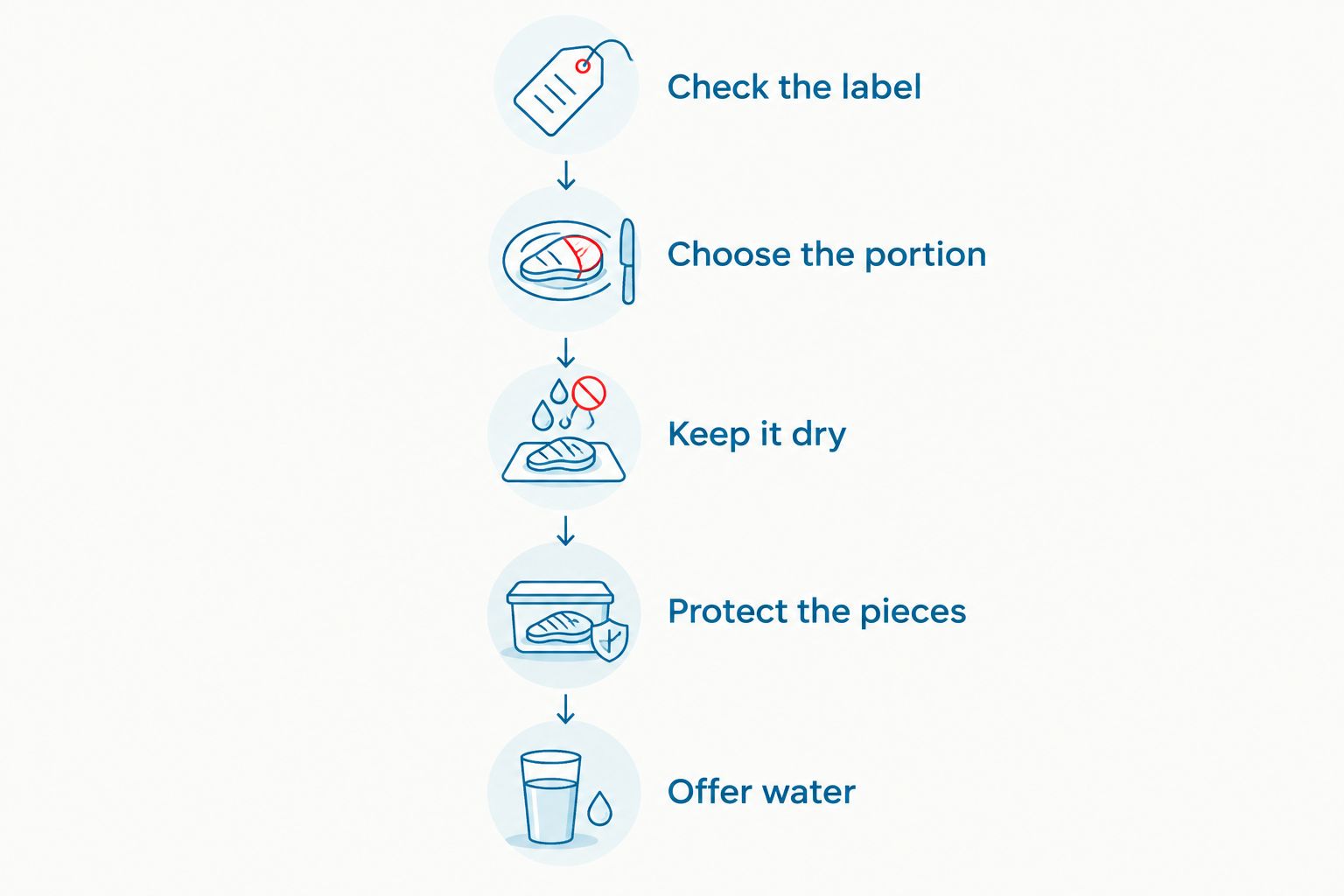
Build your 2026 packing routine around a familiar fruit, a suitable portion, and dry storage. Try a new texture at home before relying on it for a school snack.
- Check the label. Read the ingredients, serving information, allergen statements, and storage directions. A fruit picture on the front is not a substitute for the ingredient list.
- Choose the portion. Use the labeled serving as a reference, not a requirement that your child finish the package. Consider appetite and the other foods you are sending.
- Keep it dry. Separate fruit crisps from wet foods and leaking containers. Follow the package directions after opening.
- Protect the pieces. Put fragile crisps where a drink bottle or heavy food container will not crush them.
- Offer water. Keep drinking water available rather than expecting dried fruit to provide fresh fruit’s moisture.
If you pack fruit crisps with yogurt, keep them separate until eating if your child wants crunch. Yogurt still needs appropriate cold storage; adding a shelf-stable fruit snack does not change that requirement.
After school, ask a useful question: Was the snack easy to open and eat? That tells you more about tomorrow’s packing choice than whether the lunchbox came home perfectly empty.
Choosing a pack without guessing your child’s favorites
For families exploring Naturesturn, these variety packs serve different purposes. Start with the flavors you want to try, then decide whether you need a tasting selection or repeated bags for future snacks.
| Option | Best for | What the product description includes | Main limitation |
|---|---|---|---|
| Freeze-Dried Fruit Crisps Sampler Variety Pack | Trying flavors before choosing favorites | 8 flavors, with 1 bag of each: 8 bags total | No repeat bag of a favorite within the sampler |
| Freeze-Dried Fruit Crisps Mega Variety Pack | Families who want repeat bags across a flavor selection | 8 flavors, with 2 bags of each: 16 bags total | A mixed selection also repeats flavors your child might not prefer |
Choose the sampler for discovery; choose the mega variety pack when repeated flavors fit your family. Neither pack determines the right serving for your child. Check the individual package information before packing.
Fruit variety packs to compare

Eight flavors to try, with one bag of each. Real fruit and nothing else.
$21.99

Eight flavors, with two bags of each. Real fruit and nothing else.
$36.99
Does no added sugar mean freeze-dried fruit is sugar-free?
No added sugar does not mean sugar-free. Fruit contains naturally occurring sugar, and removing water does not remove that sugar.
Look at both the ingredient list and Nutrition Facts panel. Total Sugars and Added Sugars answer different questions: one describes the sugar present, while the other identifies sugar added during processing.
For your 2026 snack shopping, choose wording that stays accurate when you explain it to your child: this is fruit with its water removed, not fruit with its sugar removed. There is no need to describe either fresh or freeze-dried fruit as a treat your child must earn.
Is freeze-dried fruit suitable for every child?
No—suitability depends on the child, the fruit, and how it is served. A short ingredient list does not establish that a food is free from allergens or appropriate for every stage of eating.
Check current product information and your school’s food policy, especially when sending snacks for a shared classroom event. Do not infer manufacturing conditions or cross-contact controls from the words 100% fruit.
For younger children or children with feeding difficulties, ask their clinician about suitable textures and preparation. A crisp that softens in the mouth is not automatically a safe food for every child. Have children sit while eating and provide appropriate supervision.
FAQ
Can freeze dried fruit replace fresh fruit every day?
Freeze-dried fruit can be one of your child’s fruit options, but it should not crowd out fresh fruit entirely. Fresh fruit supplies water and different textures, while plain freeze-dried fruit offers convenient packing.
Is freeze-dried fruit still real fruit?
Plain freeze-dried fruit is real fruit with most of its water removed. Check the ingredients because products with similar packaging can contain added ingredients.
Does freeze-dried fruit have more sugar than fresh fruit?
Freeze-dried fruit has more concentrated sugar by weight because water has been removed. That does not mean sugar was added; compare serving sizes and the Added Sugars line on the label.
Should I give my child water with freeze-dried fruit?
Keep drinking water available when your child eats freeze-dried fruit. The dried fruit does not supply the water found in its fresh version.
Can I put freeze-dried fruit in the same container as yogurt?
You can combine freeze-dried fruit with yogurt, but contact with moisture softens the fruit. Pack them separately if your child wants crunch, and keep the yogurt appropriately chilled.
What should I check before sending fruit crisps to school in 2026?
Check the current ingredient list, allergen information, storage directions, and school food policy before sending fruit crisps. Also make sure your child can manage the texture and open the package.
Are Naturesturn fruit snacks sugar-free?
Naturesturn fruit snacks are made with no added sugar, not without naturally occurring fruit sugar. Read the individual product’s Nutrition Facts panel for serving information.
One last thing
Liking freeze-dried strawberries but declining fresh strawberries is not a contradiction. The texture and eating experience are different, even though both start with the same fruit.
For the rest of your 2026 school routine, keep offering fresh fruit without making it a test. Let freeze-dried fruit cover the days when portability matters, and let fresh fruit stay on the menu when juicy, ready-to-eat fruit fits the moment.