


Is freeze-dried fruit gluten-free?
Editorial Team
Yes—plain freeze-dried fruit is naturally gluten-free because fruit contains no gluten, and freeze-drying does not add it. For a packaged snack, check the current ingredients and gluten-free labeling before packing it for someone with celiac disease; coatings, other ingredients, and cross-contact during production can change the answer.
TL;DR
- Is freeze dried fruit gluten free? Plain fruit is naturally gluten-free; check each packaged snack’s current label.
- A U.S. gluten-free claim means the food must contain less than 20 parts per million of gluten.
- Nature’s Turn offers 100% fruit snacks with no added sugar; those claims do not establish gluten-free status.
- For school snacks, check the package, your child’s dietary plan, and classroom rules—not just the fruit flavor.
Is freeze-dried fruit gluten-free?
Plain freeze-dried strawberries, apples, bananas, and other fruits are naturally gluten-free. Gluten comes from wheat, barley, rye, and their crossbreeds—not from fruit. Removing water through freeze-drying does not introduce gluten or remove gluten from an ingredient that already contains it.
The distinction is between the fruit itself and the finished packaged food. A bag containing only fruit has a different ingredient list from fruit coated in a cereal mixture or combined with cookie pieces. Both deserve a label check.
For your 2026 school-snack routine, use the same approach you use with other packaged foods: identify the ingredients, check the relevant dietary claim, and confirm the classroom requirements. The guide to checking allergy-friendly snacks before a class celebration covers that broader packing task.
| Type of snack | Gluten-free assessment | Best for | Main limitation |
|---|---|---|---|
| Plain, fruit-only freeze-dried fruit | Fruit ingredients naturally contain no gluten; assess the finished package | Parents seeking a short ingredient list | Fruit-only wording does not describe production controls |
| Freeze-dried fruit with a gluten-free label | The finished food must meet applicable gluten-free labeling requirements | Shoppers looking for an explicit packaged-food claim | Gluten-free does not mean free of every allergen |
| Coated fruit or a mixed snack | Depends on every ingredient and the finished product | Families seeking different flavors or textures after checking labels | Coatings and mix-ins require extra attention |
| Fruit transferred to a shared container | Depends on the original food and subsequent handling | Home packing with clean equipment | Contact with gluten-containing crumbs can introduce gluten |
Why this matters for a school lunchbox
A familiar fruit flavor makes a snack easy to recognize. It does not tell you everything about the packaged product. The most useful question is not simply whether strawberries contain gluten, but whether this particular bag fits your child’s needs.
For a child with celiac disease, a gluten-free diet is medical care, not a general snack preference. Follow the child’s clinician or registered dietitian’s guidance when choosing products and handling food. A short ingredient list is helpful, but it does not answer every question about cross-contact.
School rules add another check. A gluten-free snack is not automatically suitable for a nut-restricted classroom, and a school-approved snack is not automatically appropriate for every child. Keep your child’s dietary needs and the classroom policy separate so neither gets overlooked.
What does a gluten-free label mean in 2026?
For FDA-regulated packaged foods in the United States, a voluntary gluten-free claim requires less than 20 parts per million of gluten and compliance with the rule’s ingredient restrictions. The threshold is not a promise of absolute zero gluten.
The FDA’s gluten-free labeling rule remains the relevant U.S. framework in 2026. Its scope is the finished food carrying the claim, not simply whether the main ingredient starts out gluten-free. That makes the package’s wording more useful than an assumption based on a product photograph.
Less than 20 parts per million is not zero
Less than 20 parts per million means less than 20 milligrams of gluten per kilogram of food. These are two ways of expressing the same concentration—not a serving recommendation or a personal daily allowance.
Do not turn that threshold into a home calculation for how much gluten your child can eat. Use it to understand the labeling standard, then follow your child’s care plan for product selection.
Certification and gluten-free labeling are different
A gluten-free claim and a third-party certification are not interchangeable. Certification involves a separate program, and its requirements depend on the certifying organization. A food does not need a third-party certification logo to carry a compliant FDA gluten-free claim.
If a certification matters to your family, identify the actual certifier and its current requirements. Do not treat a decorative seal, a fruit illustration, or the words natural and clean as certification.
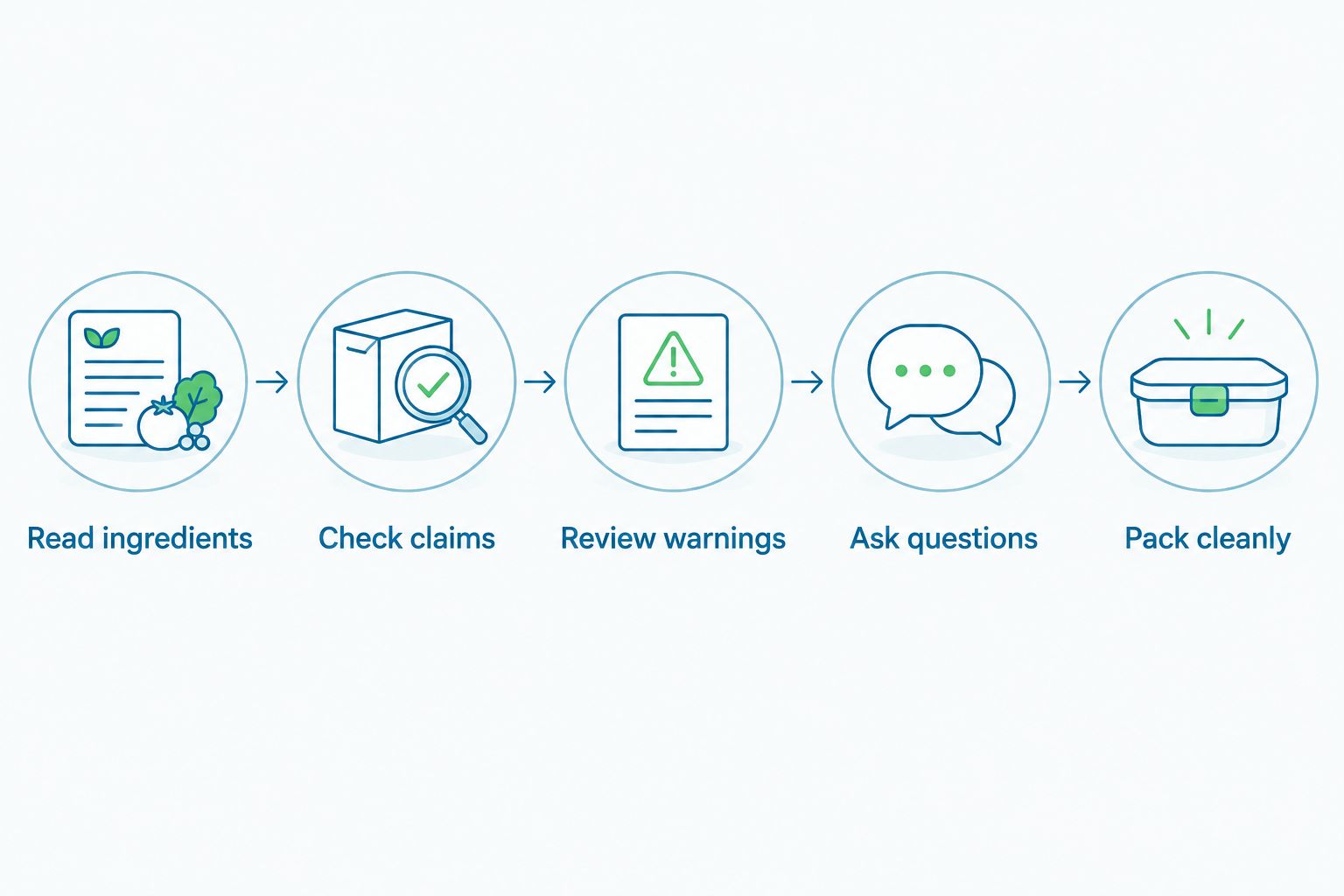
How do you check a bag before packing it?
Make the package check part of your 2026 lunchbox routine rather than relying on what you remember from the last order. Read the exact flavor and bag in your hand, especially when you switch between a plain fruit, a seasoned version, and a mixed snack.
- Read ingredients. Look through the complete list, including coatings, seasonings, and mix-ins. Wheat, barley, rye, malt, and malt extract need attention; barley malt is not gluten-free.
- Check claims. Look for an explicit gluten-free statement rather than assuming that 100% fruit or no added sugar means the same thing.
- Review warnings. Read allergen and facility information, while remembering that precautionary statements do not replace a gluten-free assessment.
- Ask questions. When the package leaves a question unresolved, contact the manufacturer about the exact product. Ask about its gluten-free claim and controls for gluten cross-contact.
- Pack cleanly. Use clean hands, utensils, and containers. Keep the fruit away from bread crumbs and shared scoops that have touched gluten-containing foods.
A repeatable check is easier than trying to memorize every package in the pantry. Keep the original packaging available when a teacher, sitter, or another caregiver needs to confirm what you sent.
Why a wheat warning is not the whole gluten check
Wheat is a major food allergen under U.S. labeling law, but barley and rye are not covered by the same major-allergen declaration requirement. A package without a Contains wheat statement is therefore not automatically gluten-free.
Also, advisory statements such as may contain are voluntary. Their absence does not prove that a food was made on dedicated equipment. Read the full label and use the manufacturer’s current information when you need clarification.
Why gluten-free suitability varies between bags
The fruit is not the variable that introduces gluten. The finished recipe and the way food is produced and handled are what you need to assess.
- Added ingredients: Coatings, flavorings, cereal pieces, and other additions change what is in the bag. Check them individually rather than treating all fruit snacks alike.
- Production handling: Shared equipment requires controls to prevent gluten cross-contact. Fruit-only ingredients do not explain those controls.
- Label claims: A gluten-free statement addresses the finished food under applicable rules. Claims about sugar or artificial ingredients address different characteristics.
- Packing habits: A clean snack can pick up crumbs from a cutting board, scoop, or lunchbox compartment. Keep preparation surfaces and containers clean.
- Individual needs: Celiac disease, wheat allergy, and a household preference to avoid gluten are different situations. Choose food according to the specific need rather than using those terms interchangeably.
Where Nature’s Turn fits in your snack search
Nature’s Turn freeze-dried fruit snacks are best for families seeking 100% fruit with no added sugar. That is an ingredient-based recommendation, not a claim that every product is suitable for celiac disease or every classroom.
Nature’s Turn describes its snacks as fruit crisps in multiple flavors and bag sizes. Two practical starting points are a familiar single-fruit option and a lunchbox-focused assortment. Check the current package for gluten-free and allergen information before choosing either for a medically required diet.
| Product | Best for | What the product information states | What still needs checking |
|---|---|---|---|
| Freeze-Dried Strawberry Crisps | Families wanting a single-fruit strawberry snack | Real strawberries, sliced and freeze-dried into crisp pieces | Current gluten-free labeling, allergen information, and suitability for your child |
| Freeze-Dried Fruit Crisps Lunchbox Snack Variety Pack | Parents wanting small bags with different fruit choices | Strawberry, apple, and pear in small, single-serve bags | Current labeling for the included flavors and classroom requirements |
The benefit is straightforward fruit and a choice of packing formats. The limit is equally clear: the product descriptions alone do not establish a gluten-free certification or a dedicated gluten-free facility. Choose the flavor after confirming the dietary requirements—not instead of confirming them.
Does 100% fruit mean certified gluten-free?
100% fruit describes the ingredients, not gluten-free certification. Fruit naturally contains no gluten, but that phrase does not identify a certification program or explain the manufacturer’s production controls.
The same distinction applies to no added sugar. Fruit contains naturally occurring sugar, and a no-added-sugar claim does not mean sugar-free. Neither sugar claim answers a gluten question.
Can a child with celiac disease eat freeze-dried fruit?
Plain freeze-dried fruit is naturally gluten-free, but the specific packaged product and its handling must fit the child’s celiac care plan. Check the current label and follow the selection guidance from the child’s clinician or registered dietitian.
For your 2026 school handoff, give caregivers the original package or its complete label information. Ask them to keep the snack separate from gluten-containing foods and avoid shared serving utensils.
Does a shared facility make fruit unsafe?
A shared facility statement alone does not establish whether a food meets gluten-free requirements. Shared facilities can use cross-contact controls, and the finished product—not the building description alone—is what a gluten-free claim addresses.
If the wording leaves you unsure, ask the manufacturer about the exact product’s gluten-free status and controls. Do not assume either that shared means unsuitable or that fruit-only means suitable.
FAQ
Is all freeze-dried fruit gluten-free?
No—not every packaged freeze-dried fruit snack is automatically gluten-free. Plain fruit naturally contains no gluten, but coatings, other ingredients, and cross-contact require a check of the finished product.
Does freeze-drying remove gluten?
No, freeze-drying is not a method for making gluten-containing food gluten-free. Choose appropriate ingredients and a finished product that meets your dietary requirements.
What does gluten-free mean on a U.S. snack label?
For FDA-regulated packaged foods, a gluten-free claim requires less than 20 parts per million of gluten and compliance with the rule’s ingredient restrictions. The claim does not mean absolute zero gluten.
Is no added sugar the same as gluten-free?
No, no added sugar and gluten-free describe different things. Fruit contains naturally occurring sugar, and a sugar-related claim does not establish gluten-free status.
Are Nature’s Turn freeze-dried fruit snacks certified gluten-free?
The product information provided here does not establish gluten-free certification. Check the current package or ask the manufacturer about the exact product before choosing it for a medically required gluten-free diet.
Can I put freeze-dried fruit next to crackers in a lunchbox?
Keep fruit intended for someone avoiding gluten separate from gluten-containing crackers and their crumbs. Use clean, separate compartments or containers and avoid shared utensils.
Does gluten-free mean a snack is safe for every classroom?
No, gluten-free does not mean free of every allergen or approved under every school policy. Check the classroom rules and each child’s individual dietary requirements.
One last thing
The serving container deserves the same attention as the shopping bag. A gluten-free snack placed in a container with leftover cracker crumbs has a handling problem that an ingredient list cannot solve.
For the rest of 2026, keep the routine simple: check the current package, use a clean container, and send clear instructions when another adult handles the snack. The fruit, the finished package, and the packing routine each need their own check.