


Can you make freeze-dried fruit at home without a machine?
Editorial Team
No—you cannot reliably make true freeze-dried fruit at home with only a regular freezer, oven, or dehydrator; you need equipment that freezes the fruit and removes its ice under a controlled vacuum. Those kitchen alternatives can freeze or dehydrate fruit, but they do not reproduce the same process or reliably deliver the light, porous crunch of freeze-dried fruit.
TL;DR
- Can you make freeze dried fruit at home? Yes with suitable freeze-drying equipment, not a regular freezer alone.
- Ovens and dehydrators make dried fruit, not true freeze-dried fruit.
- Naturesturn freeze-dried fruit snacks suit parents who want ready-to-pack, 100% fruit options with no added sugar.
- Keep fruit crisps separate from moist foods, and check current labels and school snack policies.
Can you make freeze-dried fruit at home without a machine?
A regular kitchen appliance is not a substitute for a freeze dryer. Freezing turns water into ice. Freeze-drying then removes that ice as vapor under reduced pressure, a process called sublimation.
The difference matters when you want a crisp lunchbox snack rather than frozen berries or chewy dried slices. For the everyday texture comparison, see freeze-dried mango or chewy dried mango for school snacks.
| Method | What it does | Typical result | Best for | Main limitation |
|---|---|---|---|---|
| Home freeze dryer | Freezes food and removes ice under vacuum | Light, porous, crisp fruit | Families interested in a food-preservation project | Requires dedicated equipment and careful handling |
| Regular freezer | Keeps water in fruit frozen | Frozen fruit that softens after thawing | Smoothies and frozen ingredients | Does not reliably produce dry, shelf-stable crisps |
| Food dehydrator | Uses warm, moving air to remove moisture | Dried fruit, often chewy; texture varies | Parents who enjoy making dried snacks | Does not reproduce freeze-dried texture |
| Oven | Uses heat to remove moisture | Dried or baked fruit with variable texture | Following a tested oven-drying recipe | Heat control and results depend on the oven and recipe |
| Packaged freeze-dried fruit | Provides fruit already freeze-dried | Ready-to-eat fruit crisps | Busy school mornings | Requires label checks and protection from moisture and crushing |
For a 2026 school-snack plan, choose the result you actually want. Homemade dried apple slices and freeze-dried apple crisps can both have a place in your kitchen, but they are not interchangeable.
Why this matters for your lunchbox plans
An internet shortcut can sound wonderfully simple: slice strawberries, put them in the freezer, and wait for a crunchy snack. The missing piece is controlled drying under vacuum—not just more time in the cold.
That distinction saves you from planning tomorrow's snack around an experiment that produces frozen fruit instead. If you need freeze-dried crunch, use properly freeze-dried fruit; if you want a kitchen project, choose a tested drying recipe.
There is no need to turn every lunchbox into a preservation project. Pick a method that fits your time, your child's texture preferences, and the way the food will be stored before snack time.
Why a regular freezer does not make fruit crisps
Your freezer's job is to keep food frozen, not to run a controlled freeze-drying cycle. USDA freezer-storage guidance recommends keeping a freezer at 0°F (−18°C); that storage temperature does not turn an ordinary freezer into a freeze dryer.
You might notice dry patches or freezer burn on fruit left exposed. That is not proof that the entire piece has been thoroughly freeze-dried, and appearance alone cannot establish that homemade fruit is safe for room-temperature storage.
A strawberry can have a dry-looking surface while moisture remains inside. Do not treat freezer-burned fruit as a finished pantry snack or use a social-media waiting period as a storage-safety test.
Does leaving fruit uncovered in the freezer work?
Leaving fruit uncovered does not provide a reliable household freeze-drying method. Some surface moisture can escape over time, but the process is uneven and lacks the controlled conditions used for freeze-drying.
For your 2026 lunchbox routine, keep ordinary frozen fruit in the frozen-food category. Thaw and handle it appropriately rather than packing it as though it were a dry fruit crisp.
Can an oven, dehydrator, or air fryer do the job?
An oven, dehydrator, or air fryer can remove moisture with heat, but none becomes a freeze dryer by using a low setting. The equipment name matters less than the process: heated drying is different from removing ice under vacuum.
Some fruit becomes crisp when sliced thinly and dried or baked. A crisp bite alone does not prove that fruit is freeze-dried, just as a chewy bite does not mean a drying recipe failed.
A food dehydrator is useful when you want to make dried fruit and can follow a tested recipe. An oven is another option only when a reliable recipe accounts for that method and your appliance can maintain the required conditions.
Follow fruit-specific guidance from the National Center for Home Food Preservation or a university extension service. Do not copy freeze-dryer instructions into an oven recipe: preparation, drying conditions, doneness checks, and storage guidance are not automatically transferable.
Is dehydrated fruit a bad choice for school snacks?
Dehydrated fruit is not automatically a bad choice; it is a different snack with a different texture. Choose it because your child enjoys dried fruit, not because you expect it to feel like a light freeze-dried crisp.
Check the ingredients, too. Drying method and added sugar are separate questions, so neither a homemade label nor a fruit picture tells you everything you need to know.
Why homemade results vary
Fruit type and equipment change the result. Even when you follow a suitable drying method, a banana slice and a raspberry do not behave exactly alike.
- Fruit structure: Whole berries and sliced fruit expose moisture differently during drying.
- Slice thickness: Uneven slices do not dry evenly, so follow the preparation instructions in your chosen recipe.
- Equipment control: Temperature, airflow, and—when freeze-drying—vacuum control determine how moisture leaves the fruit.
- Batch arrangement: Crowding or overlapping pieces interferes with the conditions a tested recipe expects.
- Storage conditions: Exposure to humid air or wet foods changes the texture of dried fruit after processing.
These are reasons to follow a method, not reasons to invent a longer drying time. A fruit piece that looks finished is not, by itself, evidence of a validated preservation process.
How do you choose the right option for your family?
Start with the snack you want to pack, then work backward. That keeps you from buying equipment for a result your child does not actually enjoy.
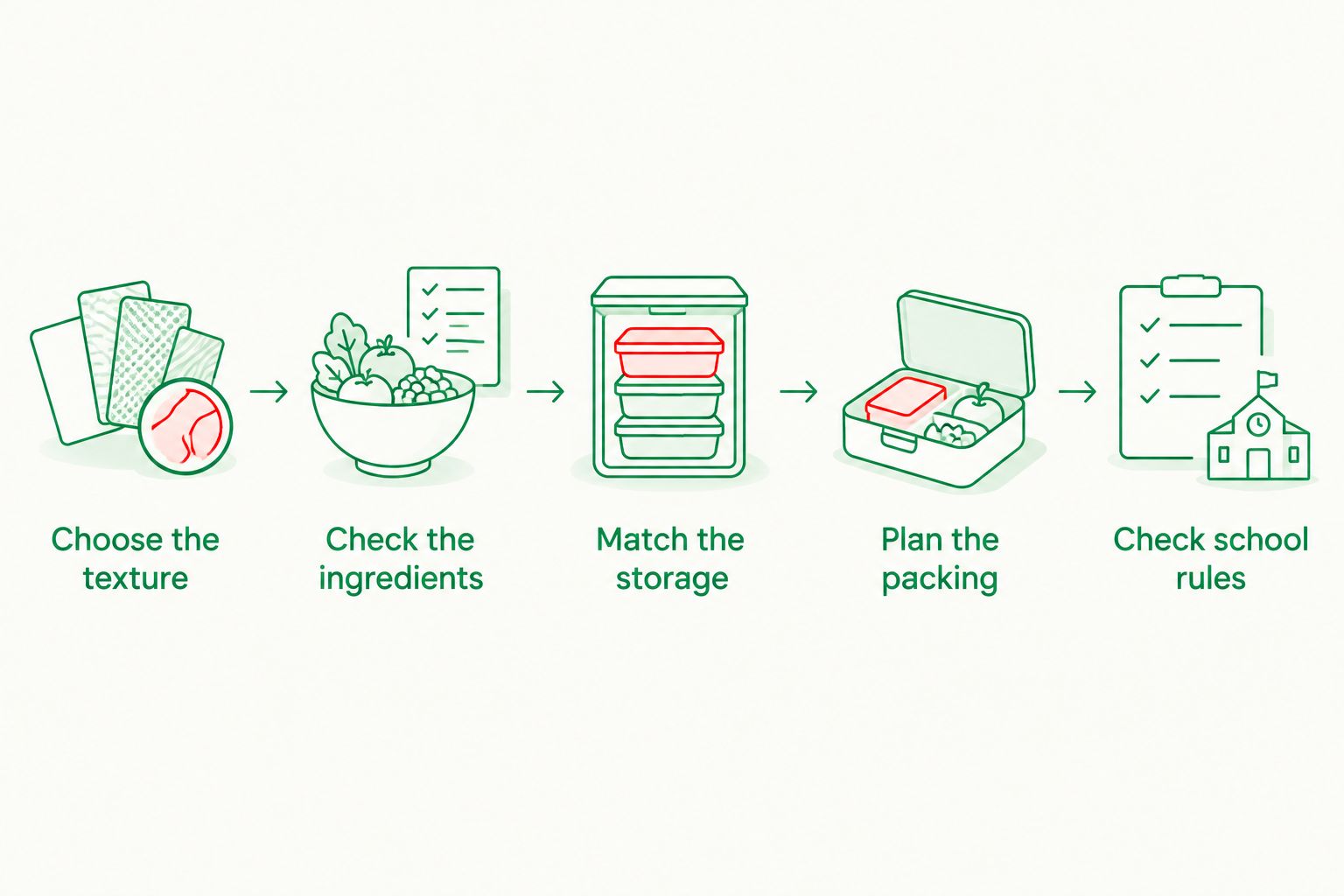
- Choose the texture. Decide whether your child wants crisp fruit, chewy dried fruit, or fresh fruit. Try an unfamiliar texture at home before relying on it at school.
- Check the ingredients. Read the ingredient list and Nutrition Facts rather than assuming all fruit snacks contain only fruit.
- Match the storage. Use the package directions or tested recipe's storage instructions. Keep other lunch foods cold when required.
- Plan the packing. Protect fragile crisps from heavy items and keep them away from damp foods until eating time.
- Check school rules. Review current allergen information and school policies before sending a snack for your child or a shared classroom event.
In 2026, a useful snack routine is still one you can repeat on a busy morning. If making dried fruit is enjoyable, give it its own kitchen time; do not make a school-day deadline depend on an unfamiliar preservation method.
Ready-made fruit crisps when you want to skip the project
Naturesturn freeze-dried fruit snacks are best for parents who want 100% fruit with no added sugar and no home drying project. The trade-off is practical: the crisps need protection from moisture and crushing, and every purchase still needs a current-label check.
For everyday school packing, the lunchbox assortment focuses on familiar fruit flavors. For exploring preferences at home, the sampler offers more flavors without requiring you to choose a favorite first.
| Option | What's included | Best for | Main consideration |
|---|---|---|---|
| Freeze-Dried Fruit Crisps Lunchbox Snack Variety Pack | Strawberry, apple, and pear in small, single-serve bags | Packing familiar fruit flavors for school | Less flavor variety than the sampler |
| Freeze-Dried Fruit Crisps Sampler Variety Pack | 8 flavors, with 1 bag of each | Trying flavors together at home | Includes flavors your child has not yet tried |
The sampler's 8 flavors make it a tasting option, not a guarantee that every bag will become a favorite. Start at home, notice what your child enjoys, and use that information when choosing future school snacks.
Fruit crisps for packing or tasting

Strawberry, apple, and pear in small, single-serve bags sized for school lunches.
$24.99

Does no added sugar mean sugar-free?
No added sugar does not mean sugar-free. Fruit contains naturally occurring sugar, and removing water does not remove all that sugar.
Naturesturn describes its fruit crisps as made with 100% fruit and no added sugar. Use those specific claims rather than calling the snacks sugar-free, and check the current label for the particular flavor you choose.
How do you keep fruit crisps crunchy in a lunchbox?
Keep fruit crisps dry and separate from moist foods until snack time. If you want to combine them with yogurt, pack the components separately and add the fruit when your child is ready to eat.
Use these habits for your 2026 school-day packing:
- Leave a single-serve bag sealed until eating time.
- Follow the package directions after opening a larger bag.
- Put fragile crisps where a heavy bottle or container will not squash them.
- Keep wet fruit, condensation, and leaking containers away from the crisps.
- Follow refrigeration guidance for the rest of the lunch, even when the fruit snack itself does not need refrigeration.
Choose textures and pieces appropriate for your child's age and eating skills. A simple ingredient list does not make a snack suitable for every child or remove the need to check allergy information.
FAQ
Can you make freeze dried fruit at home without a machine?
You cannot reliably make true freeze-dried fruit at home with a regular freezer, oven, or dehydrator alone. True freeze-drying removes ice from frozen fruit under controlled vacuum conditions.
Can I freeze-dry strawberries in my regular freezer?
A regular freezer freezes strawberries but does not reliably turn them into thoroughly dried fruit crisps. Surface drying or freezer burn is not evidence that the fruit is suitable for pantry storage.
Will a dehydrator make fruit as crunchy as freeze-dried fruit?
A dehydrator does not reliably reproduce the light, porous texture of freeze-dried fruit. Some dehydrated fruit becomes crisp, but the result depends on the fruit, preparation, and drying method.
Can I use dry ice to make freeze-dried fruit for school snacks?
Dry ice is not a reliable kitchen shortcut to controlled freeze-drying. It also creates cold-contact and carbon-dioxide hazards, so do not use an improvised dry-ice setup as a school-snack preservation method.
Does freeze-drying remove the natural sugar in fruit?
Freeze-drying does not make fruit sugar-free. Fruit retains naturally occurring sugar, so no added sugar and sugar-free are different claims.
Do I need to refrigerate packaged freeze-dried fruit crisps?
Packaged freeze-dried fruit crisps generally do not need refrigeration when stored as directed on the package. Follow the current label, protect the fruit from moisture, and refrigerate other lunch foods when required.
What is a practical alternative to making fruit crisps at home?
Naturesturn offers ready-made freeze-dried fruit crisps with 100% fruit and no added sugar. Choose a flavor your child enjoys, check the current label, and follow school snack policies.
One last thing
Crunch is not a storage-safety test. An oven-dried fruit slice can snap, while a properly freeze-dried piece can soften after absorbing moisture; neither observation alone establishes how the food was processed or how it should be stored.
For your 2026 snack plan, separate the two decisions: choose a process for making food, and choose a texture your child enjoys. You do not need to make freeze-dried fruit yourself to pack a simple fruit snack.