


How to pack hiking snacks so fruit crisps stay whole
Editorial Team
To pack hiking snacks so fruit crisps stay whole, keep the unopened bag inside a rigid, dry container and place it where bottles, gear, and backpack straps cannot squeeze it. For a 2026 family hike, protect the crisps from both crushing and moisture: a sturdy box handles pressure, while a properly closed package helps preserve the crunch.
TL;DR
- Pack hiking snacks in a rigid container; a soft pouch alone cannot protect fragile fruit crisps from pressure.
- Keep freeze-dried fruit sealed and separate from wet foods until snack time.
- Naturesturn freeze-dried fruit snacks suit families seeking 100% fruit with no added sugar.
- Choose an accessible backpack compartment that stays clear of bottles, tight straps, and heavy gear.
Why this matters for your 2026 hiking kit
A snack bag can look perfectly fine outside and still hold mostly broken pieces. Freeze-dried fruit has a light, brittle texture, so the important question is not just whether the package fits. It is whether anything will press against it during the walk.
Moisture creates a different problem: fruit crisps absorb moisture and lose their crisp texture. Protect against pressure and moisture separately. A container that prevents crushing does not automatically keep an opened snack dry.
These habits also help with everyday packing. The same approach works when you pack freeze-dried apples without crushing them for a school bag, family outing, or afternoon away from home.
How do you pack hiking snacks so fruit crisps stay whole?
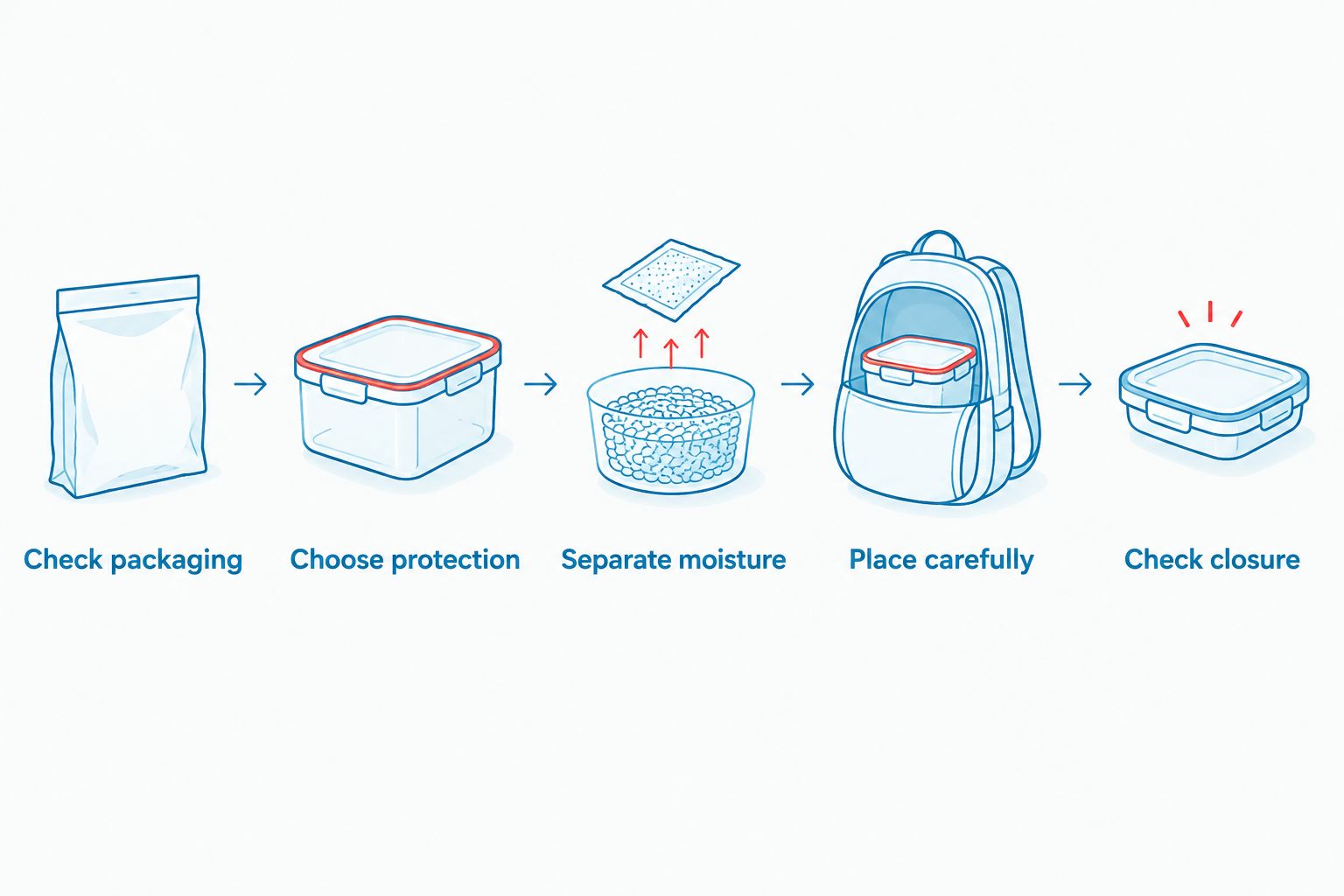
Start with the package closed, add a protective outer container, and give the snack a stable place in the backpack. Follow this sequence before you head out rather than trying to make room after everything else is packed.
1. Check packaging
Look for tears, an open seam, or fruit caught in the closure if the bag has already been opened. Follow the package's storage directions. Do not assume every snack bag has a resealable top.
Keep an unopened bag closed until you are ready to eat. If you are dividing a larger bag, use clean, completely dry containers and handle the fruit gently rather than pressing it into place.
2. Choose protection
Choose a rigid food container with enough room for the snack bag to sit naturally. You should be able to close the lid without flattening the fruit or folding a tightly filled package against itself.
Try the fit on the kitchen counter. If closing the lid requires pushing down on the snack, choose another container. The lid should protect the fruit, not become the thing that crushes it.
3. Separate moisture
Keep fruit crisps away from cut fruit, damp utensils, and containers that might leak. If you are packing several foods in a snack box, give the crisps their own dry, closed compartment or container.
Do not tip crisps into a compartment beside juicy fruit and expect them to stay crunchy. A divider that stops foods touching is not necessarily a moisture barrier.
4. Place carefully
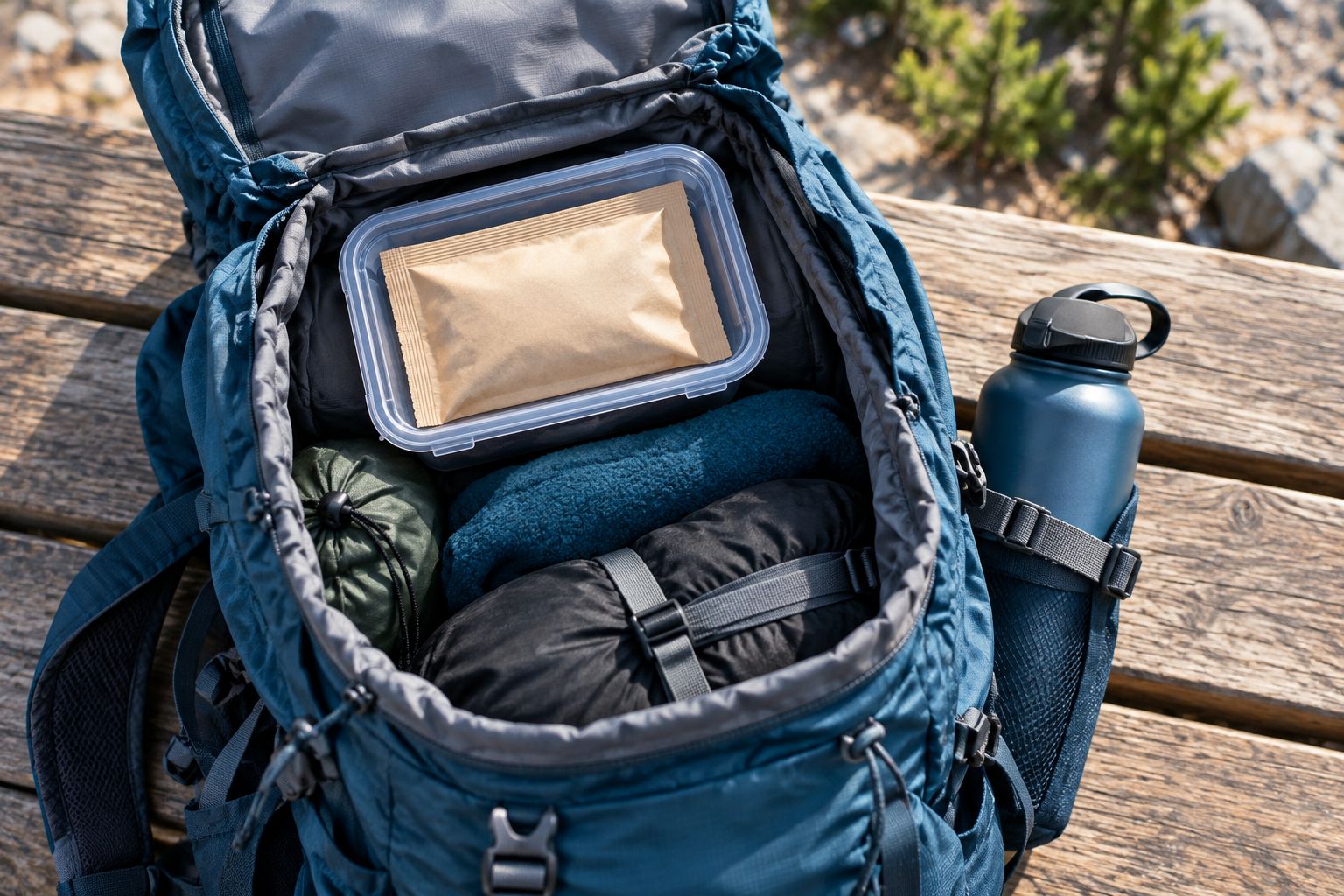
Set the protective container in an accessible compartment where it will not sit beneath a full water bottle or other heavy gear. Check the backpack from the outside, too: a compression strap can push directly against a snack compartment.
Keep the load stable without wedging the container into a space that is too small. A spare dry layer can help stop the box shifting, but soft fabric is not a replacement for rigid protection.
5. Check closure
Close the backpack as you will carry it, including its straps. Lift it and check whether the snack container shifts, gets squeezed, or blocks access to drinking water.
Make any adjustment before leaving. A good packing spot is easy to reach without unloading the bag onto the trail.
Which container works best for fruit crisps?
A rigid container is the best choice when keeping pieces whole is your priority. Soft storage takes up less room, but it leaves the contents exposed to pressure from the rest of the backpack.
Choose based on how the snack will travel, not just how tidy it looks on the counter. These packing options have different strengths and limitations.
| Packing option | Best for | Advantage | Limitation |
|---|---|---|---|
| Closed snack bag inside a rigid container | Family backpacks carrying bottles and other gear | Keeps the package protected from direct squeezing | Adds bulk and leaves a container to carry home |
| Dry, airtight food container | Portions divided at home | Provides a firm shell and a closure for leftover fruit | Requires transferring the fruit and keeping the container dry |
| Closed snack bag in a soft pouch | Lightly packed bags where whole pieces are less important | Fits into small spaces | Does not provide a firm barrier against crushing |
A familiar lunchbox container is a sensible place to start if it fits the snack without pressure. You do not need a hiking-specific box just to protect a bag of fruit crisps.
For a child carrying a small backpack, check the full setup rather than choosing the largest possible container. Protection helps only if the box fits comfortably alongside the other things the child needs.
Why fruit crisps arrive broken or soft
Changing the flavor does not solve a packing problem. Before replacing a snack your family enjoys, check what happens to it between the kitchen and the snack stop.
- Direct pressure: Bottles, tightly packed clothing, and other gear can press against a soft snack bag. Give the fruit a rigid outer barrier.
- An overfilled container: A lid that pushes against the contents can break pieces before the walk begins. Leave enough room to close it freely.
- Movement inside the backpack: A loosely packed container can move around and bump against other items. Give it a stable position.
- An open package: Exposure to humid air works against the crisp texture. Close leftovers promptly and follow the label's storage instructions.
- Contact with wet foods: Cut fruit, damp containers, and spills introduce moisture. Keep the crisps in a separate, dry space.
A rigid container reduces the risk of breakage; it does not guarantee every piece will stay intact. Some crumbs are normal with a fragile snack, especially after repeated opening and handling.
How should you pack fruit crisps for children?
Pack a portion your child can manage without needing to pour the whole bag onto a rock or picnic table. Let your child practice opening the container at home, especially if its lid is unfamiliar or stiff.
Offer a flavor your child already enjoys when the outing has enough other new experiences. The trail is not the easiest place to discover that a snack is unfamiliar, difficult to open, or awkward to share.
Naturesturn freeze-dried fruit snacks fit families who want 100% fruit with no added sugar. The practical trade-off is their delicate texture: Naturesturn fruit crisps still need protection from pressure and moisture, rather than being tucked loose beneath the rest of the gear.
For a shared snack stop, keep the package available so adults can check the ingredient and allergen information. No added sugar does not mean sugar-free: fruit contains naturally occurring sugar.
If your child has a food allergy, follow the child's established plan and check current product information. A simple ingredient message does not establish that a snack is suitable for every child, and an outdoor group can have its own food rules.
Where should fruit crisps go in a hiking backpack?
Choose a spot based on pressure, stability, and access. A top compartment works only if you will not tighten a strap across it or place something heavy above it.
An outside pocket is not automatically a better spot. If the pocket is tight, exposed to bumps, or shared with a bottle, it can put the snack under pressure throughout the walk.
Place the fruit container where you can reach it without removing essential gear. Then make sure the lid cannot pop open when the backpack bends or moves.
Picture the snack stop as well as the walk. Keeping the container upright when you open the bag makes it easier to hand out fruit without tipping loose pieces into the backpack.
What should you do at the snack stop?
Open fruit crisps when everyone is ready to eat, rather than leaving the bag open while you organize the rest of the stop. Set the container on a stable, dry surface and keep it away from drink spills.
Pour out a manageable portion gently. Avoid shaking the package hard to free the last pieces, and do not squeeze the bag while passing it around.
If you have leftovers, close them promptly according to the package directions and return them to their protective container. An outer box can prevent crushing on the return walk, but it cannot restore crunch already lost to moisture.
Keep food handling simple. Clean, dry hands and utensils help you avoid adding moisture or dirt to the remaining snack, and keeping packaging together makes it easier to carry out your rubbish.
Can you pack fruit crisps with other hiking snacks?
Yes, pack fruit crisps alongside other hiking snacks, but keep wet foods separate and protect the crisps from harder items. Sharing a backpack is different from sharing an open food compartment.
For example, a closed fruit-crisp package can travel beside another sealed snack inside a suitable box. Loose crisps mixed with a moist food will not have the same protection from moisture.
Choose the rest of your food around your family's needs and the outing. Fruit crisps are one snack option, not a complete plan for every walk, and any food that needs temperature control still needs appropriate storage.
Does this packing routine work for school snacks too?
Yes, the same dry-container and pressure-protection routine works for school snacks. For the 2026 school year, check where a lunchbox sits inside the school bag: books, drink bottles, and sports gear can squeeze a soft package there too.
Keep the snack easy to open and follow your school's food rules. If the fruit is packed beside chilled or juicy foods, use separate closed containers rather than relying on a simple divider.
The main difference is access. On a family hike, you can help with a tricky lid; at school, your child needs a setup they can manage during the snack break.
A quick packing check for your next 2026 outing
Before you zip up, look at the snack as part of the whole backpack rather than as an isolated package. Check that the bag is closed, the outer container is dry, and the lid shuts without pressing on the fruit.
Then check the load. Move bottles and heavy gear away from the crisps, adjust any strap pressing against the container, and make sure the snack remains accessible.
Keep the method repeatable. A container that already works in your lunchbox routine is easier to remember than a special setup you assemble differently for every walk.
FAQ
What's the best way to keep hiking snacks from getting crushed?
Keep fragile hiking snacks inside a rigid container and away from bottles, heavy gear, and tight backpack straps. Close the container without pressing on the food.
Should I open fruit crisps before a hike?
Keep an unopened package closed until snack time unless you need to divide portions beforehand. If you portion the fruit at home, use clean, dry containers with secure closures and follow the package's storage directions.
Can I put freeze-dried fruit in a reusable snack bag?
A reusable snack bag can hold freeze-dried fruit, but a soft bag does not protect it from crushing. Add rigid outer protection when keeping whole pieces matters.
Why did my fruit crisps go soft in the backpack?
Fruit crisps lose crunch when they absorb moisture. Check for an open package, a damp container, contact with wet foods, or a spill.
Are Naturesturn fruit crisps sugar-free hiking snacks?
Naturesturn fruit crisps have no added sugar, but they are not sugar-free. They are made with 100% fruit, which contains naturally occurring sugar.
Are fruit crisps safe for every child's school trip?
No snack should be assumed suitable for every child. Check the current ingredient and allergen information, the child's individual needs, and the school or outing organizer's rules.
Can I keep leftover fruit crisps for the walk home?
Close leftover fruit crisps promptly according to the package directions and put them back inside their protective container. Keeping them dry matters as much as preventing crushing.
One last thing
The last adjustment before your 2026 hike should happen after the backpack is fully closed. Check the straps: a carefully packed snack can still get squeezed when you tighten the bag for carrying.
If the container is taking that pressure, move it. The best packing spot is the one that stays protected after the backpack is on your shoulders.