


Hiking snacks for a short after-school nature walk
Editorial Team
Families’ hiking snacks are easy-to-carry foods packed for a walk with the aim of keeping hungry children comfortable between school pickup and home. For a short after-school nature walk, choose familiar foods, pack water separately, and keep snack time simple enough that everyone can enjoy the trail.
TL;DR
- Choose hiking snacks your child already enjoys; a short after-school walk does not need a special sports-food plan.
- Naturesturn freeze-dried fruit snacks suit families wanting 100% fruit with no added sugar; protect the crisp pieces from crushing.
- Pack water separately, check current allergen labels, and stop walking before children eat.
- Keep fruit crisps dry and separate from juicy fruit, damp containers, and melting ice packs.
Why hiking snacks matter for after-school families
The school day shapes your snack choice more than the trail does. Your child might have eaten lunch early, left part of it untouched, or already finished the snack you packed that morning. Start with what happened today, not a fixed packing formula.
An after-school walk also puts different demands on a snack than a weekend outing. You need something you can find quickly at pickup, carry alongside school bags, and serve without turning a bench into a kitchen.
Naturesturn freeze-dried fruit snacks are best for families who want portable, 100% fruit snacks with no added sugar. The trade-off is texture: crisp fruit needs protection from crushing and moisture. You can explore Naturesturn while keeping those packing needs in mind.
For your 2026 school-day routine, build around familiar food rather than a perfect-looking snack assortment. A snack your child recognizes gives you one less decision at the trail entrance.
How to pack hiking snacks for a short nature walk
1. Check hunger before choosing the snack
Ask when your child last ate and whether they feel hungry now. A child who skipped much of lunch needs a different plan from one who just finished an afternoon snack. If hunger is already making the walk feel difficult, eat before setting off.
For a planned 20-minute walk, use the duration as a packing cue, not a feeding rule. Appetite, age, the time since lunch, and your child’s usual routine matter more than the clock. There is no need to finish a packed snack simply because you brought it.
Use food you already have first. Leftover lunchbox food is an option only when it has been stored safely and remains suitable to eat.
- Ask what your child actually ate at school.
- Offer a seated snack before the walk if your child is hungry.
- Pack a familiar amount rather than filling every container.
- Keep dinner timing in mind without asking a hungry child to wait unnecessarily.
2. Choose a familiar food and a practical companion
Start with a fruit your child already likes. A washed apple, prepared fruit carried safely, or another familiar pantry snack can work without a special shopping trip. Match the food’s shape and texture to your child’s eating abilities.
If fruit alone does not suit your child’s appetite, add a familiar companion such as crackers. Check the ingredients and school rules for each item rather than treating a simple-looking combination as automatically suitable.
Offer 2 familiar choices before leaving, then pack the one your child selects. This gives your child a say without moving the whole pantry into your backpack. Save unfamiliar textures for a relaxed moment at home, where refusing a snack does not interrupt the outing.
- Choose a fruit flavor your child already enjoys.
- Add a familiar companion food when your child wants more.
- Keep foods separate if mixed textures bother your child.
- Avoid introducing a new food just because it looks convenient for hiking.
3. Match the snack to your carrying setup
Fresh fruit works when you have time to wash, prepare, and protect it. Freeze-dried fruit offers a ready-to-pack alternative when you want fruit without refrigeration or preparation. Follow the package’s storage instructions after opening.
For families who already enjoy strawberry flavor, freeze-dried strawberry crisps are a practical option to consider. Naturesturn makes freeze-dried fruit snacks with 100% fruit and no added sugar. No added sugar does not mean sugar-free: fruit contains naturally occurring sugar.
The convenience comes with a packing limitation. Freeze-dried pieces are crisp rather than chewy, and a heavy water bottle can crush them. Keep the original package protected, or use a clean, dry container when portioning at home; retain the label information when others need to check it.
- Use fresh fruit when preparation and suitable storage fit your day.
- Choose freeze-dried fruit when you want a dry, ready-to-pack option.
- Place crisp snacks above heavy bottles and books.
- Keep opened fruit crisps sealed according to the package directions.
4. Check labels and school rules before sharing
A short walk can still involve complicated food rules. Your own child’s snack, a friend’s snack, and food offered by another parent do not become interchangeable because everyone is outdoors.
Read the current ingredient list and allergen information for each packaged food. A fruit-only ingredient list does not establish that a product is suitable for every allergy, and a broad description such as “clean-label” does not replace a label check.
For a school-organized walk in 2026, confirm the school’s current food and sharing rules before packing. For a private family walk, follow each child’s established allergy plan and caregiver instructions. Never use the trail as the place to test whether an unfamiliar food is suitable.
- Read ingredients and allergen statements on the package in hand.
- Ask caregivers before offering food to another child.
- Keep original packaging available when label checks are needed.
- Follow school restrictions and individual allergy plans.
5. Keep dry snacks dry and chilled foods cold
A snack can be suitable at home and awkward in a backpack. Juicy fruit can wet crackers, condensation can soften fruit crisps, and a container tucked beneath a lunchbox can get squashed. Give each food the storage conditions it needs.
For a simple setup, think in terms of Dry snacks, Chilled foods, and Water. Dry snacks need clean, dry protection. Foods that require refrigeration need appropriate cold storage; a short route is not a substitute for keeping them cold.
This separation also makes snack time easier. You can hand over the dry snack without opening a chilled compartment or balancing several containers on a narrow bench.
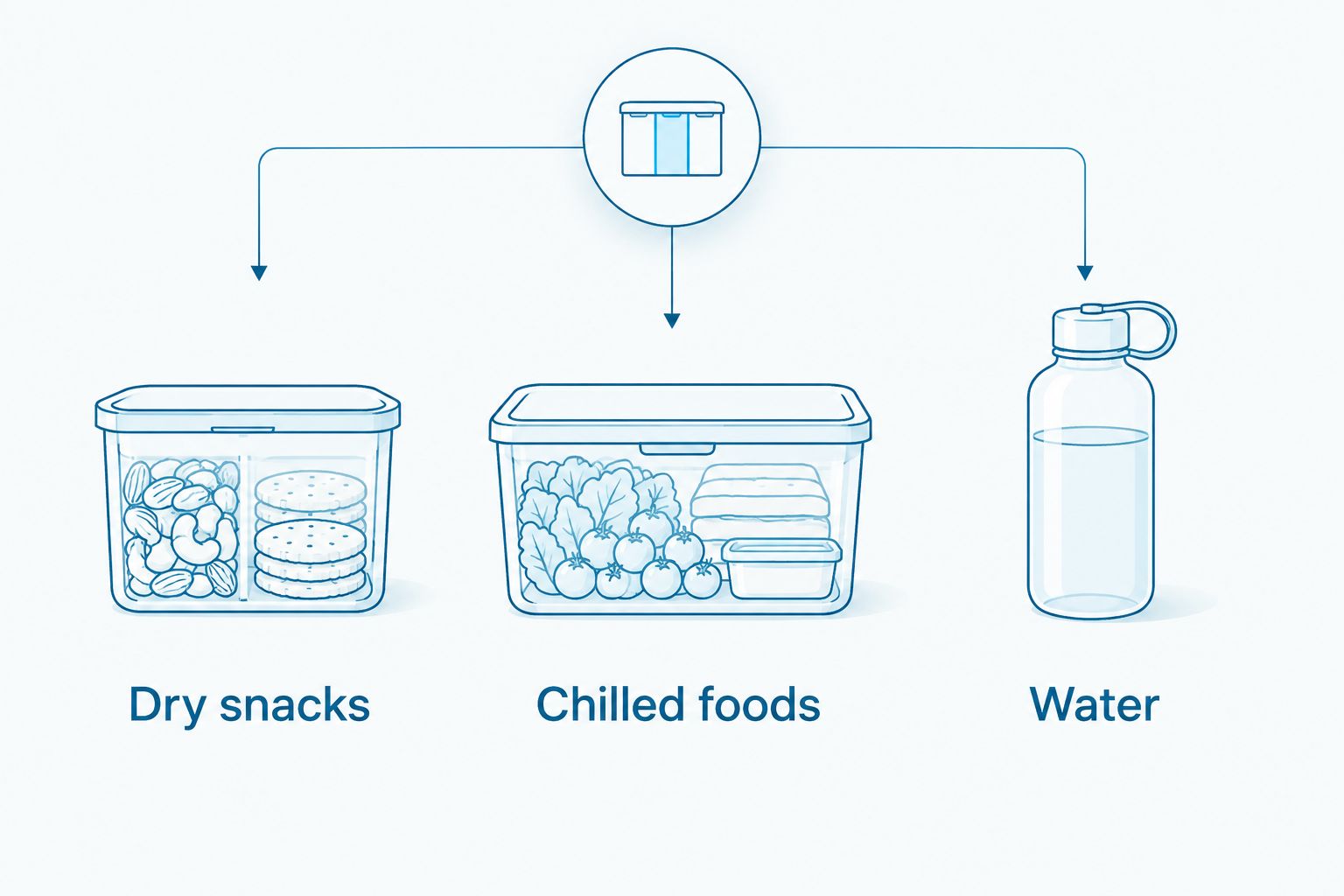
A quick packing check helps more than an elaborate bag organizer. Use the containers you own, and make sure anything touching food is clean and ready for use.
- Dry washed containers fully before adding crisp snacks.
- Seal juicy fruit separately from dry foods.
- Use an insulated setup with cold sources for foods requiring refrigeration.
- Check that the water bottle closes securely.
6. Plan a seated snack stop and an easy cleanup
Choose a place to stop before opening the food. Children should sit still while eating, with appropriate adult supervision, rather than snack while running, climbing, or walking over uneven ground. Choose textures and food sizes appropriate for your child.
Let the walk set the scene: a bench near the entrance, a clear resting spot, or a picnic table can make a better snack stop than a crowded stretch of trail. Clean hands before eating, and bring a way to carry wrappers and leftovers home.
For your 2026 walk bag, keep 1 small waste bag with your reusable containers. That is a suggested packing habit, not a reason to buy more equipment. The goal is an easy stop that leaves the place as you found it.
- Stop walking and have children sit before eating.
- Supervise snack time and use age-appropriate food preparation.
- Clean hands before handling food.
- Collect wrappers, peels, and unfinished food before leaving.
Compare snack options for an after-school walk
The best hiking snacks fit your child and your bag—not an adult endurance checklist. Use this comparison to choose a format, then check the actual food’s label, storage needs, and suitability for your child.
| Option | Best for | Practical advantage | Key limitation |
|---|---|---|---|
| Fresh whole fruit | Families who want a familiar food with little packaging | Easy to recognize and pack after washing | Some fruits bruise; peels or cores need carrying home |
| Prepared fresh fruit | Children who prefer ready-to-eat pieces | Lets you prepare suitable shapes before leaving | Needs a container and appropriate storage for the fruit chosen |
| Freeze-dried fruit crisps | Families wanting dry fruit snacks without refrigeration | Ready to pack, with no cutting or washing | Crisp pieces crush easily and need protection from moisture |
| Crackers | Children who want a familiar savory companion | Simple to portion and carry separately | Ingredients and allergens vary; crackers also crush |
| Plain yogurt with fruit | Families planning a seated stop with a chilled bag | A spoonable alternative to dry snacks | Requires cold storage, utensils, and more cleanup |
For the simplest setup, start with food already in your kitchen. Choose a packaged option when its convenience solves a real problem, such as leaving directly from pickup without time to prepare fruit. Neither approach needs to become your family’s only routine.
Common mistakes families make with hiking snacks
Packing for a long hike instead of a short walk
A neighborhood nature loop does not automatically call for a backpack full of specialty foods. Extra containers add decisions and cleanup without telling you whether your child is hungry.
Pack for today’s outing. If lunch was early or incomplete, offer food before the walk rather than relying on a small trail snack to cover the gap.
Treating no added sugar as sugar-free
Fruit naturally contains sugar, including when it is freeze-dried. Naturesturn’s no-added-sugar description does not mean its fruit snacks contain no sugar.
Read the Nutrition Facts panel and ingredient list for the product you choose. Keep the explanation simple for children: it is fruit, and fruit can taste sweet.
Assuming fruit-only means suitable for every child
A short ingredient list is helpful information, not a universal allergy guarantee. Individual allergies, manufacturing information, school rules, and a child’s eating abilities still matter.
Check the current package and follow caregiver instructions. Do not share snacks first and ask questions afterward.
Mixing everything into one container
Combining fruit crisps, juicy berries, and crackers saves a container but changes their textures. It also makes it harder to separate an unwanted food once everything is mixed.
Keep wet and dry items apart. Ask your child whether they want foods combined before making a snack mix.
Opening food while children keep moving
An exciting trail is not a reason to eat on the move. Uneven ground, climbing, and a mouthful of food are a poor combination.
Make the snack stop part of the outing. Sit, eat, pack up, and then get back to looking for leaves, birds, or interesting tree bark.
FAQ
What are the best hiking snacks for a short after-school walk?
The best hiking snacks are familiar foods that suit your child’s appetite, eating abilities, and storage needs. Fresh fruit, protected freeze-dried fruit, or crackers can work; pack water separately and plan a seated snack stop.
Do kids need special hiking food for a short nature walk?
Children do not need specialty hiking food simply because they are taking a short nature walk. Start with familiar snacks and consider when your child last ate, how hungry they feel, and what the outing involves.
Are freeze-dried fruit snacks sugar-free?
Freeze-dried fruit snacks are not sugar-free because fruit contains naturally occurring sugar. No added sugar means something different; check the ingredient list and Nutrition Facts panel on the product you choose.
Can I pack Naturesturn fruit snacks without a cooler?
Naturesturn freeze-dried fruit snacks are a dry snack option that does not require refrigeration. Follow the package’s storage directions, keep the snacks protected from moisture, and store any accompanying chilled foods separately with appropriate cooling.
Are fruit-only hiking snacks safe for children with allergies?
A fruit-only ingredient list does not establish that a snack is suitable for every child with allergies. Read current ingredients and allergen information, follow the child’s allergy plan, and confirm school rules before sharing.
How do I keep fruit crisps from getting crushed in a backpack?
Keep fruit crisps away from heavy bottles and books, and protect the package with a suitable container when needed. Use clean, dry storage and keep crisp foods separate from juicy fruit and condensation.
What should I put in an after-school walk bag in 2026?
Pack a familiar snack, water, hand-cleaning supplies, and a way to carry waste home. Add appropriate cold storage for refrigerated foods and follow any child-specific medical or allergy instructions.
One last thing
Before your next walk, ask your child which part of yesterday’s snack they actually enjoyed. The answer is more useful than packing a larger assortment.
Make your 2026 routine a small repeatable habit: check hunger, choose a familiar food, protect it in the bag, and stop to eat. Leave room for the walk itself to be the interesting part.