


Healthy packaged snacks for museum days with kids
Editorial Team
For families visiting museums, healthy packaged snacks are ready-to-pack foods chosen to meet your child's needs, follow venue rules, and make planned food breaks easier. Choose familiar flavors, check the labels, and pack snacks where they won't get crushed beneath a water bottle or souvenir.
TL;DR
- Naturesturn freeze-dried fruit snacks are best for parents seeking 100% fruit with no added sugar.
- Choose healthy packaged snacks around museum food rules, your child's needs, and the time until the next meal.
- No added sugar does not mean sugar-free; fruit contains naturally occurring sugar.
- Keep fruit crisps dry, protect the bag, and save eating for the museum's permitted areas.
Why healthy packaged snacks matter for museum-going families
Museum days put a different set of demands on your snack bag than afternoons at home. You need food your child recognizes, packaging you can manage while supervising, and a plan for where eating is allowed. A snack that works at your kitchen table isn't automatically convenient beside a busy coat check.
For your 2026 outings, start with the museum's current visitor information rather than last year's routine. Check outside-food rules, eating areas, and whether you can leave and return. A permitted snack still needs a permitted place to eat it.
Naturesturn offers freeze-dried fruit snacks made with 100% fruit and no added sugar. That makes them a straightforward fruit option to consider—not a reason to skip checking the current package or your child's individual needs.
The best museum snack is one your child can eat comfortably at the place and time you can offer it. Ingredient simplicity helps, but so do familiar textures, protected packaging, and a realistic break plan.
How to choose and pack your museum snacks
Check the museum's food rules before choosing snacks
Start with a free check of the museum's visitor information. Look for the difference between carrying food and eating food: permission to bring a bag doesn't tell you where you can open it. If the wording is unclear, ask the venue directly.
For a school visit, check the teacher's instructions too. A school group's snack arrangements can differ from what you would choose on a family visit, especially when adults are supervising several children.
Write the answer in your outing notes so another caregiver can follow the same plan. Your 2026 museum checklist should include the permitted eating location, not just the admission details.
- Confirm whether outside snacks are permitted.
- Find the designated eating area before arrival.
- Check the group's instructions for food and sharing.
- Plan where snacks will stay if gallery eating is prohibited.
Match the snack to the gap before lunch
Map the outing around meals before deciding what to pack. A small fruit snack and a delayed lunch solve different problems. If lunch will be later than usual, don't expect a fruit-only bag to do the work of the whole meal.
Use your child's familiar routine as the starting point. For example, plan 2 snack breaks if that fits the visit: one before entering and another in a permitted area later. Treat that as a planning example, not a rule for every age or appetite.
Consider the journey home as well. A child who ate happily before the dinosaur gallery might still need something after the bus ride or walk back to the car.
- Note the expected breakfast, lunch, and return-home times.
- Choose foods your child already eats comfortably.
- Pack a more substantial pairing when the meal gap calls for it.
- Keep 1 backup bag separate if the outing allows food.
Read the label before picking a fruit snack
Compare the ingredient list and Nutrition Facts label yourself first. Look at what the snack contains, the serving information, and any allergen statements. A fruit picture on the front isn't a substitute for reading the package.
Keep the sugar distinction clear: no added sugar does not mean sugar-free. Fruit naturally contains sugar, including when it is freeze-dried. Judge the snack by its ingredients and its place in your child's day, rather than treating one phrase as a complete nutrition verdict.
Naturesturn freeze-dried fruit snacks fit parents looking for 100% fruit with no added sugar. If strawberry is already a favorite, freeze-dried strawberry crisps are a familiar-flavor option to consider. The limitation is equally useful: fruit crisps are a fruit snack, not a complete lunch.
- Read the ingredient list on the current package.
- Distinguish total sugars from added sugars.
- Review serving information rather than judging bag size alone.
- Choose a familiar fruit before trying a new texture on an outing.
Check individual needs without assuming universal safety
Review allergies, eating skills, and school instructions before packing. Keep those checks separate: an ingredient that fits one child's needs doesn't establish that the snack is suitable for everyone in the group.
For your 2026 field-trip notes, record any teacher instructions about original packaging and sharing. Read the current label each time you select a snack; don't rely on an old shopping note or assume that every flavor has identical information.
Texture matters too. Freeze-dried fruit is crisp rather than soft like fresh fruit. Choose foods suited to your child's age and eating skills, and supervise eating while your child is seated and settled. Follow your child's clinician's advice when you have individual feeding or allergy concerns.
- Check current ingredients and allergen information.
- Follow the school's instructions for shared spaces.
- Keep original packaging available when required.
- Avoid sharing snacks without the responsible adult's approval.
Protect the snacks from crushing and moisture
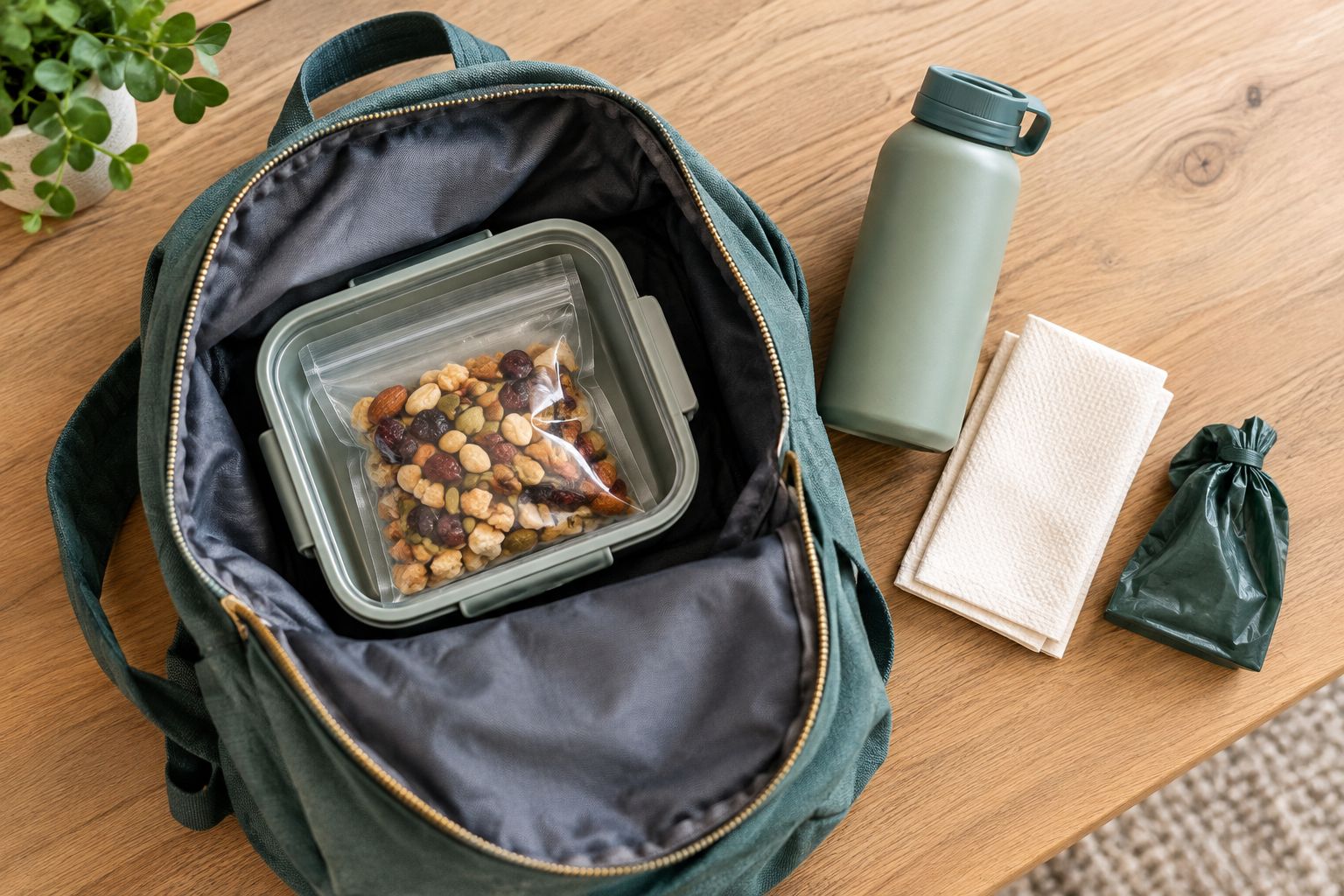
Use a container you already own before buying special packing gear. A rigid lunch container can keep a delicate snack bag away from heavier items. Put the water bottle beside the container rather than directly on top of the fruit crisps.
Keep dry foods separate from wet items. An opened fruit-crisp bag tucked beside a damp napkin is a different packing problem from an unopened bag protected inside a dry container. Follow the package's storage directions and close opened food as directed.
The easiest snack to carry is also one you can reach without emptying the entire backpack. Give your snack container a consistent place so the adult handling food can find it quickly.
- Put delicate bags inside a protective container.
- Separate snacks from leaking bottles and wet items.
- Keep packaging intact until the eating break.
- Place napkins and a waste bag beside the snack container.
Plan the eating break and the cleanup
Decide when you'll offer the snack before everyone is hungry and searching for a bench. A useful trigger is a transition you already expect: before entry, after an activity, or before the journey home. Use only locations where eating is permitted.
Try the packaging at home if your child will open it independently. Easy handling matters, but don't pre-open a bag simply to save a moment later if doing so conflicts with its storage instructions.
Finish the break before returning to exhibits. Check hands, collect packaging, and put remaining food away. For a 2026 school-group outing, agree on the same routine with the other supervising adults so children receive clear instructions.
- Choose a permitted eating location before opening food.
- Help children sit and settle before eating.
- Follow handwashing guidance and bring cleanup supplies.
- Collect crumbs and wrappers before leaving the area.
Compare packaged snack options for museum days
Choose by the job the snack needs to do, not by a single front-of-pack claim. A dry fruit snack suits a different packing plan from refrigerated yogurt, while crackers offer a different eating experience from a fruit pouch.
The table below compares formats rather than declaring one snack right for every child. Check the actual package, your child's needs, and the venue rules before deciding.
| Option | Best for | Practical advantage | Key limitation |
|---|---|---|---|
| Naturesturn freeze-dried fruit snacks | Parents seeking 100% fruit with no added sugar | Ready-to-pack fruit without refrigeration or preparation | Crisp pieces need protection from crushing; fruit alone isn't a complete meal |
| Whole-grain crackers | Children who prefer a familiar savory snack | Dry format that can travel in a protective container | Crumbs need cleanup; ingredients and allergens vary |
| Fruit puree pouches | Children who already manage the pouch format comfortably | No separate spoon needed when used as directed | Squeezing can create spills; caps and disposal need adult attention |
| Refrigerated yogurt | Families able to maintain appropriate cold storage | Works as part of a planned snack or meal | Requires a cold-storage plan and suitable eating arrangements |
| Packaged snack bars | Families wanting a compact format their child already knows | Easy to separate into individual portions as packaged | Ingredients, textures, and suitability differ between products |
You don't need to pack every format. Pick the combination your child already enjoys and that you can store correctly. Adding variety is useful only when it doesn't complicate the break.
Common mistakes families make on museum days
Choosing the snack before checking the venue
Buying a convenient snack doesn't resolve a no-eating rule. Start with the museum's instructions, then work backward to a break before entry, a designated eating area, or a meal afterward. Don't promise a gallery snack you won't be able to offer.
Treating fruit snacks as a replacement for lunch
A delayed meal needs a meal plan, not just another fruit bag. Keep fruit as one part of the day's food, and arrange lunch around the visit. If refrigerated foods are involved, plan their storage before you leave home.
Trying a new flavor during a tightly scheduled visit
An outing isn't the easiest moment to discover that your child dislikes a new texture. Try unfamiliar snacks at home first. Keep the museum bag focused on foods your child recognizes, especially when the group has a short eating window.
Packing delicate food beneath heavy gear
A snack bag at the bottom of a backpack has to share space with bottles, jackets, and purchases. Protect it before departure rather than hoping it survives. Leave room for whatever comes home from the museum too.
Assuming a simple ingredient list settles allergy questions
Simple ingredients don't establish universal safety. Check current product information and the child's individual requirements, then follow school or caregiver instructions. Keep snacks separate when sharing hasn't been approved.
FAQ
What are the best healthy packaged snacks for a museum day with kids?
The best healthy packaged snacks fit your child's needs, the museum's food rules, and the time until the next meal. Familiar fruit crisps, crackers, or another suitable packaged food can work when you can store and serve them correctly.
Can I bring snacks into a museum?
Check the specific museum's current visitor rules before bringing snacks. Permission to carry food does not necessarily mean permission to eat it in galleries, and school groups should also follow teacher instructions.
Are freeze-dried fruit snacks sugar-free?
No, freeze-dried fruit contains naturally occurring fruit sugar. No added sugar describes a different claim and does not mean that a food contains no sugar.
Do fruit crisps need refrigeration during a museum visit?
Naturesturn fruit crisps can be packed without refrigeration; follow the current package's storage instructions. Keep the bag dry and protected, and follow the label's directions after opening.
Are packaged fruit snacks safe for every child with allergies?
No snack should be assumed safe for every child with allergies. Review current ingredients and allergen information against the child's individual requirements, and follow school or caregiver instructions.
How do I keep freeze-dried fruit from getting crushed in a backpack?
Put the snack bag inside a rigid container and keep heavy items from pressing onto it. Store the container separately from leaking bottles or damp items.
Should I pack fruit crisps instead of lunch?
Pack fruit crisps as a fruit snack, not as a replacement for a complete lunch. Plan the main meal separately, especially when travel or scheduled activities push lunch later.
One last thing
Rehearse the snack break, not just the packing. Before your next 2026 museum visit, have your child open the chosen package at home while seated at the table. You'll learn whether the wrapper needs help, the texture is familiar, and the portion fits your usual routine—without a waiting group beside you.