


Freeze-dried fruit snacks to Sunday meal-prep workflow
Editorial Team
Instead of choosing and opening fruit snacks every school morning, organize your Sunday meal prep snacks for the week into a dry pantry station, then pack each day’s selection when you assemble lunch. Keep freeze-dried fruit sealed and separate from moist foods so the crunch lasts until snack time.
TL;DR
- Nature’s Turn freeze-dried fruit snacks suit parents seeking 100% fruit with no added sugar.
- For sunday meal prep snacks for the week, organize sealed bags before opening larger packages.
- Keep freeze-dried fruit separate from yogurt, cut fruit, and other moist lunchbox foods.
- Check current labels and school snack policies before choosing lunchbox snacks.
Why this matters
Sunday snack prep works best when it removes decisions without creating extra handling. You do not need to open every package, fill every lunchbox, or prepare every food at once. For your 2026 school-week routine, organize the shelf-stable pieces first and leave refrigerated additions for daily packing.
Freeze-dried fruit is useful here because it needs no washing, slicing, or refrigeration while stored according to its package directions. Its limitation is moisture: fruit crisps absorb it and lose their crisp texture. Our guide to keeping freeze-dried mango crisp in a lunchbox covers that packing problem in more detail.
Nature’s Turn freeze-dried fruit snacks are best for parents who want 100% fruit with no added sugar. They still contain naturally occurring fruit sugar; no added sugar does not mean sugar-free.
Before you start
- Check the schedule and school rules. Count actual school days, after-school activities, and snack breaks. Read current ingredient and allergen information alongside classroom policies; a short ingredient list does not establish that a snack is suitable for every child.
- Gather your packing supplies. Set out unopened fruit snacks, clean and completely dry food containers, a pantry basket, and a written list. Keep the original packaging available when school staff or another caregiver needs ingredient information.
- Plan around the moisture gotcha. Do not build a week of fruit-and-yogurt cups expecting the fruit to stay crunchy. Store fruit crisps separately, follow package instructions after opening, and do not assume an ordinary lunchbox compartment creates an airtight seal.
Let your child help identify familiar flavors before you sort anything. Sunday is a good time to make choices together; a rushed school morning is not the moment to discover that a sweet-tart berry snack is an unwelcome surprise.
Your school-week snack count
- Count snack occasions. Write down the days your child needs a packed snack rather than assuming every weekday looks the same. Include an afternoon activity only when you actually need to provide food.
- Calculate a working example. For 2 children attending 5 school days, one packaged fruit-snack selection per child per day means setting aside 10 snack bags. This is an organizing example, not a serving recommendation or a complete snack plan.
- Match the amount to the child. Use the package’s serving information as a reference, then consider appetite, age, the rest of the lunch, and any individualized guidance you follow. A package size is not automatically the right amount for every child.
- Write down the gaps. Note the days that still need a snack choice before adding anything to your shopping list. Account for food already in the pantry first.
Expected result: Your 2026 snack list shows who needs food, on which days, and what you already have. You can see the gaps without opening a single bag.
Keep the list simple enough that another adult can use it. A note saying which child prefers apple and which afternoon needs an additional snack is more useful than an elaborate meal-prep chart nobody checks.
Your fruit-snack selection
- Choose the packing format. Use sealed single-serve bags when you want fewer containers to fill. Choose a larger bag only when you are prepared to manage opening, resealing, and portioning according to its directions.
- Start with familiar flavors. Put accepted flavors into school-day slots. Save an unfamiliar fruit for a relaxed tasting at home rather than making it the only planned snack at school.
- Compare ingredients, not front-label impressions. Confirm the specific flavor’s ingredient list and check the nutrition label. Fruit naturally contains sugar, including when a product has no added sugar.
- Keep a flexible choice. Let your child swap between suitable flavors before packing. The goal is a repeatable routine, not a rigid menu that makes snack time harder.
These Nature’s Turn options serve different packing needs. Choose the format that fits your family’s routine, not simply the widest flavor selection.
| Product | Best for | Practical advantage | Limitation |
|---|---|---|---|
| Freeze-Dried Fruit Crisps Lunchbox Snack Variety Pack | Parents wanting small, single-serve school-lunch bags | Strawberry, apple, and pear are already packaged for lunchbox use | Its flavor selection does not include the broader range in the Mega Variety Pack |
| Freeze-Dried Fruit Crisps Mega Variety Pack | Families wanting more flavor rotation | Eight flavors, with two bags of each, provide a wider tasting selection | A mixed box includes flavors your child has not necessarily tried or accepted |
Expected result: You have a suitable packing format and a flavor plan, with unfamiliar choices kept separate from dependable school snacks.
Fruit snacks for your Sunday setup

Strawberry, apple, and pear in small, single-serve bags sized for school lunches. No sugar added.
$24.99

Eight fruit flavors, with two bags of each, for finding favorites and rotating snacks.
$36.99
Your dry pantry station
- Clear a dry space. Choose a pantry shelf away from steam and splashes, following the storage conditions printed on your packages. Do not place an open snack-sorting station beside a steaming dishwasher.
- Create simple groups. Label your baskets or shelf spaces School snacks, Home snacks, and Use first. Keep the labels about purpose rather than making separate containers for every possible day.
- Sort without opening. Put the sealed bags assigned to school into the school group. Keep unfamiliar flavors in the home group and place appropriate previously opened packages in the use-first group, following their storage instructions.
- Protect fragile pieces. Keep heavy pantry items off the fruit bags. If you portion fruit from a larger package, use clean, dry food containers with secure lids and close the original package promptly.
Expected result: Your school snacks are visible, protected from crushing, and separate from food intended for home. Everyone helping with packing can find the right group.
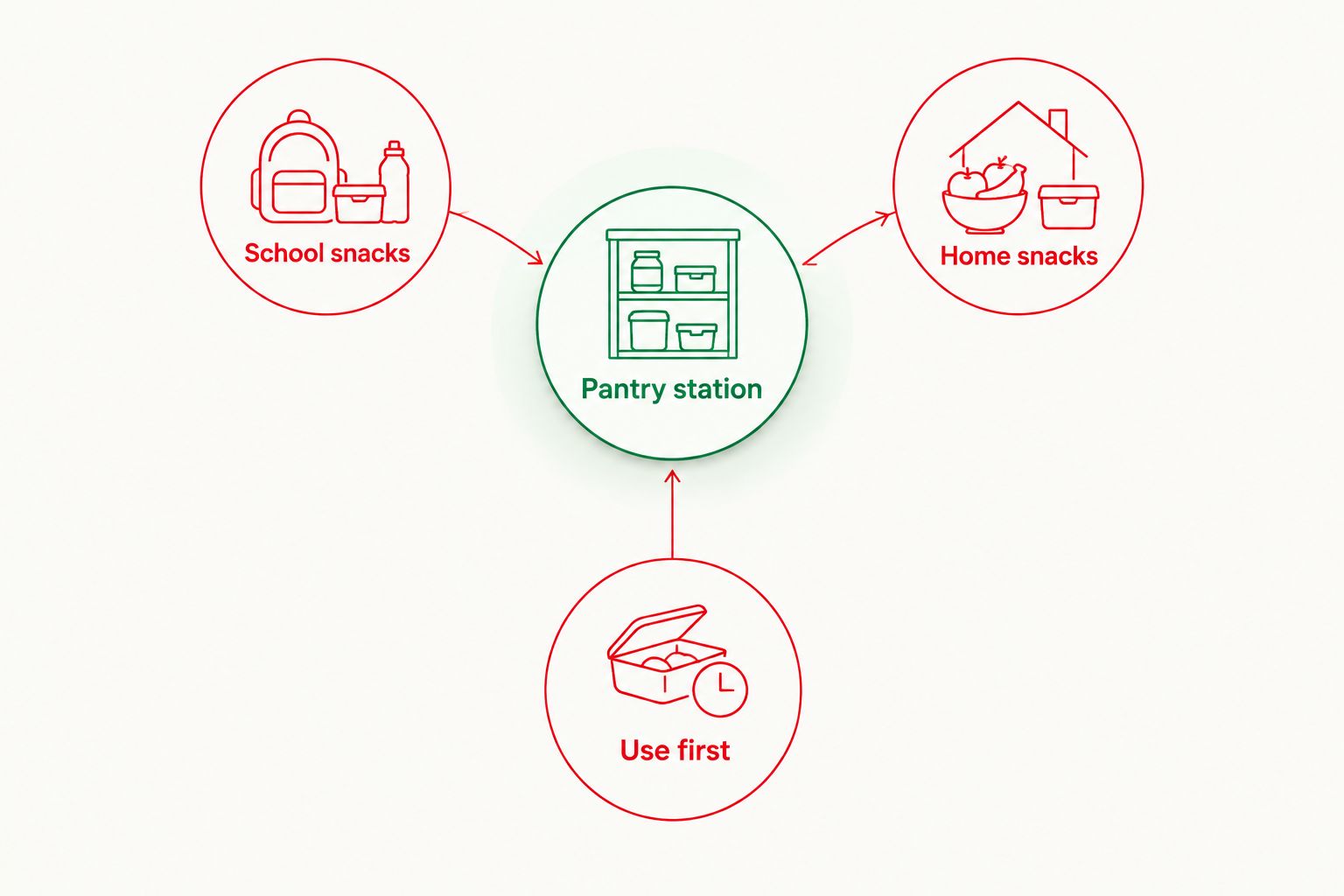
For your 2026 setup, choose a system your child can understand without a long explanation. A visible school-snack basket is enough; you do not need matching bins, printed menus, or a separate container for every weekday.
Your daily lunchbox handoff
- Take the planned fruit snack. Leave a sealed bag closed until eating time. If you are portioning from an opened package, follow its directions and transfer the fruit with dry hands or utensils.
- Keep wet foods separate. Put yogurt, cut fruit, dips, and other moist foods in their own secure containers. A divider prevents mixing but does not necessarily prevent moisture from reaching the crisps.
- Add the rest of the snack. Choose accompanying foods your child eats and the school permits. Freeze-dried fruit is one component, not a promise that a fruit bag alone will meet every child’s appetite.
- Protect and check. Place delicate fruit crisps where a heavy bottle will not squash them. Confirm that your child can open the packaging or container, with help available when needed.
Expected result: The lunchbox holds a fruit snack that stays separate from wet ingredients, alongside any other foods your child needs.
The fruit does not require refrigeration when stored as directed, but that does not change the needs of the rest of the lunch. Keep perishable foods cold using appropriate insulated packing and cold sources. Do not remove a necessary ice pack just because the fruit component is shelf-stable.
At unpacking time, notice what came home. An unopened bag can signal an unwanted flavor, a difficult package, a short snack break, or a child who simply was not hungry; ask before changing the whole plan.
Second workflow: prep a home snack station
A home snack station uses the same Sunday sorting routine but changes the final step. Instead of assigning everything to lunchboxes, reserve a home group for after-school snacks and fruit toppings.
- Choose the eating occasion. Decide whether the fruit will be eaten dry or stirred into something moist. Crunchy snacking and softened yogurt toppings need different assembly timing.
- Store components separately. Keep fruit crisps sealed in the pantry and refrigerated foods in the refrigerator. Put a reminder on your written plan rather than storing everything together prematurely.
- Combine when ready to eat. Add fruit to yogurt just before serving when crunch matters. If your child likes softened fruit, stir it in earlier while keeping the yogurt properly refrigerated.
- Use suitable crumbs at home. Clean crumbs from an appropriately stored package can become a topping instead of a disappointing lunchbox portion. Discard food that is contaminated or otherwise unsuitable to eat.
For a 2026 family routine with changing afternoon activities, assign snacks to occasions rather than fixed weekdays. This keeps a canceled practice from leaving you with a confusing row of dated containers.
Trade-off: Home assembly gives you more flexibility, but someone still needs to combine the components. Sealed school bags require less handling at the point of packing.
Troubleshooting your Sunday snack prep
The fruit is soft at snack time
Check for an incompletely closed container, damp utensils, or contact with moist food. Use dry equipment and a secure closure, and keep fruit separate until eating. Follow the package’s after-opening guidance rather than assuming any container will preserve the crunch all week.
The fruit arrives as crumbs
Give the bag a protected spot instead of placing it beneath a water bottle. A rigid outer container helps protect delicate crisps, though it does not make them unbreakable. Keep clean, properly stored crumbs for a home topping if your child prefers whole pieces at school.
Favorite flavors disappear before the week ends
Separate the planned school bags from the help-yourself home snacks. Ask which flavors your child wants before sorting, then record what actually gets eaten. A variety box helps with rotation only when its included flavors suit your family.
The school needs ingredient information
Retain the original packaging and check whether snacks must arrive in labeled, unopened bags. Read current allergen statements and any relevant manufacturer information. Do not treat a fruit-only ingredient list as proof of suitability for every allergy or classroom.
Too many snacks come home untouched
Ask about opening difficulty, flavor, texture, timing, and appetite before preparing more. Try a smaller amount in a suitable container when school rules allow. Do not make a child finish a preset amount simply to keep the prep chart tidy.
Customize your workflow
Once the basic routine works, extend it to the snack occasions that create the most daily decisions. Keep the same dry-storage rules, but adjust the destination: a caregiver handoff, an after-school activity, or a home snack shelf.
For siblings, sort by child only when their preferences or requirements differ. For shared snacks, keep original ingredient information accessible and follow the group’s rules rather than assuming your usual school routine applies everywhere.
Add a brief review to your 2026 Sunday plan: what was eaten, what stayed sealed, and what needs replacing? Use those observations to adjust the next selection. There is no need to change flavors every week if familiar choices are working.
Nature’s Turn offers multiple fruit flavors and bag sizes, so choose around actual eating habits rather than building a system that depends on constant novelty. Repeat the parts that make packing easier; change the parts that leave food untouched.
FAQ
How do I start Sunday meal prep snacks for the week?
Count the snack occasions, check school rules, and organize sealed snacks in a dry pantry space. Keep freeze-dried fruit separate from moist foods and assemble refrigerated additions during daily packing.
Should I open all the freeze-dried fruit bags on Sunday?
No—leave individually packaged fruit snacks sealed until eating time whenever practical. Opening bags early creates extra exposure to moisture; follow the package directions when portioning from a larger bag.
Can I put freeze-dried fruit in yogurt ahead of time?
Yes, but the fruit absorbs moisture and softens. Add it just before eating if you want crunch, and keep the yogurt properly refrigerated.
Are Nature’s Turn fruit crisps sugar-free?
No, Nature’s Turn fruit crisps contain naturally occurring fruit sugar. No added sugar means sugar has not been added; it does not mean the fruit contains no sugar.
How many snack bags should I set aside for school?
Count the actual snack occasions for each child. For example, two children each taking one fruit-snack bag on five school days need ten bags; that calculation is a packing example, not a serving recommendation.
Do freeze-dried fruit snacks need an ice pack?
Freeze-dried fruit does not require refrigeration when stored according to its package directions. Other lunchbox foods still need appropriate cold storage, so pack an ice pack when those foods require one.
Are fruit-only snacks suitable for every classroom?
No snack is automatically suitable for every classroom or child. Check current ingredients, allergen information, individual needs, and school policies before packing.
One last thing
Sunday prep does not have to mean Sunday portioning. Leaving a snack sealed while deciding where it belongs is still useful preparation—and it avoids handling food before you need to.
Try the pantry-station approach before buying more containers. If the right bags are easy to find, the labels are available, and your child can open the snack, you have already solved several everyday packing problems.