


Freeze-dried fruit snacks for nurses: complete 2026 guide
Editorial Team
Nurses’ freeze-dried fruit snacking is packing crisp, shelf-stable fruit with the aim of making shift-break snacks simpler. This 2026 guide explains how to choose flavors, protect the crunch, and pack fruit alongside other foods without treating a snack as a replacement for a meal.
TL;DR
- Naturesturn freeze dried fruit snacks for nurses fit fruit-only packing preferences, but they are not a complete meal.
- Choose single-serve bags for convenient portions; keep freeze-dried fruit separate from wet foods.
- No added sugar does not mean sugar-free: fruit contains naturally occurring sugar.
- Use designated eating areas, check package labels, and follow your workplace’s food-storage rules.
Why freeze-dried fruit matters for nurses
A useful shift snack needs to fit your actual break routine. If you want fruit without washing, peeling, or keeping it refrigerated, freeze-dried fruit offers a practical option. The trade-off is texture: crisp pieces need protection from moisture and the heavier things in your work bag.
Naturesturn sells freeze-dried fruit crisps made with 100% fruit and no added sugar, with multiple flavors and bag sizes. That gives you choices without requiring a new recipe or a separate prep session.
Choose snacks for the break you can take, not for eating while providing care. Keep food in the areas your workplace permits, clean your hands before eating, and leave patient-care supplies separate from your snacks.
For your 2026 packing routine, the goal is straightforward: fruit you enjoy, a package you can manage, and enough other food for your needs. Nurses who also pack school lunches can use the same pantry shelf, while choosing portions separately for adults and children.
How to pack freeze-dried fruit for a nursing shift
Choose your eating location first
Start with your workplace’s rules before choosing a bag size. A staff refrigerator, locker, and designated break room serve different purposes; permission to store food in one place does not mean you can eat it everywhere.
A simple manual approach is to identify where your snack will stay and where you will open it. Avoid building your plan around carrying an open bag through the unit. An unopened backup is easier to keep separate from the snack you are currently eating.
If you bring food for colleagues, leave the original packaging visible. An ingredient list on a sealed bag gives someone more information than an unlabeled bowl of fruit pieces.
- Confirm the designated eating and food-storage areas.
- Keep snack packaging separate from clinical supplies.
- Clean your hands before opening the food.
- Leave shared snacks in their original labeled packages.
Read the ingredients before the front-of-bag claims
Turn the package over. For plain freeze-dried fruit, look for the named fruit in the ingredient list, then check the Nutrition Facts panel and any allergen statements relevant to you.
No added sugar is not the same as sugar-free. Removing water does not remove the fruit’s naturally occurring sugar. Compare labeled portions rather than assuming a handful of crisp fruit is nutritionally identical to the same-looking handful of fresh fruit.
Treat flavored versions individually. Apple cinnamon is different from plain apple because it includes cinnamon; a mixed-fruit bag also contains more than one ingredient. Neither is automatically the wrong choice—the label should match what you want.
- Read the full ingredient list on the current package.
- Check the serving size before comparing Nutrition Facts.
- Distinguish naturally occurring sugar from added sugar.
- Review allergen statements instead of assuming fruit-only means suitable for everyone.
Match the package to your break routine
You can portion fruit from a larger bag into a clean, dry, food-safe container at home. This gives you control over the amount and lets you use containers you already own. Close the remaining package according to its storage instructions.
Naturesturn freeze-dried fruit snacks also come in single-serve formats, which remove that portioning step. The limitation is flexibility: a prepacked bag sets the amount in that package, whether your appetite is smaller or larger that day.
For 2026, build your routine around what you actually finish. Keep a simple note after several shifts: did you eat the fruit, bring it home unopened, or wish you had packed something more substantial? Adjust the next bag rather than buying a different assortment immediately.
- Choose a dry container if you portion fruit yourself.
- Use sealed single-serve bags when portioning adds unwanted work.
- Pack an unopened backup separately if your plans require one.
- Adjust quantities using what you actually eat.
Protect the crunch from moisture and pressure
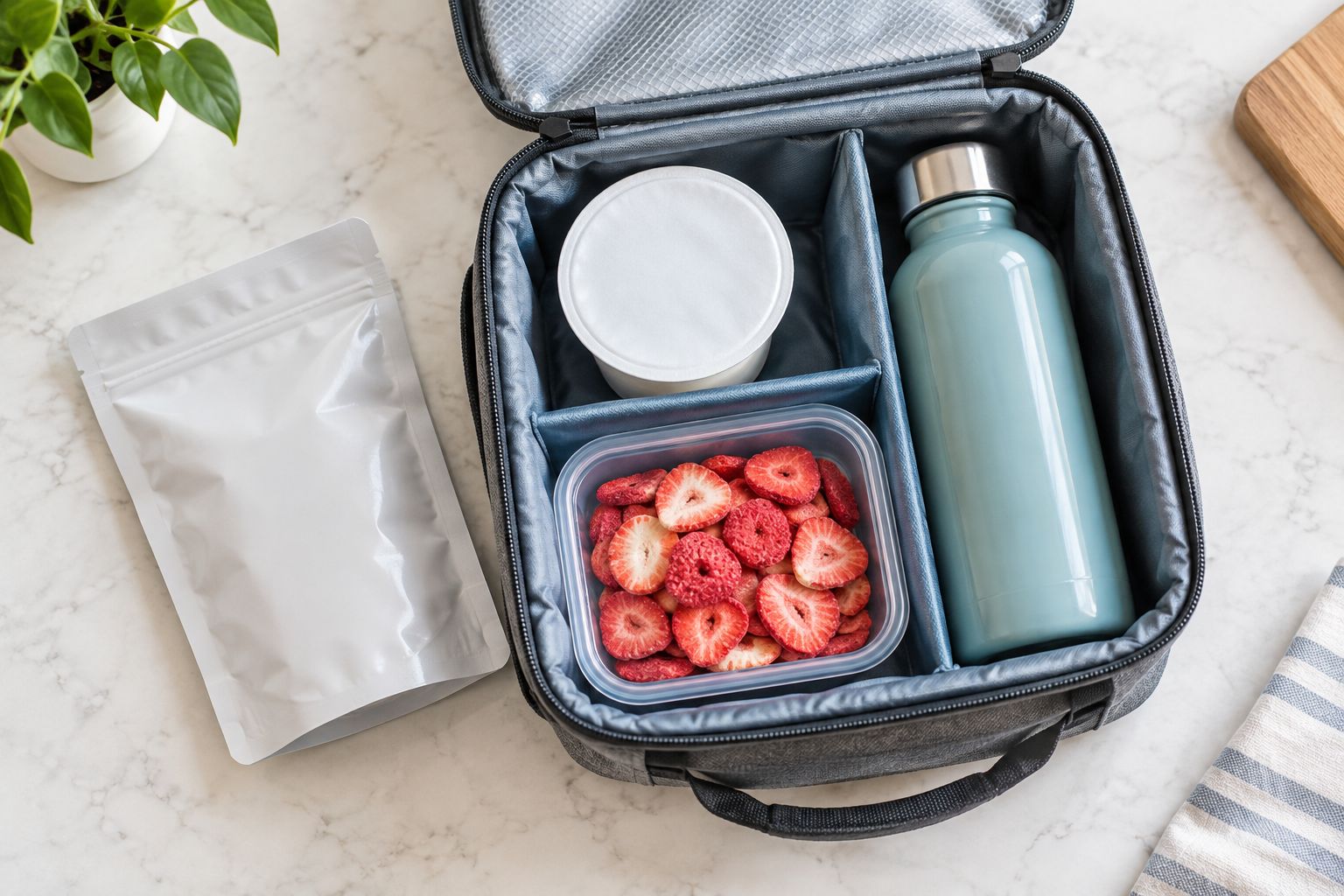
Freeze-dried fruit absorbs moisture, so the way you pack it matters. Keep crisp pieces away from yogurt, cut fruit, sauces, and condensation. Mix them into a wet food when you are ready to eat, not when you pack your bag.
A clean, rigid container helps protect a bag from pressure. Put the fruit beside—not underneath—a heavy water bottle or meal container. This will not guarantee whole pieces, but it avoids making the snack bag carry the weight of everything else.
If the fruit softens, inspect the package and follow its storage instructions. Texture alone is not a reliable food-safety test, and there is no universal after-opening timeline for every product.
- Keep wet foods in separately closed containers.
- Protect delicate pieces with a rigid outer container.
- Position heavy items away from fruit bags.
- Follow the package’s instructions after opening.
Start with flavors you already enjoy
A shift snack does not need to be a flavor experiment. Begin with fruit you enjoy fresh, then try the freeze-dried version at home. The crisp texture is different, and tartness or sweetness can feel different without the fruit’s usual water content.
Strawberry offers a sweet-tart option; banana offers a familiar, naturally sweet crunch. Pear is a milder choice, while sour kiwi is intended for people who enjoy tart fruit. Best for dependable packing: a familiar flavor you have already tried.
Variety has a role, too, but a mixed assortment is less useful if you consistently leave certain flavors behind. Separate favorites from trial flavors so an unfamiliar choice does not become your only fruit snack on a busy day.
- Try a new flavor at home before packing it for work.
- Choose familiar fruit for your main snack.
- Keep tart flavors separate from milder preferences.
- Track which flavors you finish before choosing another assortment.
Pack fruit as one part of your food plan
Fruit crisps add fruit and crunch; they do not replace all the foods you would otherwise bring. If you want a more substantial snack, pair the fruit with another food that suits your preferences and dietary needs. Keep any refrigerated companion properly chilled according to its label and workplace arrangements.
For a 2026 packing check, write down the whole bag’s contents rather than evaluating the fruit alone. A fruit pouch, a meal, a drink, and a companion snack each have a different job. This makes it easier to spot a missing meal before you leave home.
The same distinction applies to portable high-protein snacks: portability describes how easily a food travels, while protein content describes what it contributes. Choose the companion by its own label, not by assuming fruit crisps provide the same thing.
- Pack fruit alongside your planned meal, not instead of it.
- Choose companion foods using their own ingredient and nutrition labels.
- Keep foods requiring refrigeration appropriately chilled.
- Include a drink separately; dry fruit does not replace hydration.
Compare packaging options for your shift
Naturesturn freeze-dried fruit snacks are best for nurses who want fruit-only crisps without washing or slicing fruit at work. Their limitation is equally clear: the crisp texture needs protection, and a bag of fruit is not a complete meal.
The comparison below separates packaging convenience from flavor variety. It is a 2026 selection guide, not a claim that one format suits every shift or appetite. Check the current product details before choosing an assortment.
| Option | Best for | Practical advantage | Key limitation |
|---|---|---|---|
| Portion fruit into your own container | Nurses who want flexible portions | You control the amount using a clean, dry container | Adds a packing step and requires careful closure |
| Freeze-Dried Fruit Crisps Lunchbox Snack Variety Pack | Nurses who prefer small, single-serve bags | Strawberry, apple, and pear in individually packed portions | Fewer flavor choices than broader assortments |
| Freeze-Dried Fruit Crisps Sampler Variety Pack | Nurses exploring flavor preferences | Eight flavors, with one bag of each | Includes flavors you have not necessarily tried |
| Freeze-Dried Fruit Crisps, Ultimate Variety Pack (0.53oz) 36-Pack | Households sharing a broad snack assortment | 36 single-serve bags across 15 flavors | Requires more storage space and includes varied flavor preferences |
The sampler has 8 flavors to try, so it suits discovery rather than repeating one favorite. The larger assortment contains 36 bags across 15 flavors, which suits a shared pantry better than a small trial. Those are packaging differences—not evidence that you need a particular amount for a shift.
The Lunchbox Snack Variety Pack is the simpler choice if strawberry, apple, and pear already sound good. Its school-oriented name does not prevent an adult from packing it; choose the amount using your appetite and the rest of your food plan.
Two formats to consider

Strawberry, apple and pear in small, single-serve bags sized for school lunches.
$24.99

Eight flavors to try, with one bag of each flavor.
$21.99
Common mistakes nurses make when packing fruit crisps
Treating a fruit snack as the whole break meal
A convenient package makes fruit easy to bring, but convenience does not turn it into a complete meal. Pack the other foods you intend to eat before adding the fruit. If you keep coming home hungry, review the whole food plan rather than only changing fruit flavors.
Packing crisp fruit directly into yogurt
Adding fruit in the morning means the texture changes before your break. Keep the components separate if you want crunch, then combine them at the table. Softened fruit is a different eating experience, not a failed recipe if you prefer it that way.
Assuming an ingredient list answers every allergy question
A fruit-only recipe does not establish that a product is suitable for every person with an allergy. Check current package statements and seek clarification when needed. Do not relabel a shared snack as universally allergy-safe.
Buying variety without checking preferences
An assortment is less convenient when most of its flavors stay in the pantry. Try unfamiliar fruit at home and keep your reliable choices for work. If your family shares the box, separate work snacks from school snacks so neither supply disappears unnoticed.
FAQ
What are the best freeze dried fruit snacks for nurses?
The best fit is a flavor you enjoy in packaging that suits your workplace’s eating and storage rules. Naturesturn offers fruit crisps with no added sugar, including single-serve formats; pack them as part of your food plan rather than as a complete meal.
Do freeze-dried fruit snacks need refrigeration during a shift?
Unopened freeze-dried fruit generally does not need refrigeration when stored according to its package instructions. Keep the packaging dry, and refrigerate any companion food that requires it.
Are no-added-sugar fruit crisps sugar-free?
No, no-added-sugar fruit crisps are not sugar-free because fruit contains naturally occurring sugar. Read the Nutrition Facts panel for the amount in the labeled serving.
Can I eat freeze-dried fruit while working at the nurses’ station?
Eat only where your workplace permits food. Follow your facility’s infection-prevention and food-storage rules rather than assuming a portable snack is acceptable at a nurses’ station.
Are single-serve bags better than portioning fruit myself?
Single-serve bags are better for avoiding a portioning step, while your own dry container gives you more control over quantity. Neither format removes the need to protect the fruit from moisture and crushing.
What should I pack with freeze-dried fruit for a longer break?
Pack a meal or companion food that meets your preferences and dietary needs. Choose that food by its own label, and keep refrigerated items appropriately chilled.
Can I share fruit crisps with coworkers who have allergies?
Keep the original packaging available so coworkers can review the ingredients and allergen statements themselves. Do not assume a fruit-only ingredient list establishes suitability for every allergy.
One last thing
Pack the fruit last. For your next 2026 shift, load the heavier meal containers and bottle first, then give the fruit a protected spot. A favorite flavor is much more enjoyable when it arrives as crisps rather than crumbs.