


Freeze-dried fruit snacks for daycare providers: complete 2026 guide
Editorial Team
Daycare providers’ freeze-dried fruit snack planning is the process of choosing, storing, and serving crisp fruit with the aim of making supervised snack time simpler. This 2026 guide focuses on the extra checks group care requires: children’s eating abilities, individual allergy plans, shared handling, and clear communication with parents.
TL;DR
- Choose freeze dried fruit snacks for daycare providers by eating readiness, current labels, and center policy—not convenience alone.
- Naturesturn freeze-dried fruit snacks suit families seeking 100% fruit and no added sugar; daycare use requires individual checks.
- No added sugar does not mean sugar-free: fruit contains naturally occurring sugar.
- Single-serve bags simplify distribution, but neither packaging nor a crisp texture establishes suitability for every child.
Why freeze-dried fruit snacks matter for daycare providers
A daycare snack has to work for the child eating it and the adult serving it. Parents need clear ingredient information, while staff need an organized way to keep approved foods separate and serve them without a last-minute scramble.
Start with approval, not the pantry shelf. Use this guide to check allergy-friendly snacks before group celebrations when reviewing labels and family instructions.
Freeze-dried fruit offers a different eating experience from fresh fruit: it is dry and crisp rather than juicy. That difference matters when children have different chewing skills or feeding plans. A familiar fruit name does not make every form of that fruit appropriate.
For your 2026 snack plan, treat convenience as the final selection criterion. First establish whether the food fits the child, your program’s rules, and the rest of the snack. Then choose the packaging that makes the approved routine easier.
How to plan freeze-dried fruit snacks for daycare
Check each child’s eating readiness
Start with your existing enrollment records, parent conversations, and feeding instructions. You do not need a special planning tool. You need a clear answer about whether each child can manage the food’s actual texture and shape.
Freeze-dried fruit is not automatically suitable for babies or toddlers. Do not assume a crisp piece dissolves safely because it feels light. Choking risk depends on the food and the child’s developmental abilities, and adult supervision remains essential.
If a child has swallowing difficulties or an individual feeding plan, follow that plan and the child’s healthcare guidance. Do not improvise a texture change at the snack table. Keep an approved alternative ready so a child does not have to wait while staff search for something suitable.
- Confirm eating readiness with the parent or caregiver.
- Review any written feeding or swallowing instructions.
- Assess the actual piece, not just the fruit name.
- Serve children seated and under adult supervision.
- Keep an individually approved alternative available.
Read the current label for every flavor
Make the first pass yourself using the package’s ingredient list, allergen information, and Nutrition Facts panel. Compare that information with each child’s restrictions and your center’s policy. A front-of-bag claim is not a substitute for this review.
No added sugar means the product has not had sugar added; it does not mean the fruit contains no sugar. Fruit naturally contains sugar. Likewise, a short ingredient list does not establish that a food meets every allergy plan or facility requirement.
Save the current package information with your snack records, rather than relying on a remembered label or an older online screenshot. During your 2026 menu review, check each flavor separately. A mixed-fruit bag and a single-fruit bag have different ingredients, even when the packaging looks similar.
- Read the full ingredient list.
- Check allergen and cross-contact statements.
- Match every fruit or added ingredient to individual restrictions.
- Record the exact flavor and package information.
- Recheck labels when a new shipment arrives.
Choose packaging that fits your serving routine
Before buying anything new, count the children approved for the snack and review how staff currently portion food. An existing dry-food container and a written roster can support a simple routine, provided your center’s food-handling rules allow it.
For families and providers seeking 100% fruit with no added sugar, Naturesturn freeze-dried fruit snacks are a straightforward option to evaluate. The Freeze-Dried Fruit Crisps Lunchbox Snack Variety Pack contains strawberry, apple, and pear in small, single-serve bags. Those 3 fruit flavors offer choices without making every bag a mixed-fruit snack.
The limitation is important: a single-serve bag is a packaging format, not an individualized serving recommendation. It also creates an empty wrapper to manage. Choose it when the separation helps your approved routine, not because the package implies universal suitability.
- Count approved eaters before setting out bags.
- Choose single-fruit options when ingredient tracking matters.
- Keep different flavors visibly separated.
- Have an adult handle opening when needed.
- Retain the original label through snack service.
Build a snack around the whole menu
Use your existing menu sheet to decide what role the fruit will play. Is it accompanying another approved food, replacing a planned fruit option, or serving as an occasional pantry backup? Naming that role prevents a convenient bag from becoming the entire menu by default.
Freeze-dried fruit is fruit with much of its water removed. Do not assume a bag is nutritionally interchangeable with an equal volume of fresh fruit, and do not copy serving amounts from a different product. Read the actual label and follow your program’s portion guidance.
If your daycare participates in the Child and Adult Care Food Program, check current USDA requirements and your administering agency’s instructions before counting a product toward a reimbursable meal or snack. Product marketing does not establish meal-pattern crediting.
- Write down the snack’s role in the menu.
- Review the product’s serving information.
- Select any accompanying food under the same allergy checks.
- Follow your program’s portion guidance.
- Confirm applicable meal-pattern requirements separately.
Protect the crisp texture during storage
Start with the manufacturer’s storage directions and your normal pantry checks. Keep the fruit in its original packaging until needed, and follow the package instructions after opening. Do not invent an opened-bag storage deadline.
Freeze-dried fruit takes up moisture from its surroundings, which changes its crisp texture. Keeping it separate from wet foods matters. If you plan to combine it with an approved moist food, make that a deliberate serving choice rather than an accidental result of packing everything together early.
A simple labeled pantry area helps staff distinguish unopened supplies, opened packages, and food reserved for a particular child. Protect lightweight pieces from crushing, too. A snack bag underneath a stack of containers is unlikely to reach the table in the same condition.
- Follow the package’s storage instructions.
- Check package seals before use.
- Keep dry crisps separate from wet foods.
- Close opened packaging as directed.
- Store bags where heavier supplies will not crush them.
Set up a calm serving station
Plan the serving sequence on paper before snack time. Bring out only the foods approved for that group, keep the child-specific alternatives identifiable, and leave the ingredient information where staff can find it.
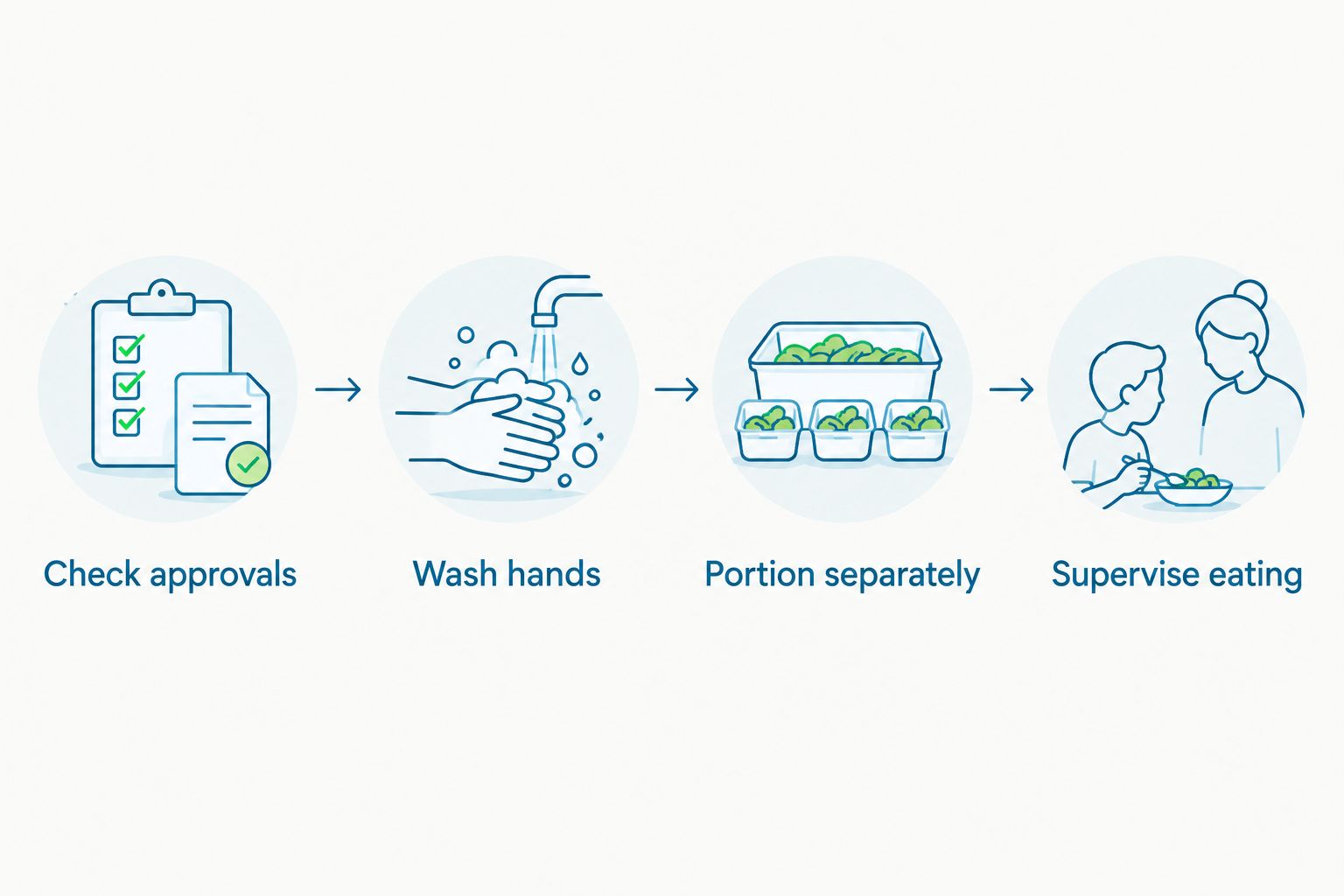
Clean hands and clean serving equipment are part of the routine, not a substitute for an allergy plan. Avoid a shared grab bag, and do not let children exchange snacks. Keep children seated while eating rather than handing out crisps during active play or a rushed transition.
Your 2026 staff instructions should be clear enough for a substitute to follow. Specify who checks the roster, who serves, and where an approved alternative is stored. Responsibility should not depend on someone remembering what happened yesterday.
- Check approvals before opening food.
- Wash hands and prepare clean equipment.
- Portion separately under your food-handling rules.
- Prevent snack swapping and shared grabbing.
- Supervise eating and follow your emergency procedures.
Record what children actually eat
Use a brief note on your existing menu sheet after service. Record the flavor offered, whether it was accepted, and any practical issue such as difficult packaging or excessive breakage. You do not need a detailed scoring system.
Keep preference notes separate from medical information. A child refusing a tart flavor is not the same as a suspected reaction, and a child enjoying a food does not establish that it fits their feeding plan. Follow your center’s procedures for concerns and parent communication.
Flavor variety is useful only when staff can still track what each child receives. Introduce choices within the approved menu rather than opening every available flavor at once. That keeps the routine understandable for children, parents, and the next staff member taking over.
- Note the exact flavor served.
- Record acceptance without pressuring children to finish.
- Log packaging or storage problems.
- Report concerns through your established procedure.
- Adjust future orders using actual use and waste.
Compare snack options for your daycare
For 2026 planning, choose between options by their job at snack time—not by which bag looks most convenient. No option replaces individual feeding and allergy checks.
| Option | Best for | Practical advantage | Key limitation |
|---|---|---|---|
| Freeze-Dried Fruit Crisps Lunchbox Snack Variety Pack | Separating familiar fruit choices | Strawberry, apple, and pear come in small, single-serve bags | The packaged amount still needs review against individual portion guidance |
| Freeze-Dried Fruit Crisps Sampler Variety Pack | Exploring preferences within an approved menu | Contains 8 flavors, with 1 bag of each | Every flavor needs its own ingredient review; a child need not like every option |
| Fresh fruit prepared for the child | Menus calling for a juicy fruit texture | Offers a different eating experience from dry crisps | Washing, preparation, storage, and shape require attention |
| Separately portioned freeze-dried fruit | Staff-managed portions under center policy | Lets staff follow individualized serving instructions | Adds handling and requires a way to preserve ingredient information |
The sampler contains 8 bags in total. That makes it a way to explore preferences, not a promise of enough matching portions for a whole group. Check the contents against your roster before using it for a shared snack.
These Naturesturn options serve different needs: the lunchbox pack emphasizes separated familiar choices, while the sampler emphasizes flavor variety. Neither establishes allergen suitability or developmental readiness.
Fruit packs to evaluate for your snack plan

Strawberry, apple and pear in small, single-serve bags sized for school lunches.
$24.99

Eight flavors to try, with one bag of each flavor.
$21.99
Common mistakes daycare providers make
Treating crisp fruit like an infant melt
A light, dry texture does not establish that a snack is suitable for an infant or a child learning to chew. Assess the actual food under the child’s feeding guidance, and choose a different approved option when its suitability is uncertain.
Using one flavor’s label to approve the whole box
A variety pack contains different foods, not one interchangeable ingredient list. Review each flavor before serving, including fruits and spices. Keep the exact package available so another staff member can confirm what a child received.
Calling no-added-sugar fruit sugar-free
Fruit contains naturally occurring sugar. Tell parents that the snack has no added sugar when the current label supports that claim; do not shorten the message to sugar-free. Clear wording avoids creating the wrong expectation about ingredients or nutrition.
Assuming unopened bags solve every handling issue
Individual packaging helps separate food before opening, but adults still need clean hands, a serving plan, and active supervision. Once bags are open, snack swapping and shared handling can defeat the separation you intended.
Choosing flavors before checking the group’s needs
A colorful assortment is appealing, but the approved roster comes first. Start with feeding plans and restrictions, then choose flavors within those boundaries. A familiar, approved alternative is more useful than a large selection staff cannot confidently serve.
FAQ
Are freeze-dried fruit snacks safe for toddlers at daycare?
Suitability depends on the individual toddler, the food’s texture and shape, and any feeding instructions. Do not assume freeze-dried fruit dissolves safely; serve only appropriate foods with children seated and supervised.
What are the best freeze dried fruit snacks for daycare providers?
The best choice is a product whose current label, texture, and packaging fit the approved children and your center’s procedures. Naturesturn offers 100% fruit snacks with no added sugar, but each flavor still needs individual review.
Does no added sugar mean freeze-dried fruit is sugar-free?
No, fruit contains naturally occurring sugar. No added sugar describes the absence of added sugar, not the absence of all sugar.
Can I count freeze-dried fruit toward a CACFP snack?
Confirm crediting with current USDA guidance and your administering agency before including a product in a reimbursable snack. Do not infer a creditable portion from the bag size or front-of-package wording.
Are single-fruit snacks automatically allergy-friendly?
No, a single-fruit ingredient list does not establish suitability for every allergy plan. Check the current package, relevant cross-contact information, and each child’s written restrictions.
Should daycare providers choose single bags or portion fruit themselves?
Choose the format that fits your center’s approved handling and portioning procedures. Single bags simplify separation before opening; staff-portioned fruit adds handling but allows individualized portions.
How do I keep freeze-dried fruit crisp until snack time?
Follow the package’s storage directions and keep dry crisps separate from wet foods. Protect the packaging from damage, and follow the manufacturer’s instructions after opening.
One last thing
Keep the label, not just the snack. Once fruit has been poured into a bowl, its appearance cannot reliably tell the next caregiver which ingredients or flavor were served. Preserve the original package through service and connect it to your snack record.
For your 2026 routine, make that handoff as ordinary as putting out cups. A substitute should be able to identify the food, check the approved roster, and find the alternative without guessing. That small habit supports a calmer snack time for staff and clearer answers for parents.