


Does freeze-dried fruit lose vitamins during processing?
Editorial Team
Yes, freeze-dried fruit loses some vitamins during processing, but it does not lose all its nutritional value. Vitamin C is especially sensitive, and the amount retained depends on the fruit, processing conditions, packaging, and storage. For your child's lunchbox, treat freeze-dried fruit as a convenient fruit option—not a guarantee of the same vitamin content as fresh fruit.
TL;DR
- Does freeze dried fruit lose vitamins? Yes, but vitamin loss varies; no single retention percentage describes every fruit.
- Vitamin C is sensitive to processing and storage; check the finished snack's Nutrition Facts rather than assuming an amount.
- Nature’s Turn freeze-dried fruit snacks suit parents seeking 100% fruit ingredients and no added sugar—not guaranteed vitamin retention.
- Fresh, frozen, and freeze-dried fruit serve different packing needs; keep variety in your family's routine.
Why this matters for your lunchbox
A crunchy fruit snack can make school mornings easier without needing to match fresh fruit in every nutritional detail. The useful question is whether it fits your child's eating habits, the rest of lunch, and your school's rules.
Nature’s Turn makes freeze-dried fruit snacks with no added sugar. That ingredient claim answers a different question from vitamin retention: a short ingredient list does not tell you how much vitamin C remains after processing.
For your 2026 snack routine, choose fruit your child enjoys, read the label, and keep different fruit forms in rotation. You do not need to make every lunchbox choice a contest over a single nutrient.
Does freeze-dried fruit lose vitamins during processing?
Yes. Freeze-drying preserves some vitamins, but it does not prevent every vitamin loss. The process freezes food and removes water under reduced pressure, with much of the ice changing directly into vapor. This is called sublimation.
That process differs from drying fruit with hot air. Lower-temperature drying can help protect heat-sensitive nutrients, but freezing, preparation, oxygen exposure, and later storage still affect the finished food. Freeze-drying is a preservation method, not a promise that every nutrient stays unchanged.
The comparison below separates practical benefits from nutritional limits. None of these fruit forms wins every lunchbox situation.
| Fruit form | Best for | Main benefit | Limitation to remember |
|---|---|---|---|
| Fresh fruit | Children who enjoy juicy textures | Provides fruit with its water still present | Ripeness, handling, and storage affect quality and vitamins |
| Frozen fruit | Home meals and chilled preparations | Makes fruit convenient to keep for later use | Thaws and releases liquid; not a direct substitute for dry lunchbox crisps |
| Freeze-dried fruit | Dry, portable fruit snacks | Light, crisp fruit that needs no cutting before packing | Some vitamin loss occurs, and the fruit no longer provides its original water |
| Heat-dried fruit | Children who prefer chewy textures | Offers another portable way to eat fruit | Heat-sensitive vitamins can decline; ingredients vary by product |
The fair takeaway is simple: freeze-dried fruit remains fruit, but its vitamin profile is not automatically identical to fresh fruit. A comparison also needs to account for serving size and water content, not just the food's name.
Which vitamins are most affected?
Vitamin C deserves particular attention because it is sensitive to heat and oxidation. The National Institutes of Health Office of Dietary Supplements identifies storage and cooking as factors that reduce food's vitamin C content. That supports caution about retention, not a universal loss figure for freeze-dried snacks.
Some B vitamins are also sensitive to processing conditions. Different vitamins respond differently to heat, light, oxygen, and preparation, so a statement about vitamin C cannot stand in for every vitamin in the fruit.
For a parent choosing snacks in 2026, the practical limit is this: the words freeze-dried do not reveal a finished product's vitamin content. Neither does a bright color, a strong fruit flavor, or a particularly loud crunch.
If vitamin C is the nutrient you are comparing, look for vitamin C information on the current package. Do not assume that a strawberry snack supplies a particular amount simply because fresh strawberries contain vitamin C.
What about fiber and minerals?
Fiber and minerals are not vitamins. Removing water does not automatically remove all the fiber or minerals from fruit, and vitamin C loss does not mean that every other nutrient has disappeared.
Keep those questions separate when reading snack advice. A claim about fiber cannot establish vitamin retention, and a claim about vitamins cannot tell you whether a snack provides enough protein for the rest of lunch.
Why vitamin retention varies
There is no useful blanket percentage for every freeze-dried fruit. These factors affect the starting vitamin content, the processing loss, or what remains by the time you open the bag:
- Fruit and ripeness: Different fruits begin with different vitamin levels. Variety and maturity also affect their composition.
- Preparation: Peeling, cutting, and any pretreatment change what enters the dryer. Cutting also exposes more fruit surface to air.
- Processing conditions: Temperature, time, and the complete drying process affect nutrient retention. The method's name alone does not describe all those conditions.
- Oxygen and light: Exposure during handling and storage contributes to the breakdown of sensitive vitamins.
- Packaging and storage: The package's protection and the conditions in your pantry influence how well the food keeps after processing.
You cannot judge those factors from a product photo. Use the package's nutrition information and storage directions instead of treating appearance as evidence.
How can I compare vitamin content fairly?
Start with the same nutrient and a clearly stated serving. An equal weight of fresh fruit and freeze-dried fruit is not an equal amount of starting fruit, because fresh fruit contains much more water.
This explains an easy source of confusion: a dried food can show more of a nutrient per gram even after some of that nutrient was lost during processing. Removing water changes the concentration; it does not create vitamins.
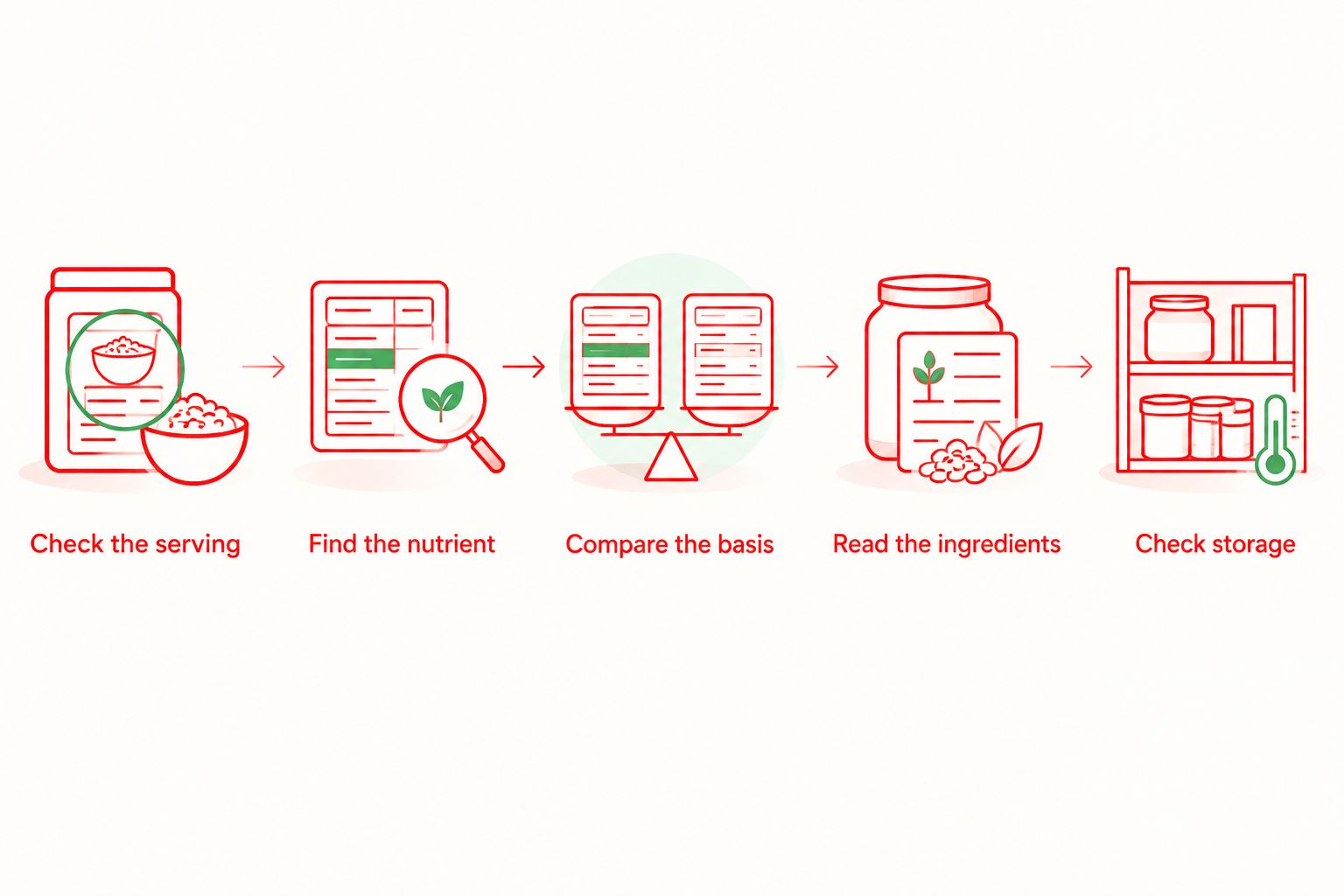
Use this sequence for your 2026 label checks:
- Check the serving. Read the serving size and servings per container before comparing nutrients.
- Find the nutrient. Look for the specific vitamin you care about, rather than relying on a general fruit claim.
- Compare the basis. Keep per-serving comparisons separate from per-weight comparisons.
- Read the ingredients. Check whether the product contains fruit alone or includes other ingredients.
- Check storage. Follow the package instructions so your comparison also leads to sensible pantry habits.
The U.S. Food and Drug Administration's general label guide treats 5% Daily Value or less per serving as low and 20% Daily Value or more as high for a nutrient. Those thresholds help interpret a listed vitamin amount; they do not measure how much survived freeze-drying.
Also remember that vitamin C is not required on every standard Nutrition Facts label. If it is not listed, the omission alone does not prove the food contains none. It also gives you no basis for claiming a particular amount.
Does no added sugar mean more vitamins?
No added sugar does not establish vitamin content. It tells you about added sugars, not how much vitamin C or another vitamin survived processing.
Fruit contains naturally occurring sugars. A snack made only from fruit can therefore have no added sugar while still containing total sugars on its Nutrition Facts label. No added sugar does not mean sugar-free.
The same distinction applies to a 100% fruit claim. It describes the ingredients; it is not a vitamin-retention test. Read the ingredient list for what is in the snack and the Nutrition Facts for the nutrients it declares.
For your 2026 shopping list, keep these as separate checks. You can prefer simple ingredients without assuming that every simple-ingredient snack has the same nutritional profile.
Is freeze-dried fruit better than fresh fruit for school snacks?
Freeze-dried fruit is better suited to some packing situations, not universally better nutritionally. It works when you want a dry, crisp fruit option without washing or cutting fruit that morning. Fresh fruit offers juicy texture and water that freeze-dried fruit no longer contains.
Your child's preferences matter here. A child who likes crunchy apple pieces might enjoy a different texture on another day. Offering both forms avoids making one snack responsible for every fruit-related need.
Do not use convenience as a reason to ignore the rest of lunch. Think about the whole meal, including other foods and a drink, rather than asking a small bag of fruit crisps to do everything.
How should I pack freeze-dried fruit for school?
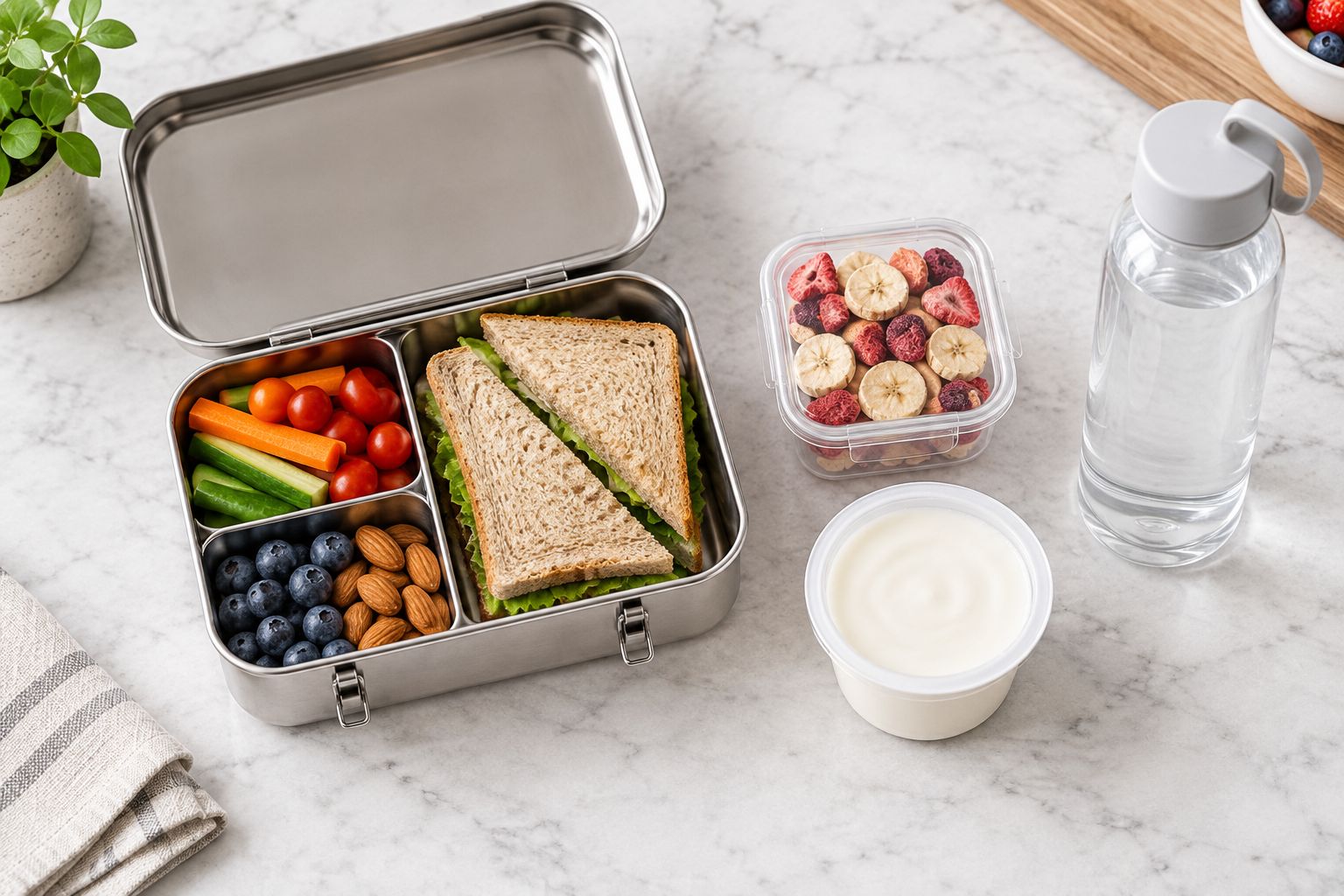
Keep the fruit dry, protect it from crushing, and follow the package's storage instructions. Pack it separately from juicy fruit, yogurt, and other wet foods if your child wants the pieces to stay crisp.
A rigid lunchbox compartment can protect delicate pieces from a heavy food container. If your child enjoys fruit crisps stirred into yogurt, send them separately and let your child combine them at eating time. Follow appropriate cold-storage guidance for the yogurt.
For children with allergies, check current ingredient and allergen information every time you choose a snack. A fruit-only ingredient list does not establish manufacturing conditions or make a product suitable for every child. Confirm school policies, too.
Texture also needs an individual check. Choose pieces appropriate for your child's eating skills and follow any feeding guidance your child's clinician has given you.
Which fruit snack fits a busy school morning?
Nature’s Turn freeze-dried fruit snacks are best for parents seeking 100% fruit ingredients and no-added-sugar lunchbox convenience. That is an ingredient-and-packing recommendation, not a claim that the snacks match fresh fruit vitamin for vitamin.
The Freeze-Dried Fruit Crisps Lunchbox Snack Variety Pack contains strawberry, apple, and pear in small, single-serve bags designed for school lunches. It gives you familiar fruit choices without cutting fruit before you leave.
The limitation is the same as for the category: convenience and ingredient simplicity do not establish a particular vitamin-retention rate. Check current labels, confirm school requirements, and choose flavors your child actually enjoys.
FAQ
Does freeze dried fruit lose vitamins during processing?
Yes, freeze-dried fruit loses some vitamins during processing, but the amount varies by fruit and processing conditions. Vitamin C is especially sensitive, and storage also affects what remains.
Does freeze-drying destroy all the vitamin C in fruit?
Freeze-drying does not automatically destroy all the vitamin C in fruit. The finished amount depends on the starting fruit, preparation, processing, packaging, and storage; no single percentage describes every product.
Is freeze-dried fruit as nutritious as fresh fruit?
Freeze-dried fruit is not nutritionally identical to fresh fruit. It loses water and some vitamins, while other components, including fiber and minerals, remain; compare specific nutrients and serving sizes rather than assuming an exact match.
Does 100% fruit mean all the original vitamins remain?
A 100% fruit claim does not mean all the original vitamins remain. It describes ingredients, not the amount of each vitamin retained through processing and storage.
Are Nature’s Turn fruit snacks sugar-free?
Nature’s Turn fruit snacks have no added sugar, but that does not mean they are sugar-free. Fruit contains naturally occurring sugars, so check total sugars separately from added sugars on the current label.
Can I tell vitamin retention from the Nutrition Facts label?
The Nutrition Facts label can show a listed vitamin's amount, but it does not by itself show the percentage retained from the starting fruit. Calculating retention requires information about the fruit before processing and a comparable measurement afterward.
Does adding water back restore lost vitamins?
Adding water back does not restore vitamins that have already broken down. Rehydration changes the fruit's moisture and texture, not the amount of a vitamin that was destroyed during processing.
One last thing
A louder crunch is not a vitamin test. Neither is a brighter color.
For your next 2026 lunchbox restock, make the decision simpler: choose an appropriate fruit snack your child enjoys, check the current label, and keep fresh fruit in the family routine too. Use freeze-dried fruit for what it offers—not for a vitamin-retention promise the package does not make.