


Are individually wrapped fruit snacks worth the extra cost?
Editorial Team
Individually wrapped fruit snacks are worth the extra cost when ready-to-pack portions solve a real school-day problem; they are not automatically better value for eating at home. The trade-offs are more individual wrappers and less flexibility over portion size, so judge the packaging by what your child actually eats—not just how quickly you can fill a lunchbox.
TL;DR
- Are individually wrapped snacks worth it? Yes for busy lunchbox routines; not automatically for home snacking.
- Naturesturn freeze-dried fruit snacks offer 100% fruit and no added sugar; packaging does not make them sugar-free.
- Compare equal amounts of fruit, then consider unused portions, packing work, and wrappers.
- Check current product labels and school policies before sending any packaged snack.
Why this matters
A snack that is easy to pack still needs to suit your child. For your 2026 school routine, separate ingredient quality from packaging convenience: a sealed bag solves a packing task, not every snack decision.
Are individually wrapped fruit snacks worth the extra cost?
Choose individual bags for grab-and-go packing; choose home-portioned fruit when you want control over the amount. Neither format wins every day.
| Option | Best for | Practical advantage | Trade-off |
|---|---|---|---|
| Freeze-Dried Fruit Crisps Lunchbox Snack Variety Pack | Parents wanting small, single-serve school snacks | Strawberry, apple, and pear in bags sized for school lunches | The packaged portion will not match every child's appetite |
| Freeze-Dried Fruit Crisps Sampler Variety Pack | Families exploring fruit preferences | Includes 8 flavors, with 1 bag of each | A child who likes only a few flavors will leave you with others to use |
| Fruit portioned at home | Families wanting adjustable amounts | You choose the quantity and container | You handle portioning, sealing, and container cleanup |
The Lunchbox Snack Variety Pack has a clear purpose: school-day convenience. The Sampler Variety Pack serves a different purpose: trying flavors before settling into a routine. Do not treat a tasting assortment as automatically equivalent to a set of familiar lunchbox favorites.
Home portioning is useful when your child wants a little fruit alongside other foods or prefers a larger amount after school. Its drawback is the work you take on yourself. That work matters, but it does not prove that individually wrapped snacks save money.
Individual bags: best for busy school mornings
An individual bag removes the scoop-and-seal step from packing. You can put it beside the rest of lunch without finding a clean snack container, deciding how much fruit to pour, or washing that container afterward.
That is a useful benefit when someone else helps with lunches. A grandparent or sitter can follow a simple instruction about which bag belongs in the lunchbox. Keep any dietary instructions equally clear; packaging alone does not communicate everything a caregiver needs to know.
Naturesturn freeze-dried fruit snacks are a practical fit for parents who want 100% fruit, no-added-sugar lunchbox options. The convenience comes from the format, while the ingredients answer a separate question about what is inside.
There are limits. Your child still needs to open the bag, enjoy the fruit, and have enough time to eat it. Try the opening process at home rather than discovering a problem during a short school snack break.
For your 2026 packing plan, reserve individual bags for situations where they remove a specific task. You do not need to use the same format for breakfast at home, school snack, and an afternoon at the kitchen table.
Home-portioned fruit: best for flexible appetites
Portioning fruit yourself lets you adjust the amount to the rest of the meal. A small side of fruit and a stand-alone snack do not have to use identical portions simply because the package comes that way.
A reusable container also gives you control over how you pack delicate crisps. Choose a clean, dry container with a secure lid, and place it where heavier lunch items will not press against it. Follow the product's storage directions for the fruit left behind.
The disadvantage is simple: somebody has to do the work. Containers need cleaning and drying, and opened fruit needs careful closing and storage. If that task repeatedly gets skipped, the theoretical convenience of a larger bag does not help your morning.
Choose home portioning when you will actually maintain the routine. Do not choose it solely because it looks organized in a pantry photo. The useful system is the one your household can repeat on an ordinary school night.
Why the value of individual wrapping varies
The value changes with your routine, not just the package format. Use these factors to decide where individual bags earn their place:
- Packing work: Individual bags remove a portioning step. Home portions give you more control but require preparation and cleanup.
- Flavor fit: An assortment helps you explore preferences, but unfamiliar flavors are not useful if nobody wants them.
- Amount eaten: A fixed bag is convenient only when its contents suit the occasion. Check what comes home unfinished.
- Storage habits: Freeze-dried fruit needs protection from moisture. Follow package directions and close opened fruit promptly.
- School requirements: Some classrooms request particular packaging or labeling. Confirm the actual policy before buying for group use.
- Wrapper preferences: Individual bags create separate wrappers. Reusable containers need washing and eventually replacing; neither choice deserves an unsupported environmental claim.
For 2026, make the decision around your busiest repeat situation. If packing school snacks is the sticking point, test individual bags there first. If the problem is rejected flavors, changing the package will not fix it.
How to compare value without comparing mismatched bags
Compare the same amount of fruit before deciding whether convenience justifies the difference. A small single-serve bag and a larger sharing bag do not provide the same amount simply because each is called a bag.
Start with net weight
Read the net weight on the exact packages you are considering. Then use the retailer's current unit information, or divide the current package total by its total weight, to compare equal amounts. Do not assume every flavor or assortment uses the same bag size.
This keeps the comparison honest. A box with more bags does not necessarily contain more fruit than another box, and a larger-looking package does not establish better value.
Check what the assortment contains
The Sampler Variety Pack lists 8 flavors and 1 bag of each. That makes it useful for learning preferences, but the variety itself is not proof of a better everyday fit.
Think about how the assortment will get used. If your child chooses familiar apple while another family member enjoys the remaining flavors, that is workable. If unwanted bags simply stay in the pantry, a narrower selection suits your household better.
Add the practical trade-offs
Consider portioning, container cleanup, and unfinished food separately from the shelf comparison. Do not assign imaginary savings to a few easier mornings or assume sealed bags eliminate waste.
Ask a simpler question: would you choose the individual format again for this same situation? A clear answer after using it is more useful than a shopping-cart assumption.
Options for lunchbox packing and flavor discovery

Strawberry, apple, and pear in small, single-serve bags sized for school lunches.
$24.99

Eight fruit flavors to try, with one bag of each.
$21.99
How to test whether individual bags fit your family
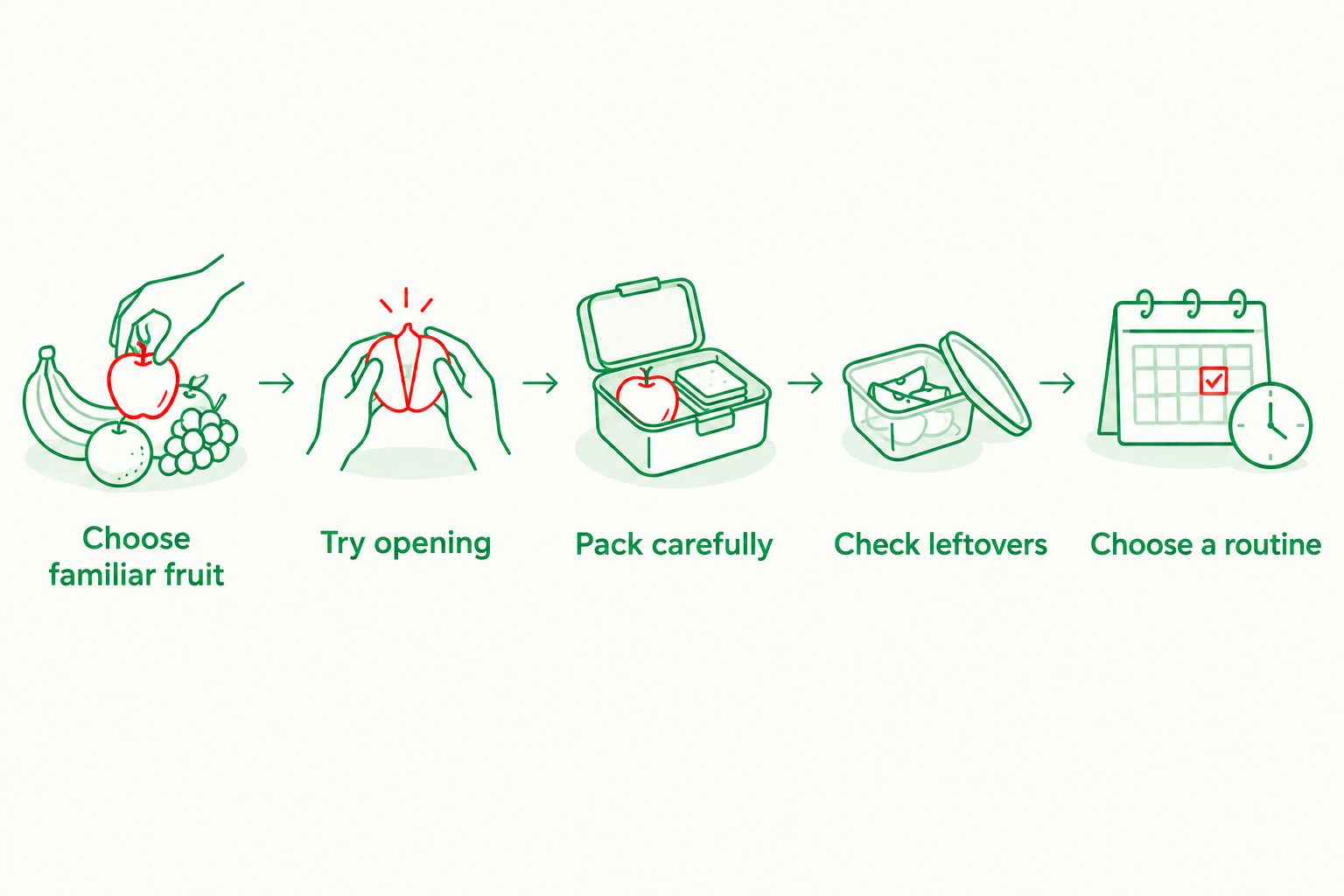
You do not need an elaborate snack system. Use an ordinary stretch of school days to check the parts that matter before making individual bags your default.
- Choose familiar fruit. Start with a flavor your child already enjoys so you are testing the packaging, not a new taste.
- Try opening. Ask your child to open the package while seated, as they would at snack time. Offer help and decide whether the format suits school.
- Pack carefully. Keep fruit crisps away from wet food and protect the bag from heavy items. A sealed package does not make delicate pieces crush-proof.
- Check leftovers. Ask whether the amount felt right and whether there was time to finish. An unopened bag tells a different story from a flavor your child disliked.
- Choose a routine. Keep individual bags for situations where they help, and use home portions where flexibility matters more.
Repeat the opening check when you change package styles. A child who handles one bag comfortably might need help with another, and a new lunchbox layout can change how easily the snack is found.
For a 2026 classroom event, ask the teacher about distribution and packaging before planning quantities. Keep original labels available when requested, and do not promise that a fruit-only ingredient list makes a snack suitable for every student.
Does individual wrapping make fruit snacks healthier?
Individual wrapping changes the portion and packing format, not the ingredient list. You still need to read what the snack contains and check the Nutrition Facts panel for the specific product.
The phrase fruit snack can describe different foods. Look for the actual ingredients rather than relying on fruit pictures, a lunchbox illustration, or the presence of a small wrapper. A familiar format is not a nutrition claim.
Naturesturn fruit crisps have no added sugar, but fruit contains naturally occurring sugar. No added sugar does not mean sugar-free. Keep that distinction clear when choosing snacks or explaining them to your child.
Treat the packaged amount as information, not a personalized instruction about how much your child must eat. Consider the rest of the meal, your child's appetite, and any individual guidance you already follow.
Are individually wrapped snacks better for school allergies?
Individual wrapping keeps the original package with the snack; it does not establish allergen safety. Read the current ingredient and allergen information, including any relevant manufacturing statements, and follow your school's rules.
A short ingredient list is helpful to read, but it does not answer every cross-contact question. If your child has a food allergy, use their established care plan and clarify unresolved product questions with the manufacturer before packing.
For shared classroom snacks, let the school decide what is acceptable. Do not describe a snack as safe for everyone, and do not substitute a general fruit claim for checking the exact product being sent.
Can you use individual bags only on busy days?
A mixed routine is a sensible choice when your packing needs change. Use sealed bags for mornings when ready-to-pack food helps, and portion fruit at home when you have the time and want a different amount.
You do not need to commit the whole pantry to one format. Keep the choice tied to a real use: school snack, a caregiver handoff, or eating at home. Convenience is most useful when it solves a particular problem.
FAQ
Are individually wrapped snacks worth it for school lunches?
Individually wrapped snacks are worth it when ready-to-pack portions make your school routine easier and the amount suits your child. Compare equal amounts of food and consider wrappers, opening difficulty, and unfinished portions.
Are individual fruit snack bags better value than a larger bag?
Individual fruit snack bags are not automatically better value than a larger bag. Compare the current unit information for the exact packages, then decide whether the packing convenience matters to your household.
Does no added sugar mean a fruit snack is sugar-free?
No added sugar does not mean a fruit snack is sugar-free. Fruit contains naturally occurring sugar, so check the ingredient list and Nutrition Facts panel for the specific product.
Can I portion freeze-dried fruit into reusable containers?
You can portion freeze-dried fruit into clean, dry containers with secure lids. Follow the product's storage directions, protect the crisps from moisture, and pack them away from heavy items.
Is a sealed fruit snack automatically safe for a nut-free classroom?
A sealed fruit snack is not automatically suitable for a nut-free classroom. Check the current product's ingredient and allergen information and confirm the school's policy before sending it.
What should I check before buying a fruit snack variety pack?
Check the included flavors, bag sizes, ingredient information, and your family's preferences before buying a fruit snack variety pack. Variety helps with tasting, but unwanted flavors do not become useful simply because they are individually wrapped.
What is the simplest way to choose snack packaging in 2026?
The simplest way to choose snack packaging in 2026 is to match it to the job: individual bags for ready-to-pack convenience and home portions for flexibility. Test whether your child can open the package and enjoys the amount provided.
One last thing
The most useful snack feedback is what comes home in the lunchbox. An unopened bag, crushed crisps, and an unfinished portion each point to a different fix: opening practice, better placement, or a different amount.
Before changing everything, solve that specific problem. Individually wrapped fruit is worth choosing when the packaging helps your family enjoy the fruit—not when it simply makes the pantry look ready for school.