


Can freeze-dried fruit help picky eaters eat more fruit?
Editorial Team
Yes—freeze-dried fruit can give picky eaters another way to enjoy fruit, especially when they prefer crunchy foods to soft or juicy textures. It does not guarantee that your child will eat more fruit or accept fresh fruit afterward. Offer it without pressure alongside familiar foods, and keep other fruit options in the picture.
TL;DR
- Can freeze dried fruit help picky eaters? Yes, as another texture to try—not a guaranteed solution.
- Naturesturn freeze-dried fruit crisps suit families seeking 100% fruit snacks with no added sugar.
- Start with a familiar fruit flavor, keep foods separate, and let your child decide whether to taste.
- No added sugar does not mean sugar-free; fruit contains naturally occurring sugar.
Why this matters
A strawberry can be appealing in one form and unwelcome in another. A child who dislikes wet fingers or soft fruit might be interested in a crisp piece instead. That is a reason to offer a different texture, not a reason to promise a breakthrough.
For your 2026 school-snack routine, aim for a fruit option your child can comfortably explore and eat. The broader question—can freeze-dried fruit replace fresh fruit for kids?—is separate from whether a crunchy option belongs in the lunchbox.
The goal is another accepted food, not a clean plate on demand.
Can freeze-dried fruit help picky eaters eat more fruit?
Freeze-dried fruit gives you a different way to offer the same fruit ingredient. Freeze-drying removes water from frozen food, producing a light, dry texture rather than the juicy texture of fresh fruit. Whether that difference helps depends on what your child likes—and what bothers them.
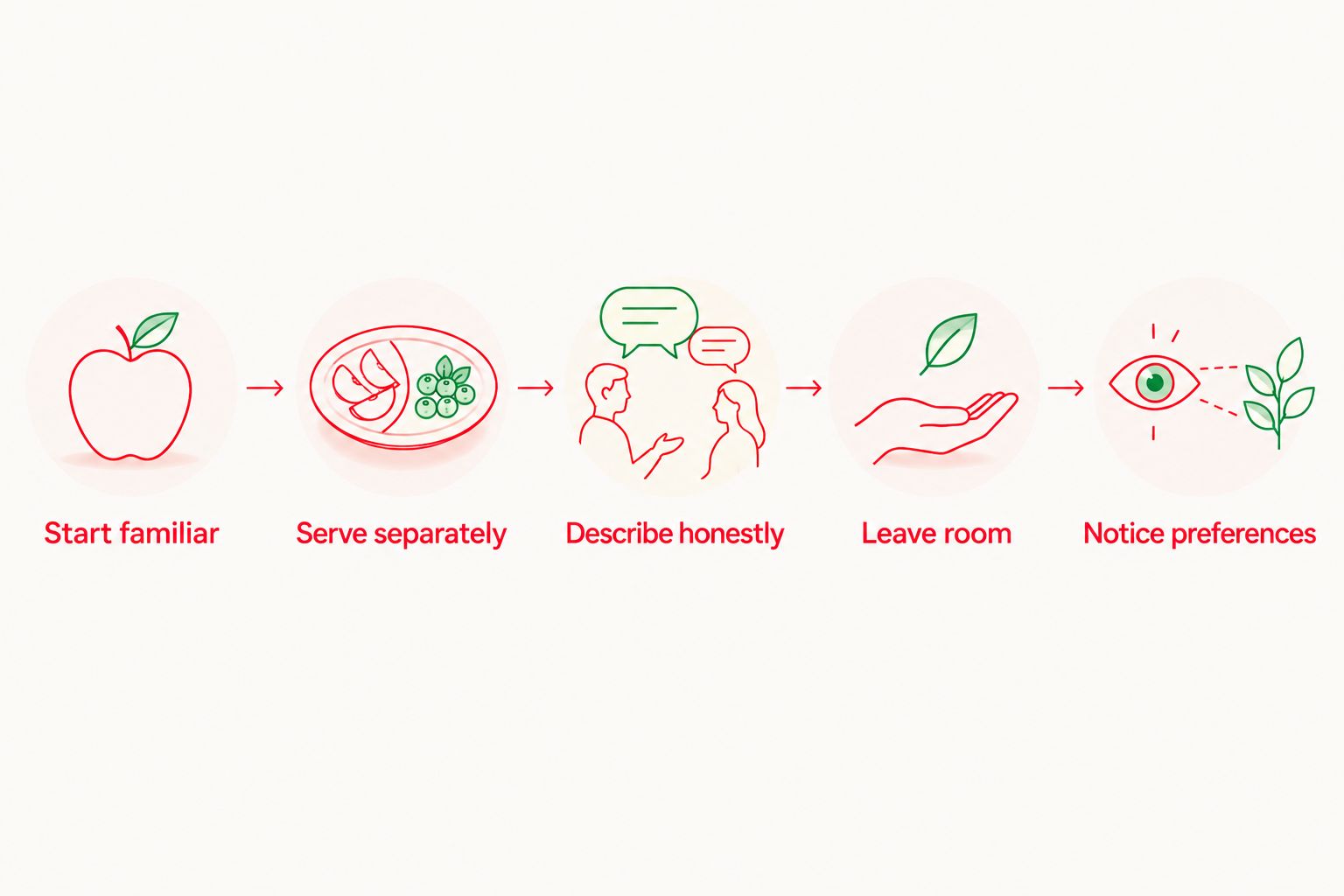
Use this simple approach rather than introducing several unfamiliar foods together:
- Start familiar. Choose a fruit your child already recognizes or enjoys in another form.
- Serve separately. Put the fruit beside an accepted snack instead of mixing it into that food.
- Describe honestly. Say that it is crunchy fruit; do not present it as candy or hide what it is.
- Leave room to decline. Let your child decide whether to touch, taste, or eat it.
- Notice preferences. Ask about crunch, tartness, and flavor without turning snack time into a test.
These steps are an offering routine, not a treatment plan or a schedule for results. Eating a crisp strawberry does not establish that a child will accept a fresh strawberry next.
What counts as a useful outcome?
Your child eating and enjoying fruit is a useful outcome, even when the fruit looks different from the version you first offered. Keep the distinction clear: accepting freeze-dried apple expands the ways your child eats apple, but it does not automatically expand the number of fruits they eat.
You can also notice interest without calling it increased intake. Looking at a new food or describing its smell is different from eating it. Both observations help you choose what to offer next, but only eating the fruit answers the intake question.
Which freeze-dried fruit should you try first?
Choose by your child's preferences, not by how adventurous a flavor sounds. A familiar single fruit keeps the first introduction simple. A sampler fits a family that wants different flavors to explore separately.
The following Naturesturn freeze-dried fruit options serve different purposes. Neither guarantees acceptance, and neither is automatically suitable for every child's allergies or eating abilities.
| Option | Best for | What supports that choice | Limitation |
|---|---|---|---|
| Freeze-Dried Strawberry Crisps | Children already interested in strawberry flavor | Made with strawberries only; light, crisp pieces with sweet-tart flavor | Familiar flavor still comes with an unfamiliar texture |
| Freeze-Dried Fruit Crisps Sampler Variety Pack | Families exploring different fruit preferences | Includes 8 flavors, with 1 bag of each | A selection of flavors does not mean your child will enjoy every bag |
A single fruit: best for a familiar starting point
Freeze-Dried Strawberry Crisps let you offer strawberry without combining it with another fruit. That makes the conversation simple: your child can decide what they think about strawberry flavor in a crisp form.
The trade-off is that sweet-tart fruit and a dry crunch will not appeal to every child. If your child dislikes strawberry flavor itself, changing the texture is not a reason to expect a different response. Start with recognition, not persuasion.
A sampler: best for exploring preferences separately
The Freeze-Dried Fruit Crisps Sampler Variety Pack contains 8 flavors, with 1 bag per flavor. It gives your family different fruits to explore without treating a mixed bowl as the starting point.
Keep the flavors separate while you learn what your child likes. If your child wants the same familiar fruit each time, a sampler adds choices without necessarily adding accepted foods. Save the other flavors for family members who enjoy them rather than making finishing the selection your child's job.
Naturesturn is best for families seeking 100% fruit freeze-dried snacks with no added sugar. The practical limit is straightforward: simple ingredients do not guarantee a flavor or texture match.
Fruit options to explore

Strawberries only, freeze-dried into light, crisp pieces with a sweet-tart crunch.
$14.99

Eight fruit flavors to explore, with one bag of each.
$21.99
Why your child's response varies
There is no single picky-eater preference. Use your child's comments and behavior to guide the next offer rather than treating every refusal as the same problem.
- Texture: Freeze-dried fruit is dry and crisp. That is a different experience from soft, juicy fruit—not an improvement every child wants.
- Flavor: Sweet, tart, and mild fruit flavors are different starting points. Match the flavor to something your child already enjoys.
- Familiarity: Recognizing the fruit gives you a clear way to describe it. A new format still needs an honest introduction.
- Presentation: Separate pieces let your child inspect the fruit without changing an accepted food beside it.
- Setting: An at-home offer gives you a chance to hear your child's response before making the food part of a school snack.
For your 2026 lunchbox plan, write down preferences in plain language: “likes apple crunch” tells you more than “good eater.” Avoid labeling a fruit permanently rejected after an offer, but respect a clear no in the moment.
How do you pack it for school without adding pressure?
Try an unfamiliar fruit snack at home before relying on it at school. A lunchbox is not the place to discover that your child dislikes the texture or cannot manage the packaging independently.
Once your child knows the snack, pack it alongside foods they already eat. Do not replace the whole lunch with an experiment or make eating the fruit a condition for enjoying the rest.
Keep the crunch separate
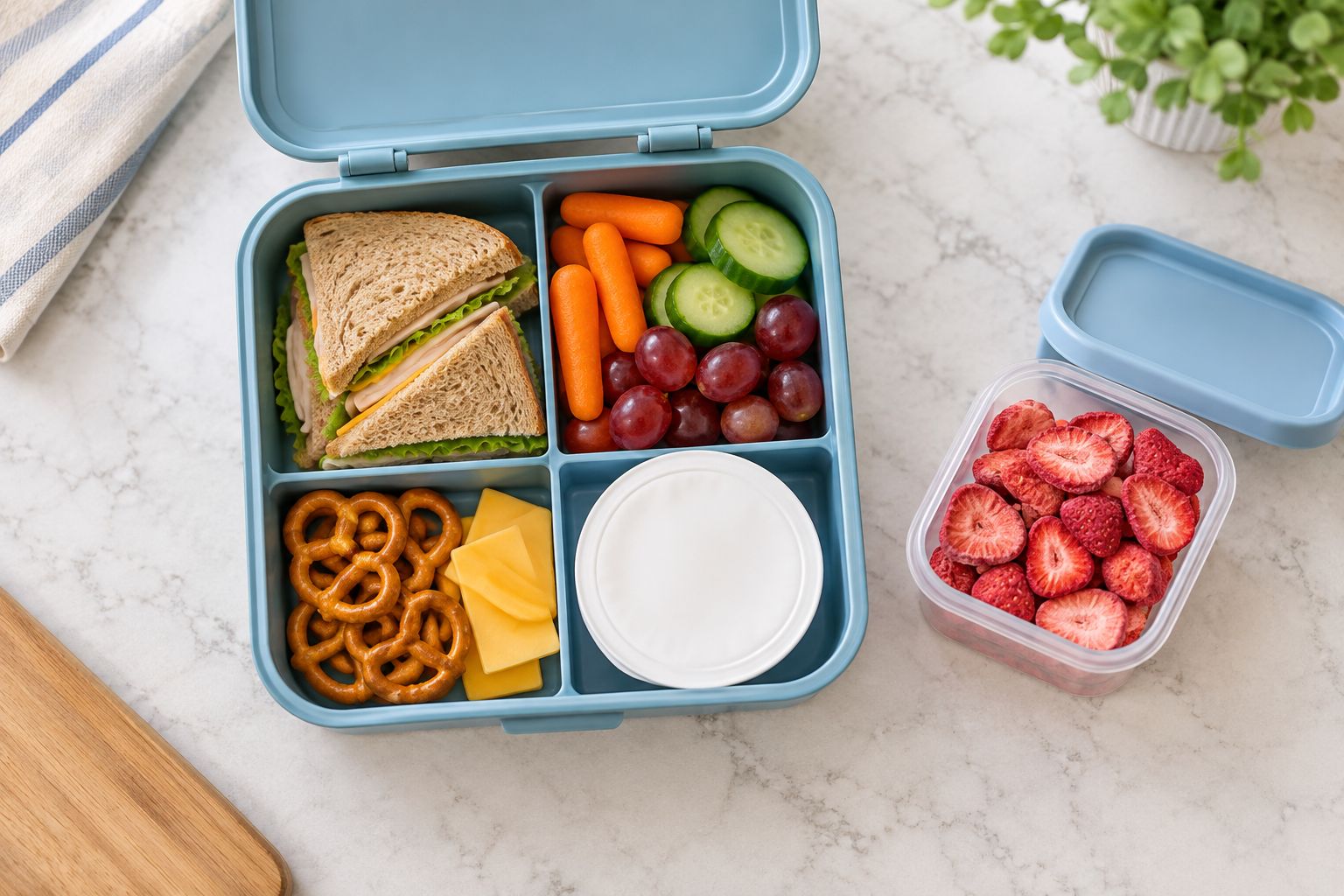
Dry fruit crisps absorb moisture from wet foods and lose their crispness. Keep them separate from cut fruit, yogurt, and other moist foods until eating time. Follow the package's storage directions, and close any remaining fruit as instructed.
Protect fragile pieces from heavy containers, too. A separate compartment or suitable container helps keep the fruit from being crushed under the rest of lunch.
Keep lunchbox expectations realistic
For the 2026 school year, ask a practical question before packing: can your child open and eat this during their actual snack break? Practice opening the package at home, or choose a school-approved container they can manage.
An uneaten snack is information, not a reason to scold. Ask whether the problem was flavor, texture, packaging, or simply wanting something else that day. Keep the conversation brief and useful.
Check the label and classroom policy
Read the current ingredient and allergen information on the exact package you plan to send. A short ingredient list does not establish that a food is appropriate for every allergy, and another family's approval does not replace your school's rules.
Check the 2026 classroom snack policy before sending food for sharing. For a child with a diagnosed allergy, use the child's care plan and qualified medical guidance rather than assuming that a fruit-only ingredient list settles every question.
Does no added sugar mean sugar-free?
No added sugar does not mean sugar-free: fruit contains naturally occurring sugar. Removing water does not remove that sugar, so a naturally sweet fruit crisp is not a sugar-free food.
Naturesturn describes its freeze-dried fruit snacks as 100% fruit with no added sugar. Use the current package's Nutrition Facts and serving information when you need amounts; do not assume the same-looking handful of fresh and freeze-dried fruit represents the same amount of food.
For a child, the explanation can stay simple: “The sweetness comes from the fruit.” There is no need to describe the snack as guilt-free, make medical promises, or turn sweetness into a reward for eating something else.
What if your child refuses freeze-dried fruit too?
A refusal means this version did not work at that moment. It does not mean you packed the wrong snack or need to find a more convincing sales pitch.
Keep accepted foods available and continue offering variety without a deadline. If your child's food choices are becoming very limited, meals cause significant distress, or you have concerns about growth, talk with your pediatrician or a qualified pediatric feeding professional. Freeze-dried fruit is a food option, not a substitute for individualized support.
FAQ
Can freeze-dried fruit help a child who refuses fresh fruit?
Freeze-dried fruit offers a different texture that a child can try, but it does not guarantee greater fruit intake. Enjoying crunchy fruit also does not mean the child will accept the fresh version.
What's the best freeze-dried fruit to offer a picky eater first?
Start with a fruit flavor your child already recognizes or enjoys. Offer it separately from accepted foods so your child can explore the new texture without changing the rest of the snack.
Should I hide freeze-dried fruit in my child's food?
Offer freeze-dried fruit openly rather than hiding it in a familiar food. Describe what it is, and let your child choose whether to add it or taste it separately.
Is freeze-dried fruit with no added sugar sugar-free?
No added sugar does not mean sugar-free because fruit contains naturally occurring sugar. Read the current Nutrition Facts for the amount in the labeled serving.
Can I put freeze-dried fruit in a school lunchbox?
Freeze-dried fruit can be a lunchbox option when it suits your child and meets school rules. Try it at home first, check current allergen information, and pack it separately from moist foods.
How long does it take a picky eater to accept freeze-dried fruit?
There is no guaranteed acceptance timeline for an individual child. Keep offers pressure-free rather than setting a tasting deadline or requiring a finished portion.
Should I stop offering fresh fruit if my child likes fruit crisps?
Keep offering other suitable fruit forms rather than treating fruit crisps as the only option. Your child can enjoy freeze-dried fruit while continuing to encounter different textures.
One last thing
For your 2026 snack routine, ask what your child liked about the fruit—not just whether they ate it. “Crunchy,” “too sour,” and “easy to hold” are useful answers when choosing the next snack.
Naturesturn freeze-dried fruit crisps offer another fruit format to explore. Keep the goal small and practical: an enjoyable snack today, with room for different fruits tomorrow.