


How much sugar is actually in freeze-dried fruit?
Editorial Team
Freeze-dried fruit contains the fruit’s naturally occurring sugar; the exact grams depend on the fruit, the serving size, and whether anything has been added. Freeze-drying removes water, not sugar, so equal weights of fresh and freeze-dried fruit are not an equal-fruit comparison. For your 2026 lunchbox shopping, read Total Sugars for the amount in a serving and Added Sugars to check for added sweeteners.
TL;DR
- How much sugar is in freeze dried fruit? Check Total Sugars and serving size; there is no single category-wide amount.
- Freeze-drying removes water, concentrating the fruit’s naturally occurring sugar by weight.
- No added sugar does not mean sugar-free; fruit still contains natural sugar.
- Naturesturn freeze-dried fruit suits parents seeking 100% fruit snacks with no added sugar.
How much sugar is actually in freeze-dried fruit?
The answer is the Total Sugars amount for the portion you eat—not a fixed number for all freeze-dried fruit. A strawberry snack, a banana snack, and a fruit blend do not automatically contain the same amount. Their ingredients and labeled serving weights matter.
For a fruit-only snack, the sugar comes from the fruit itself. If the product contains added sweeteners, Total Sugars includes those sugars too; the Added Sugars line identifies that part separately.
Use this label-reading sequence when comparing packages:
- Find the serving size. Note the weight, not just a description such as pieces or a handful.
- Read Total Sugars. This gives the sugar amount for the labeled serving.
- Read Added Sugars. Keep this separate from the total.
- Check servings per container. A package is not automatically one serving.
- Match the label to your portion. Eating more or less than the labeled serving changes the amount you consume.
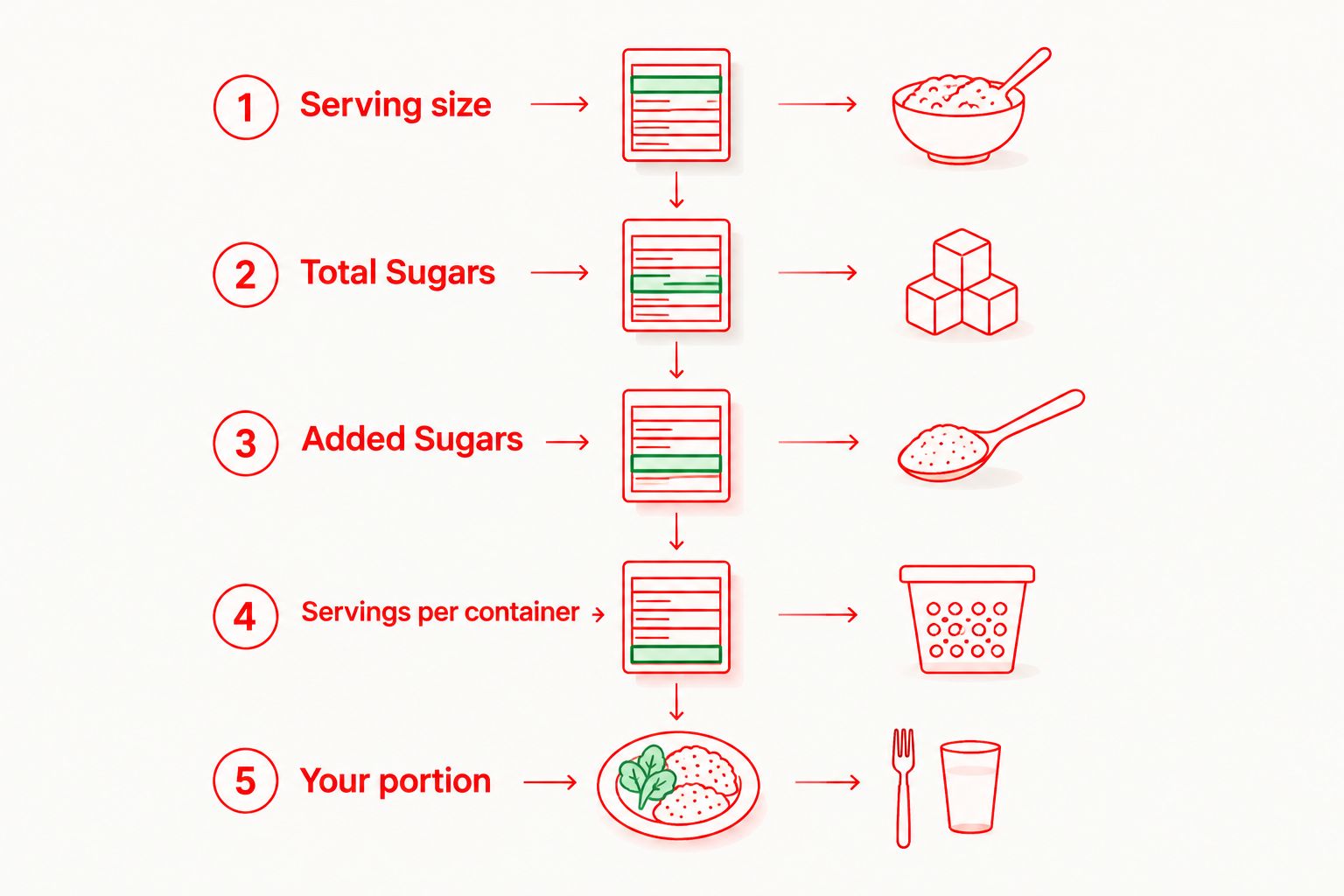
The front of a bag tells you what a snack emphasizes. The Nutrition Facts panel tells you how much sugar its labeled serving contains. You need both pieces of information before deciding what belongs in the lunchbox.
Why this matters for your lunchbox
A sweet-tasting fruit snack is not automatically sweetened, and a no-added-sugar snack is not sugar-free. That distinction helps you choose ingredients without expecting fruit to contain no sugar at all.
Naturesturn sells freeze-dried fruit snacks made with 100% fruit and no added sugar. Those ingredient claims answer a different question from the grams of total sugar: they describe what goes into the snack, not how much naturally occurring sugar your child eats.
For your 2026 school-snack routine, keep the decision simple: check the ingredients, check the portion, and choose a texture and flavor your child already handles comfortably. A familiar snack is easier to plan around than a package chosen only for its front-label wording.
Why freeze-dried fruit has more sugar by weight
Fresh fruit contains water. Freeze-drying removes much of that water, leaving a lighter, dry food that still contains the fruit’s sugar.
That changes the comparison. An equal weight of freeze-dried fruit represents more fruit material than the same weight of fresh fruit, so comparing sugar by weight alone can make the dry version look as though sugar was added.
Concentration is not the same thing as added sugar. Removing water changes how much fruit fits into a given weight; it does not mean a manufacturer poured sweetener into the bag.
| Comparison | What it tells you | Main limitation |
|---|---|---|
| Fresh fruit and freeze-dried fruit at equal weight | How sugar compares in the same weight of food | The fresh fruit includes much more water |
| Two freeze-dried snacks at equal weight | A more consistent basis for comparing sugar concentration | Different fruits and ingredients still affect the result |
| Each snack’s labeled serving | What you get when eating that stated portion | Serving weights can differ between products |
| The portion you actually pack | The sugar amount relevant to that lunchbox | You must match the portion to the label |
For a parent packing tomorrow’s snack, the final row is the most practical. An equal-weight comparison helps with shopping, but the portion your child eats is the amount that matters for the meal.
No added sugar does not mean sugar-free
No added sugar describes the absence of added sugar; it does not remove sugar naturally present in fruit. Plain fruit can taste sweet without cane sugar, honey, syrup, or another sweetener in the ingredient list.
On a U.S. Nutrition Facts panel, Total Sugars includes naturally occurring and added sugars. Added Sugars is included within that total, not an extra amount to add on top.
When reading a package in 2026, separate these questions:
- What is in it? Read the ingredient list for fruit and any other ingredients.
- Was sugar added? Read the Added Sugars line alongside the ingredient list.
- How much sugar is in this portion? Read Total Sugars and confirm the serving size.
- How much will my child eat? Match the packed portion to the labeled amount.
A short ingredient list is useful when you want a straightforward fruit snack. Its limitation is equally clear: it cannot tell you the grams of sugar without the Nutrition Facts panel.
Do not describe fruit-only crisps as sugar-free when talking with children or other parents. “Fruit with no added sugar” is the clearer description.
Why the sugar amount varies
There is no reliable shortcut from the words “freeze-dried fruit” to a specific sugar amount. These factors explain why you need the individual package label:
- Fruit type: Different fruits have different natural sugar compositions. Do not assume all flavors share a nutrition panel.
- Serving weight: A larger serving generally contains more sugar than a smaller serving of the same product.
- Fruit blends: A blend reflects its combination of fruits, rather than the nutrition of one fruit alone.
- Additional ingredients: Sweeteners or coatings change what is in the finished snack. Check rather than assuming every fruit crisp is fruit-only.
- Amount eaten: Finishing a package and eating one labeled serving are different situations when the package contains multiple servings.
Ripeness and variety also affect fruit composition, but they are not useful shopping shortcuts when you cannot measure them. The product’s current label is the practical source for comparing the packaged snacks in front of you.
How do I compare two bags fairly?
Compare equal serving weights first, then compare the portions you would actually pack. Looking only at the largest sugar number on each label can give you the wrong impression when serving sizes differ.
Start with two products in the same category, such as two plain freeze-dried fruits. Check whether their labeled serving weights match before treating the sugar figures as directly comparable.
If the weights differ, use the same calculation for each product:
Sugar in your portion = labeled sugar × your portion’s weight ÷ labeled serving weight.
Use the same weight unit throughout. This works for weighing a portion from a larger bag, but do not treat the result as more precise than the rounded information on the nutrition label.
For everyday packing, you do not need to turn breakfast into a math exercise. Choose a repeatable portion, learn how it relates to the label, and use that same approach when you switch flavors or bag sizes.
Does a sweeter taste mean more sugar was added?
A sweeter taste does not prove sugar was added. Fruit can taste sweet on its own, and tartness, aroma, and texture also shape how sweet a snack seems.
A sour fruit crisp is not automatically the lowest-sugar choice, either. Choose tart flavors because your child enjoys tart fruit, not because the taste replaces a label check.
The same distinction matters when thinking about sugar in cold-pressed juice: fruit-derived sugar still contributes to the total, even when no sweetener is added. Juice and fruit crisps are different foods, so compare each product’s own serving information rather than treating “made from fruit” as a sugar measurement.
For 2026 snack shopping, taste helps you predict enjoyment. The label answers the sugar question. Neither needs to do the other’s job.
Choosing a fruit snack for a school day
Naturesturn freeze-dried fruit is best for parents seeking a 100% fruit snack with no added sugar. That makes it a fit for an ingredient preference—not a promise of low total sugar, a medical benefit, or suitability for every child.
The following options address different packing needs. Neither should be selected as the lower-sugar choice without comparing its current Nutrition Facts panel.
| Option | Best for | Practical advantage | What to check |
|---|---|---|---|
| Freeze-Dried Strawberry Crisps | Children who prefer one familiar fruit | Made from strawberries, with nothing else in the supplied description | Total Sugars, serving size, and whether the crisp texture suits your child |
| Freeze-Dried Fruit Crisps Lunchbox Snack Variety Pack | Parents rotating familiar lunchbox flavors | Strawberry, apple, and pear in small, single-serve bags | Each flavor’s label, school rules, and your child’s individual needs |
Bag size deserves its own check. The Ultimate Variety Pack is described as 36 single-serve bags in a 0.53 oz format, while the Mega Variety Pack contains 8 flavors with 2 bags of each. Those details explain the packing format and flavor selection; they do not establish a sugar amount.
Single-serve packaging gives you a defined package to pack. Its limitation is that a single package is not an instruction about how much every child should eat. Appetite, the rest of the meal, and individual needs still matter.
Keep the crisp fruit separate
Pack freeze-dried fruit in a dry, closed package or container. Keep it separate from wet foods if you want the crisp texture to last until snack time.
For example, pack plain yogurt and fruit crisps separately, then combine them when eating. Follow the yogurt’s refrigeration requirements; a dry fruit snack does not change the storage needs of the rest of the lunch.
Check the school rules before sharing
A fruit-only ingredient list does not establish that a snack is suitable for every allergy or classroom. Read the current package for ingredient and allergen information, and check the school’s policy before sending shared snacks.
If your child needs individualized guidance about sugar, carbohydrates, allergies, or eating textures, use the current label with the relevant healthcare professional. A general snack guide cannot set that child’s portion.
What should I look for on a fruit snack label in 2026?
Look for the serving weight, Total Sugars, Added Sugars, and the complete ingredient list. Then check whether the amount you plan to pack matches the labeled serving.
Keep the original package until you know which flavor and serving information applies. If you transfer several flavors into identical containers, it becomes easier to lose track of the label you meant to use.
A simple household routine works well: read the label when opening a new product, decide how you will portion it, and recheck when the flavor or package changes. You do not need to label fruit as “good” or “bad” to make a clear packing decision.
FAQ
How much sugar is in freeze dried fruit?
The amount is the Total Sugars figure for the portion you eat, and it varies by fruit, ingredients, and serving size. Check the current package rather than using one number for every freeze-dried fruit.
Does freeze-drying add sugar to fruit?
Freeze-drying itself does not add sugar; it removes water. A finished snack can contain added ingredients, so check its ingredient list and Added Sugars line.
Why does freeze-dried fruit have more sugar than fresh fruit?
Freeze-dried fruit has more concentrated sugar by weight because much of its water has been removed. Equal weights of fresh and freeze-dried fruit do not represent equal amounts of fruit material.
Is freeze-dried fruit with no added sugar sugar-free?
No-added-sugar freeze-dried fruit is not sugar-free because fruit naturally contains sugar. Total Sugars and Added Sugars describe different information on the label.
Can I tell which freeze-dried fruit has less sugar by tasting it?
Taste does not reliably tell you which freeze-dried fruit has less sugar. Compare Total Sugars at matching serving weights instead of assuming a tart flavor has less.
Does one bag always equal one serving of freeze-dried fruit?
One bag does not always equal one labeled serving. Check servings per container and the serving weight before using the sugar figure for the whole package.
Should I add Total Sugars and Added Sugars together?
Do not add Total Sugars and Added Sugars together. Added Sugars is already included in the Total Sugars amount on a U.S. Nutrition Facts panel.
One last thing
The most useful number is not the sugar figure alone—it is the sugar figure attached to the portion you pack. Before choosing a snack because its number looks smaller, check whether its labeled serving is smaller too.
For Naturesturn or any other fruit snack, keep the ingredient question and the portion question separate. That small habit makes the label easier to understand and tomorrow’s lunchbox easier to pack.