


Freeze-dried fruit snacks to zero waste: pantry restock workflow
Editorial Team
Instead of checking half-empty snack boxes every morning, set up a pantry restock routine that counts unopened fruit snacks, puts older bags first, and adds only what your family needs to the shopping list. This 2026 workflow helps you work toward less wasted food—not a promise of zero packaging waste.
TL;DR
- For your pantry restock freeze dried fruit snacks checklist, count unopened bags before adding more to your shopping list.
- Naturesturn freeze-dried fruit snacks suit parents seeking 100% fruit options with no added sugar.
- Keep fruit crisps sealed and dry; organize older bags ahead of newer purchases.
- Plan lunchbox snacks around actual school days, flavor preferences, and current school policies.
Why this matters
A full pantry does not tell you whether you have the snacks your children will actually eat. A box of untouched flavors can sit behind a favorite that disappears before Wednesday.
Naturesturn freeze-dried fruit snacks are best for parents who want 100% fruit, no-added-sugar lunchbox options. Fruit still contains naturally occurring sugar; no added sugar does not mean sugar-free. You can explore Naturesturn while planning, but count what you already have before choosing more.
Freeze-dried fruit needs protection from moisture to keep its crisp texture. Pouring every bag into matching display jars creates another handling step and separates snacks from their original label information.
The useful goal is simple: fewer forgotten bags, fewer unwanted flavors, and fewer rushed purchases. Keeping unopened snacks in their original packaging makes the routine easier to maintain.
Before you start
- Gather your supplies: Your current snack bags and boxes, a clean, dry shelf, two containers or shelf dividers, and a paper list or shared household note. No special app is required.
- Check suitability first: Read current ingredient, allergen, storage, and date information. Confirm school rules and choose textures and pieces appropriate for your child; a short ingredient list does not establish allergy safety.
- Avoid the moisture trap: Organize sealed bags rather than opening everything during restocking. Keep label information with the food, and follow package directions for storage after opening.
Choose a time when you can see the pantry and the school calendar together. Packing for a regular school week is different from packing for a week with a holiday, a field trip, or lunch at home.
Pantry zones and inventory
The first configuration unit is your shelf, not your shopping cart. Use the labels below as homemade bin labels or note headings; they are not settings in a store account.
- Clear the space. Remove snacks from the shelf and check each package. Set aside anything with damaged packaging or a concern that needs checking against the label or manufacturer guidance.
- Create two zones. Label the front zone Use First and the back zone Reserve. Put bags with earlier relevant package dates in front, keeping any already-open package separate and clearly identified.
- Count by flavor. Write the number of unopened bags beside each flavor. Note opened packages separately rather than treating a partly eaten bag as a full school snack.
Expected result: You can see which flavors are ready to pack and which bags need attention before anything new arrives.
Keep a small Open First space only if your household regularly has unfinished packages. It should be visible, not another hiding place. Follow the package's after-opening instructions rather than assigning your own shelf-life deadline.
For your 2026 pantry list, use these headings: Flavor, Unopened Bags, Opened Packages, and Shopping List. If two adults pack lunches, keep that list somewhere both can check before shopping.
School-week snack target
Your target should reflect planned snack occasions, not the size of the shelf. Count the days when you intend to pack fruit crisps, leaving room for other snacks your family enjoys.
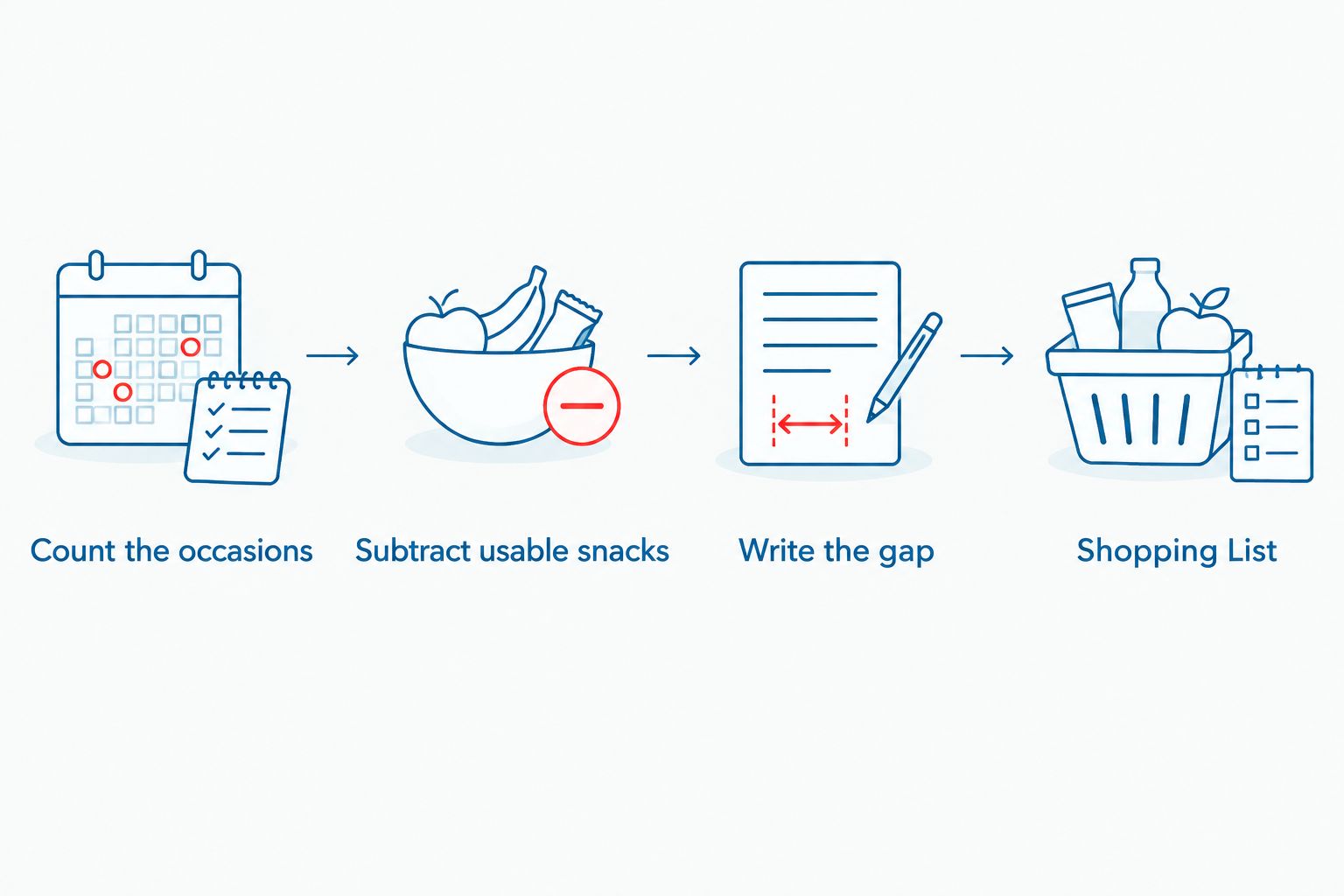
- Count the occasions. Mark which school days need a packed fruit snack. Include an after-school activity only when you actually plan to pack another bag.
- Subtract usable snacks. Count suitable unopened bags already in Use First and Reserve. Do not count a flavor your child consistently leaves untouched as coverage for that child's lunchbox.
- Write the gap. Add only the missing bags to Shopping List, then check how the product you choose fits that amount. A pack can leave a surplus, so account for that surplus at the next review.
Expected result: Your shopping list fills a known gap instead of repeating the last order automatically.
For example, suppose you plan one fruit snack per child on 5 school days for 2 children. That creates 10 planned snack bags. If you already have 4 suitable unopened bags, the gap is 6 bags—not another full week's supply on top of what remains.
Those numbers are a planning example, not a serving recommendation. Follow the product label and your child's needs when deciding what to pack.
A school calendar changes the count more usefully than an arbitrary stockpile rule. In your 2026 routine, check holidays and days away before repeating the previous week's target.
Pack choice and purchase list
Choose the pack around your family's habits. A familiar flavor mix helps with predictable lunch packing; a sampler serves a different purpose: discovering preferences before repeating a purchase.
Naturesturn offers both approaches. Neither removes the need to read current labels or check what remains at home.
| Option | Best for | Practical advantage | Trade-off |
|---|---|---|---|
| Freeze-Dried Fruit Crisps Lunchbox Snack Variety Pack | Parents packing school lunches with strawberry, apple, and pear | Small, single-serve bags sized for school lunches | The mix is limited to those three fruits; individual packaging still creates waste |
| Freeze-Dried Fruit Crisps Sampler Variety Pack | Families learning which flavors they enjoy | One bag of each of eight flavors supports a taste-first approach | A child who wants one familiar flavor might leave other bags untouched |
Choose the lunchbox pack for familiar school-day flavors; choose the sampler for at-home flavor discovery. Neither is automatically the lower-waste choice. The better fit is the one your household will use.
- Match the purpose. Decide whether you are replenishing known favorites or trying unfamiliar fruit. Keep those decisions separate so a tasting purchase does not become your only school-snack supply.
- Check the details. Read the current product information and confirm the bag format fits your packing plan. Do not assume every pack contains the same bag size or flavor arrangement.
- Record what you ordered. Add a Pending note beside incoming snacks. Remove it when you receive and count the bags, so another household shopper does not order the same gap twice.
Expected result: Every purchase has a purpose, and incoming snacks are visible before they reach the shelf.
Arrival, storage, and lunchbox handoff
Restocking is not finished when the delivery reaches the kitchen. Put the new snacks into the same system so the next packing session does not start from scratch.
- Check and rotate. Read the new packages, check their condition, and compare relevant dates. Place earlier-dated suitable bags in Use First, rather than assuming the newest delivery always belongs at the back.
- Protect the crunch. Keep unopened bags in a cool, dry place according to package directions. Avoid opening bags just to fill a display container, and protect them from heavy pantry items.
- Pack and update. Take a bag from Use First, protect it from crushing in the lunchbox, and adjust your count at the agreed review time. Keep fruit crisps separate from wet foods until eating.
Expected result: Older suitable snacks stay visible, newer bags have a place, and the inventory reflects what your family actually uses.
A shallow bin is useful when it lets you see flavors without digging. It does not need to match the rest of the pantry; visibility matters more than appearance.
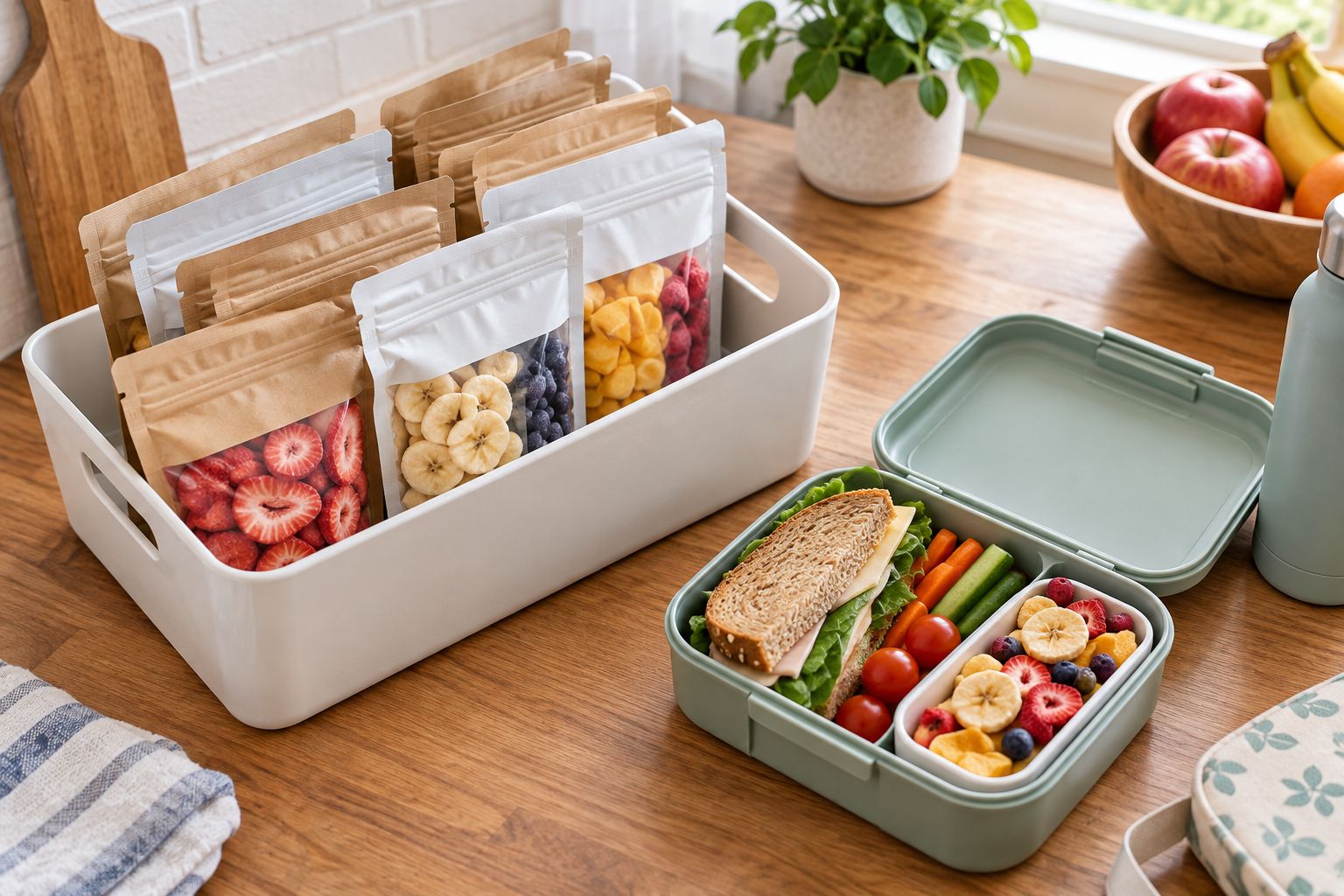
Freeze-dried fruit snacks do not require refrigeration for ordinary dry storage, but the other foods in a lunchbox still need their own handling precautions. Do not let a pantry-friendly snack determine how you store the entire lunch.
A second workflow: restock when plans change
A regular review handles ordinary weeks. An event-based review handles the surprises: a class celebration, an extra practice, a canceled school day, or a child deciding that yesterday's favorite is no longer appealing.
Use a Plan Changed note in your 2026 household list whenever a new event affects snack packing. Recount the affected occasions, check suitable bags at home, and change the shopping gap before placing another order.
For a classroom request, confirm the teacher's requirements first. An ingredient list alone does not answer every question about allergens, shared facilities, or permitted packaging.
For an unexpected day at home, leave sealed school snacks in Reserve unless someone wants them. There is no need to open a bag simply because it was originally assigned to Tuesday.
Best for changing schedules: Recalculate the next shopping gap, rather than adding an extra pack every time plans shift. This variant keeps the same storage system and changes only the count.
Troubleshooting
The fruit loses its crunch
Check whether the package stayed open or the fruit touched moisture. Follow the package's storage directions, close opened packaging as directed, and pack wet foods separately.
A texture change is not a food-safety test. If packaging is damaged or you have a safety concern, do not decide suitability by tasting it.
One flavor keeps coming home
Pause that flavor in the school-day plan. Ask whether the issue is taste, texture, difficulty opening the bag, or simply not having enough time to eat.
Offer unfamiliar flavors at home before assigning them to a rushed school snack break. A variety pack helps you learn preferences only if you use that feedback.
The inventory never matches the shelf
Pick one counting unit and stick with it: unopened bags. Keep opened packages and incoming orders in separate notes.
If tracking every packed bag becomes a chore, recount the shelf at your scheduled review instead. A maintained simple list beats an abandoned detailed one.
New bags hide the older ones
Move reserve snacks behind the front row and avoid stacking new boxes across the packing space. Check the Use First zone before unpacking another box.
Also reduce the next purchase if unopened bags keep accumulating. More storage does not fix a buying pattern that exceeds use.
Customize your workflow
Expand the routine only after the school-snack shelf works. Add separate lines for family outings or breakfast toppings if those are real uses in your household, not hoped-for ways to finish unwanted flavors.
Small broken pieces from a properly stored package can become a topping for a food your family already eats, such as yogurt or cereal. Add them just before eating if you want to keep the crunch; once mixed with moist food, their texture changes.
Naturesturn fruit crisps offer straightforward ingredients and portable packing, but the packaging and fragile texture are real trade-offs. Use less handling and more accurate counting—not extra containers—as your first waste-reduction step.
Review your 2026 list after a school break. Remove snack occasions that no longer apply, update flavor preferences, and keep the parts of the routine your household actually uses.
FAQ
How do I start a pantry restock routine for freeze-dried fruit snacks?
Count suitable unopened bags by flavor, put earlier-dated bags where you can see them, and compare your supply with planned snack occasions. Add only the gap to your shopping list.
Can this pantry routine make my fruit snacks zero waste?
This routine supports less wasted food, not a guarantee of zero waste. Packaging remains, and disposal or recycling depends on the material and your local program's rules.
Should I empty freeze-dried fruit into pantry jars?
You do not need to empty the bags to organize your pantry. Keeping unopened snacks in their original packaging avoids extra handling and keeps ingredient and storage information attached.
Are Naturesturn freeze-dried fruit snacks sugar-free?
Naturesturn freeze-dried fruit snacks have no added sugar, but they are not sugar-free. Fruit contains naturally occurring sugar; read the current Nutrition Facts panel for the specific product.
How many fruit snack bags should I plan for a school week?
Plan around the occasions when you intend to pack a fruit snack, then subtract suitable bags already at home. There is no single weekly bag count that fits every family or child's needs.
Can I pack freeze-dried fruit beside yogurt?
Keep freeze-dried fruit separate from yogurt until eating if you want it to stay crisp. Follow the yogurt's refrigeration and lunchbox handling requirements independently.
What should I check before sending fruit snacks to school in 2026?
Check the current package ingredients, allergen information, storage directions, and your school's snack policy. Also consider whether your child can manage the package and texture without help.
One last thing
A snack returning home unopened is useful feedback, not an instruction to buy a different box immediately. Ask why it came back before changing the shopping list; the problem might be the flavor, the package, or the time allowed for snack.
The best restock starts with what came home, not what looks empty on the shelf.