


Freeze-dried fruit snacks to grab-and-go lunchboxes: prep workflow
Editorial Team
Instead of choosing fruit snacks during every morning rush, set up a dry snack bin on prep day and move sealed bags into lunchboxes as needed. Naturesturn freeze-dried fruit snacks fit this routine without washing, slicing, or refrigerating the fruit crisps; keep them separate from damp foods and follow the package’s storage instructions.
TL;DR
- For lunchbox snack prep day freeze dried fruit, sort sealed bags rather than opening the week’s snacks.
- Naturesturn freeze-dried fruit snacks suit parents who want 100% fruit options with no added sugar.
- Check current ingredient labels, school rules, and your child’s needs before filling the snack bin.
- Keep fruit crisps dry and protected; refrigerate other lunchbox foods when required.
Why this matters
A useful prep routine removes decisions without creating extra packing work. You want to know which snack belongs to which child, whether it meets school rules, and where it goes in the lunchbox.
Freeze-dried fruit has a different packing need from fresh-cut fruit: protect the crunch from moisture. Mixing crisp fruit into yogurt during prep changes its texture before lunchtime. Keeping the components separate lets your child combine them when ready to eat.
For your 2026 school-day routine, prep the organization ahead of time, not every food component. A ready-to-grab fruit bag is one part of lunch, not a replacement for the rest of the meal.
Before you start
- Gather your materials: unopened fruit-crisp bags, a clean dry bin, a lunchbox, and any clean, fully dry containers you plan to use. Keep the original packaging for ingredient and storage information.
- Check the rules first: read current product labels and school snack policies. Consider your child’s allergies, eating skills, and ability to open the package; a short ingredient list does not establish suitability for every child.
- Avoid the moisture trap: do not portion crisp fruit into a freshly washed, still-damp container or mix it with wet foods ahead of time. Keep unopened bags sealed until snack time whenever practical.
You do not need an app or a complicated calendar. A paper note inside the cupboard is enough to record which days need a classroom snack, lunchbox fruit, or an after-school extra.
Your school-week snack plan
- Count snack occasions. Start with the actual school calendar, including early dismissals and days when snacks are provided. As a planning example, 5 school days for 2 children means 10 bags if each child needs 1 fruit-crisp bag per day. That is a packing calculation, not a serving recommendation.
- Check familiar flavors. Ask each child to choose from flavors already tried at home. Keep new flavors for a relaxed tasting rather than making an unfamiliar snack the only school option.
- Write the plan. Mark each child’s name and snack occasion on your note. Separate a classroom snack from lunch or after-school food when your school schedule calls for different packing.
Expected result: you have a clear count and a flavor plan before opening any packaging. If a child is absent or the schedule changes, the unused sealed snack stays in the bin according to its label instructions.
Keep the plan flexible. A 2026 school calendar belongs beside the snack list so a holiday does not turn into an unnecessary packing task.
Choose the pack that matches the job
Naturesturn freeze-dried fruit snacks are best for parents seeking 100% fruit options with no added sugar for school-day packing. Choose the format around your routine, then check the current package details before serving.
| Option | Best for | Practical advantage | Limitation |
|---|---|---|---|
| Freeze-Dried Fruit Crisps Lunchbox Snack Variety Pack | Parents packing familiar orchard and berry flavors | Strawberry, apple, and pear in small, single-serve bags sized for school lunches | Those flavors do not cover every child’s preferences; try them at home first |
| Freeze-Dried Fruit Crisps Sampler Variety Pack | Families choosing favorites before settling into a rotation | One bag of each of eight flavors supports an at-home tasting | A tasting assortment is not the same as a repeat supply of one favorite |
Choose the lunchbox pack for repeat packing; choose the sampler for discovery. Neither choice removes the need to check labels or ask what your child actually enjoys.
Packs for planning and tasting

Strawberry, apple, and pear in small, single-serve bags sized for school lunches.
$24.99

One bag of each of eight flavors for finding family favorites.
$21.99
Your dry snack station
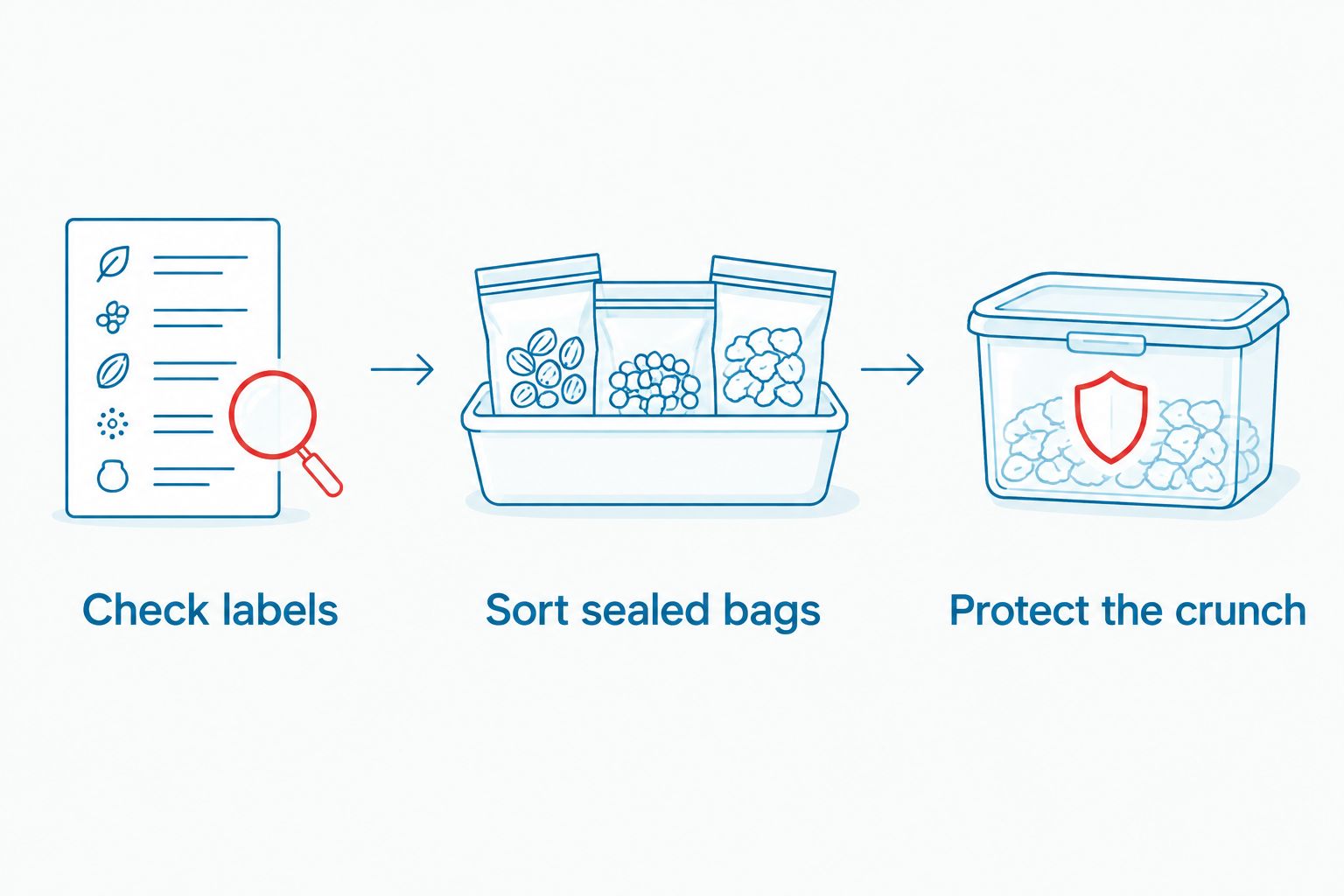
- Check labels. Read ingredients, allergen statements, storage directions, and package dates before sorting. No added sugar means no sugar has been added; fruit still contains naturally occurring sugar.
- Sort sealed bags. Group bags by child or flavor in a clean, dry cupboard bin. Keep the original bags intact rather than pouring different flavors into an unlabeled shared container.
- Protect the crunch. Place the bin away from splashes and crushing pressure. Put packages you need to use sooner toward the front, following their dates and storage directions.
Expected result: the person packing lunch can identify the right snack without opening bags or searching through a mixed cupboard.
The station has a simple sequence: Check labels, Sort sealed bags, Protect the crunch. Keep that sequence beside your 2026 packing note if more than one adult handles school mornings.
Your lunchbox assembly
- Pack the rest of lunch appropriately. Prepare foods according to their own storage needs. Fruit crisps do not need refrigeration, but that does not make yogurt, sandwiches, or other perishable foods suitable for an unchilled lunchbox.
- Add the fruit bag. Keep it away from leaking containers and avoid wedging it beneath a heavy drink bottle. Use a protective compartment or container when the lunchbox layout puts pressure on the bag.
- Check opening and eating. Practice with your child at home. Confirm that the package and food texture suit their abilities, and arrange adult help through the school when needed.
Expected result: the fruit remains sealed and protected, while the rest of lunch receives the temperature control it needs.
For the first school morning of your 2026 routine, do a dry run with the actual lunchbox. Close the lid with everything inside; if you need to force it shut, change the layout rather than squeezing the fruit bag flatter.
Keep the fruit separate until eating
For a yogurt-and-fruit snack, send the yogurt under appropriate cold storage and keep the fruit in its own sealed package. Your child can add the crisps just before eating if that is practical for their age and school setting.
The same principle applies to juicy fresh fruit. A divided lunchbox only helps when its compartments actually prevent moisture from reaching the crisps; check the container’s design rather than assuming every divider seals.
Your end-of-day reset
- Look at what came home. Ask whether the issue was flavor, texture, opening the package, or simply not having enough time. An uneaten snack is useful feedback, not proof that the whole routine failed.
- Check returned packages. Keep clean, intact, unopened bags according to their label directions. Do not automatically return torn, wet, or questionable packages to the ready-to-pack bin.
- Update the next pack. Move the child’s preferred flavor forward and adjust the snack count for the next school day. Wash reusable containers and let them dry fully before using them again for crisps.
Expected result: tomorrow’s snack reflects what happened today, and the bin stays organized without a complete weekly rebuild.
Avoid quietly increasing portions because a bag came home untouched. First find out whether your child could open it and whether the school schedule allowed time to eat.
Another workflow: refill whenever a bag leaves the bin
A full prep day is not the only workable routine. Best for changing schedules: refill the station as you use it. This approach avoids assigning every snack to a fixed weekday, but it requires someone to notice when favorites run low.
- Take the next suitable sealed bag when packing lunch.
- Check whether the remaining snacks cover the next school day.
- Add the needed flavor to your shopping note and move the next appropriate package forward.
Use this version when children alternate between home and school lunches or activities change frequently. The weekly method gives you a clearer plan; the refill method gives you more flexibility.
For 2026 school weeks with field trips or unusual pickup times, keep the calendar check even if you drop the day-by-day sorting. Flexibility should change the count, not the label checks or moisture protection.
Troubleshooting
The fruit loses its crunch
Check for moisture first. A damp container, contact with yogurt, or an opened bag exposed to humid air can soften freeze-dried fruit. For future packing, use fully dry containers and keep the fruit sealed and separate; follow the package instructions for opened snacks.
The bag arrives full of crumbs
Change where the bag sits. Keep it out from under drink bottles and heavy containers, and use a protective compartment when needed. If the food is otherwise suitable to eat, crumbs can become an at-home topping instead of the school snack you intended.
Your child cannot open the package
Practice before sending it again. Watch your child try the actual package and identify where help is needed. Ask the school about assistance or use a clean, dry container they can manage, while preserving the ingredient information and following storage directions.
The same flavors keep coming home
Pause those flavors and ask why. A child who likes fresh fruit will not necessarily like its freeze-dried texture. Try a small amount at home, and do not make school snack time the test for an unfamiliar flavor.
A school rule changes
Recheck the specific product before the next pack. Ingredient simplicity is not a substitute for current allergen information or classroom policy. Keep the package information accessible and ask the school to clarify any unclear requirement.
Customize your workflow
Expand the routine by snack occasion rather than adding more choices to every morning. A classroom snack, an after-school snack, and lunchbox fruit can have separate spaces when your family needs them.
For shared packing, give another caregiver the same short instructions: check the child’s plan, take a suitable sealed bag, and protect it from moisture and pressure. Naturesturn’s fruit-crisp formats give you options for tasting and school-day packing, but your child’s preferences should decide the rotation.
Keep a small note of favorites and practical issues. “Enjoyed pear” or “needed help opening” tells you more than a complicated snack tracker.
FAQ
How do I prep freeze-dried fruit snacks for school lunchboxes?
Sort unopened bags into a clean, dry snack bin and add them to lunchboxes as needed. Check labels and school rules first, and protect the bags from damp foods and crushing pressure.
Can I portion freeze-dried fruit for the whole school week?
Keeping individual bags sealed is the simpler prep-ahead method. If you portion from an opened package, use clean, fully dry airtight containers and follow the product’s storage instructions rather than assuming a fixed storage period.
Does freeze-dried fruit need an ice pack in a lunchbox?
Freeze-dried fruit crisps do not need refrigeration when stored according to their package instructions. Other lunchbox foods still need appropriate temperature control, so plan the whole lunch separately.
Are no-added-sugar fruit snacks sugar-free?
No-added-sugar fruit snacks are not sugar-free because fruit contains naturally occurring sugar. Read the current nutrition label to understand the specific snack and serving information.
Can I mix freeze-dried fruit into yogurt the night before?
Yes, but contact with yogurt softens the crisp fruit. For crunch, keep the fruit separate and add it just before eating; keep the yogurt appropriately chilled.
Are 100% fruit snacks suitable for every classroom?
No, a 100% fruit ingredient claim does not establish suitability for every child or classroom. Check current ingredients, allergen information, school policy, and your child’s individual needs.
What should I do when my child brings the fruit snack home?
Ask whether flavor, texture, opening the package, or limited eating time caused the problem. Check the returned package before storing it again, and adjust the next snack to address the actual issue.
One last thing
Rehearse opening the snack, not just packing it. A neatly organized lunchbox still falls short if your child cannot get into the food during the school break. One practice run at the kitchen table gives you a specific problem to solve before the morning rush.