


Best Lightweight Hiking Snacks That Won't Melt or Spoil
Editorial Team
The best lightweight hiking snacks for family outings are freeze-dried fruit, plain crackers, nuts or seeds when appropriate, roasted chickpeas, and bars without chocolate or yogurt-style coatings. For your 2026 hikes, choose shelf-stable foods with intact packaging and follow each label’s storage instructions; nothing is spoil-proof. Pair a fruit snack with something more substantial, protect crunchy foods from crushing, and pack water separately.
TL;DR
- The best lightweight hiking snacks stay shelf-stable without a cooler; coatings, moisture, and crushed packaging create problems.
- Nature’s Turn freeze-dried fruit suits families wanting a light, no-added-sugar fruit snack, but the crisps need crush protection.
- Pair fruit with a suitable protein or fat source rather than treating fruit alone as a complete trail meal.
- Check ingredient labels, allergy information, and storage directions before packing shared snacks.
Why this matters
A snack can survive warm weather and still disappoint at the trail stop. Crackers turn into crumbs, fruit crisps soften when exposed to moisture, and a familiar bar becomes messy if its coating melts. Choose for the conditions inside your backpack, not just the picture on the package.
For family hikes, familiarity matters, too. A snack your child already enjoys is a more practical choice than an unfamiliar flavor introduced halfway up a hill. If your 2026 plans start with quick local outings, these hiking snacks for a short after-school nature walk keep the planning focused on everyday family trips.
What are the best lightweight hiking snacks that won’t melt or spoil?
The strongest choices are dry, shelf-stable snacks without meltable coatings. Each option solves a different packing problem, so choose a combination rather than expecting a single food to do everything.
Use this comparison for your 2026 trail snack plan. Storage directions on the actual package take priority over the category description.
| Snack option | Best for | Main advantage | Main drawback |
|---|---|---|---|
| Freeze-dried fruit | Lightweight fruit crunch | Ready to eat without washing or slicing | Fragile; absorbs moisture after opening |
| Nuts or seeds | Adding fat and protein | Compact and easy to portion | Allergy restrictions; whole nuts are unsuitable for young children |
| Roasted chickpeas | Savory variety | A dry alternative to sweet snacks | Hard texture needs age-appropriate consideration |
| Plain crackers | Familiar, mild flavors | No chocolate or creamy coating to melt | Crush easily and are not a complete snack alone |
| Uncoated bars | Individually wrapped convenience | Easy to keep separate in a shared pack | Ingredients, texture, and heat tolerance vary |
| Labeled shelf-stable jerky | A savory protein option | Some products need no refrigeration before opening | Storage after opening varies; chewy texture does not suit everyone |
Freeze-dried fruit: best for lightweight fruit crunch
Freeze-drying removes water from fruit, leaving a light, crisp texture. That makes it convenient when you want fruit without peeling, cutting, or carrying a container of juicy pieces. It also means you are not carrying the water found in fresh fruit, so keep drinking water in the plan.
The trade-off is delicacy. Pack fruit crisps where a water bottle cannot flatten them, and keep them separate from damp foods. Freeze-dried fruit is a fruit component, not a substitute for the rest of your food on a longer outing.
Nuts, seeds, and roasted chickpeas: best for savory variety
Nuts and seeds add fat and protein alongside fruit or crackers. Roasted chickpeas offer another savory texture when you want a change from sweet snacks. Check the specific product rather than assuming every seasoned version has the same ingredients.
For children, texture and allergies come first. Whole nuts are a choking hazard for young children, and hard roasted snacks also need careful consideration. Follow each child’s feeding guidance and any school, camp, or group restrictions; no snack category is automatically safe for everyone.
Crackers, bars, and jerky: best for familiar packaged choices
Plain crackers work well for children who prefer mild flavors, but they need protection from heavy gear. An uncoated bar is convenient when you want a separate wrapped portion; read its label because a plain-looking outside does not tell you everything inside.
Choose jerky only when its package explicitly allows unrefrigerated storage. Some meat snacks require refrigeration, and opening the package can change the storage instructions. Tough or chewy pieces also are not suitable for every child.
Which fruit crisps fit a family hiking pack?
Nature’s Turn freeze-dried fruit snacks are best for families who want 100% fruit and no added sugar in a light, crunchy snack. The main limitation is physical: the pieces need protection from crushing and moisture.
Start with a familiar fruit rather than choosing by novelty alone. These two options have straightforward ingredient descriptions and different flavor profiles.
| Fruit snack | Best for | What’s in it | Advantage | Limitation |
|---|---|---|---|---|
| Freeze-Dried Strawberry Crisps | Children who enjoy sweet-tart fruit | Strawberries | Bright fruit flavor with nothing else added | Sweet-tart flavor will not suit every child; pieces are fragile |
| Freeze-Dried Apple Crisps | Families who prefer apple flavor | Apples | Naturally sweet, crisp slices | Crisp texture differs from fresh apple; pieces crush under pressure |
Both options are fruit snacks, not sugar-free foods. Fruit contains naturally occurring sugar, and no added sugar does not mean no sugar. Use the current Nutrition Facts panel when comparing serving sizes or sugar amounts.
Nature’s Turn lists no added sugar for these fruit crisps, but ingredient simplicity does not establish allergy suitability. Review the current package and any allergen information before packing for another child.
Fruit crisps for the trail

Strawberries freeze-dried into light, crisp pieces with a sweet-tart crunch. No sugar added.
$14.99

Apples freeze-dried into light, crisp chips with a naturally sweet crunch.
$14.99
Why the best hiking snack varies by outing
The right snack for a short woodland loop is not automatically enough for a longer route. Use these factors to narrow your choices:
- Route and effort: Plan food around the outing rather than treating a fruit snack as an entire meal.
- Heat exposure: Avoid meltable coatings, follow storage directions, and keep food out of prolonged direct sun.
- Moisture: Separate dry snacks from wet produce, condensation, and leaking bottles.
- Pack pressure: Give delicate crisps and crackers a protected space instead of putting them under heavy gear.
- Your child’s needs: Choose familiar flavors and suitable textures, then check allergy information and group rules.
- Access: Put the next snack somewhere you can reach without emptying the backpack onto the trail.
How do you pack hiking snacks so they stay crisp?
Build a repeatable packing routine for your 2026 family outings. Keep dry food dry, fragile food protected, and labels available. Those habits matter more than arranging a picture-perfect snack box.
- Check labels. Read ingredients, storage instructions, and package condition before packing. Look again when buying a familiar food; do not rely only on memory.
- Portion snacks. Pack amounts that suit the outing and your family’s needs. Keep extra food separate so everyone does not reach into the same open bag.
- Separate moisture. Keep fruit crisps away from cut fruit and other damp foods. Close dry-food packaging promptly after serving.
- Protect crunch. Place fragile snacks in a lightweight rigid container or a protected upper part of the pack. Do not wedge them beneath a full bottle.
- Pack out. Bring a place for wrappers, scraps, and crumbs. Keep food waste out of the trail environment.
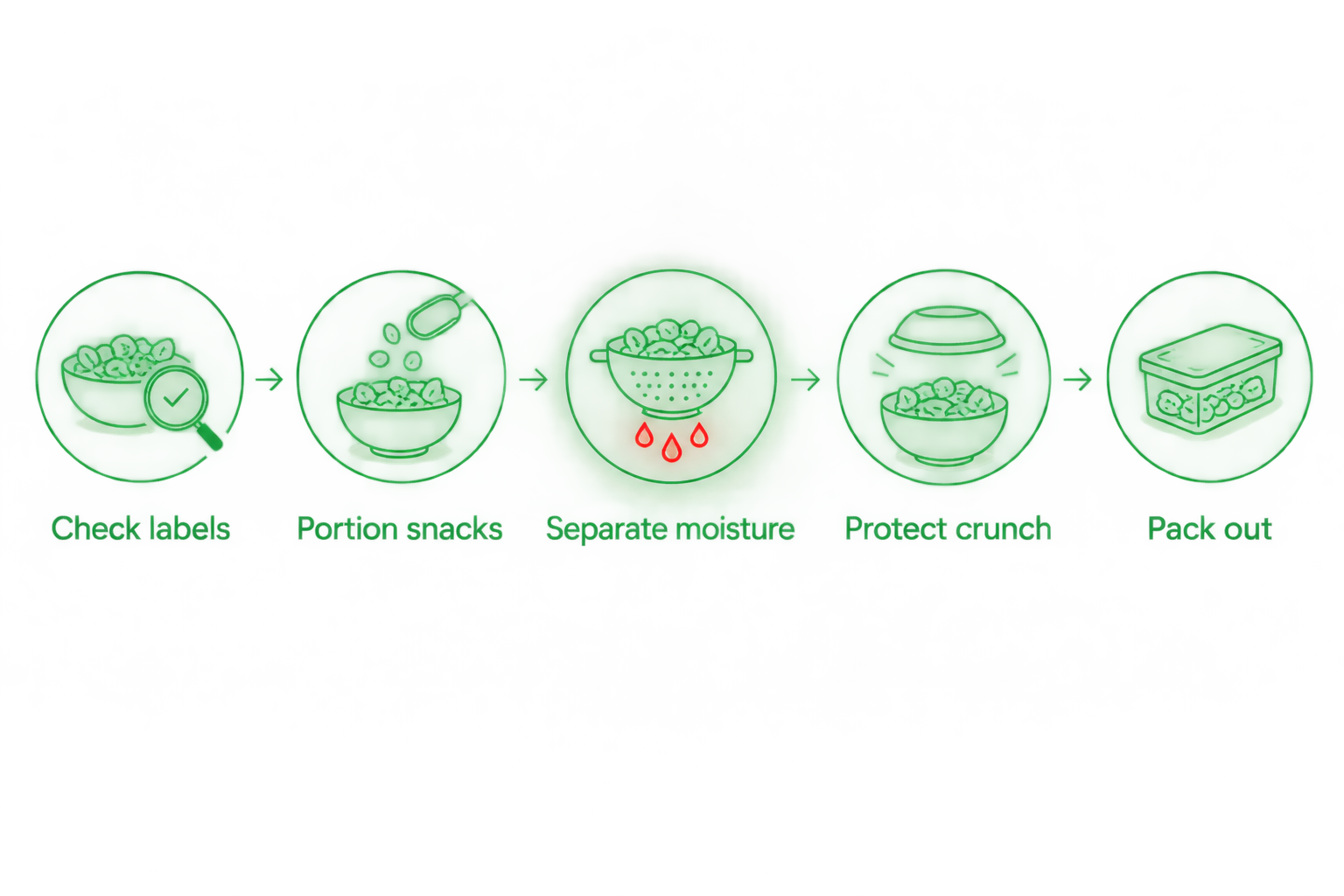
Original packaging helps preserve the ingredient and storage information you need. If you transfer a snack into a container, keep that information available, especially when another adult is supervising or children have food allergies.
For Nature’s Turn fruit crisps, check the current bag for storage and closure directions. Do not assume a bag reseals or that an opened package has the same storage conditions as an unopened one.
Are protein bars better than fruit for a longer hike?
Protein bars and fruit serve different purposes. Fruit supplies carbohydrate, while a bar’s protein, fat, fiber, and other ingredients depend on its recipe. Compare the label and your planned food, not the word protein on the wrapper.
For longer routes, protein bars for endurance belong in the same planning conversation as carbohydrate-containing foods, drinking water, and meals. A protein label alone does not establish that a bar provides everything you need for an outing.
A child who likes fruit crisps but dislikes dense bars does not need a forced swap. Pair the familiar fruit with another suitable food they already eat, and test unfamiliar combinations at home. On the trail, you want a snack break—not a negotiation over a new texture.
Which hiking snacks should stay out of a no-cooler backpack?
For your 2026 no-cooler packing list, leave out foods that require refrigeration unless you can maintain safe cold storage. That includes refrigerated leftovers, yogurt, and other perishable foods whose labels require chilling. A dry-looking exterior does not prove that a filled snack is shelf-stable.
USDA food-safety guidance limits perishable food at room temperature to 2 hours, or 1 hour when temperatures exceed 90°F. Those limits concern food safety, not whether a snack still looks or smells appealing. Do not use appearance as a safety test.
Keep melting and spoilage separate in your mind. Chocolate becoming soft is a different problem from perishable food warming beyond safe storage conditions. Choosing uncoated, shelf-stable snacks helps with packing, but it does not make food immune to damage or poor storage.
How much food should you bring for a family hike?
Bring food that matches the planned route, likely time outside, and each person’s needs, plus extra for an unexpected delay. There is no single bag count that fits every family hike. Check the actual serving information rather than assuming every small package represents the same amount of food.
Keep a planned snack accessible and your reserve food separate. For a longer outing, plan meals as well as snacks; a handful of fruit crisps does not replace that preparation. Pack drinking water independently of your food choices.
FAQ
What are the best lightweight hiking snacks for kids?
The best lightweight hiking snacks for kids are familiar, shelf-stable foods with age-appropriate textures, such as fruit crisps, suitable crackers, or an uncoated bar. Check ingredients, allergies, storage directions, and group rules before packing.
Will freeze-dried fruit melt in a hot backpack?
Plain freeze-dried fruit has no chocolate or yogurt-style coating to melt. It still needs protection from moisture, crushing, and storage conditions outside the package instructions.
Can I pack Nature’s Turn fruit crisps without a cooler?
Nature’s Turn fruit crisps are a no-refrigeration fruit-snack option. Follow the current package’s storage directions and protect the crisps from moisture and heavy gear.
Are no-added-sugar fruit snacks sugar-free?
No-added-sugar fruit snacks are not necessarily sugar-free because fruit contains naturally occurring sugar. Read the Nutrition Facts panel for the amount in the labeled serving.
Are nuts a good hiking snack for every child?
Nuts are not a suitable hiking snack for every child. Consider food allergies, group restrictions, and choking risk; whole nuts are a choking hazard for young children.
How long can refrigerated snacks stay in a backpack?
Perishable food should not remain at room temperature for more than 2 hours, or 1 hour when temperatures exceed 90°F, under USDA guidance. Use appropriate cold storage rather than relying on an ordinary backpack.
Should I pack fresh fruit or freeze-dried fruit for hiking?
Choose fresh fruit when you want its juicy texture and can protect it; choose freeze-dried fruit when low weight and dry packing matter more. Freeze-dried fruit is fragile and does not replace drinking water.
One last thing
Low weight does not mean low bulk. A light bag of fruit crisps still needs space where heavier gear cannot crush it. Before leaving, put the snacks into the loaded backpack—not the empty one—and check what presses against them.
If your child carries a small pack, keep reserve food with the adult rather than filling the child’s bag with every snack. Make the next break easy: familiar food, accessible water, and a comfortable place to sit and eat.