


Freeze-dried fruit snacks for teachers: complete 2026 guide
Editorial Team
Teachers’ freeze-dried fruit snacking is a way to pack real fruit without washing, slicing, or refrigeration, with the aim of making school-day snack breaks easier. This 2026 guide helps you choose fruit crisps for your own desk drawer, coordinate parent contributions, and keep classroom snack decisions separate from individual children’s dietary needs.
TL;DR
- Naturesturn freeze-dried fruit snacks are best for teachers who want 100% fruit with no added sugar.
- Choose freeze dried fruit snacks for teachers by checking labels, school policies, flavor preferences, and packaging.
- Keep fruit crisps sealed and separate from wet lunchbox foods to protect their crunch.
- No added sugar does not mean sugar-free, and a short ingredient list does not establish allergy safety.
Why freeze-dried fruit matters for teachers
A teacher’s personal snack and a snack distributed to children require different decisions. For your own break, you choose the flavor and portion; for classroom sharing, school rules, individual care plans, and family instructions come first.
Freeze-dried fruit offers a practical distinction: it provides fruit in a dry, crisp form rather than a fresh, juicy one. You can pack it without cutting fruit that morning, but you still need to protect the pieces from crushing and moisture.
Convenient packaging does not replace a classroom snack policy. Before organizing a shared supply for 2026, agree on who approves products, who receives them, and where ingredient information stays. Parents contributing snacks need that same information before shopping.
The guide to freeze-dried fruit multi-packs for classroom snack duty covers the group-packing side of that decision. Start with the school’s requirements, not the number of bags in a box.
How to choose and pack fruit crisps for the school day
Separate your personal snacks from classroom supplies
Start with supplies you already have: a lunch bag, a clean storage container, and a designated place for your own food. There is no need to buy a special organizer before you know what your routine requires.
Your personal snack can reflect your preferences. Shared snacks need a separate approval process, even when you eat the same product yourself. Keep personal food outside the classroom distribution system so a substitute or parent volunteer does not mistake it for an approved option.
If you also pack your child’s lunch, explain which bag belongs to the child and which supplies stay with the teacher. Clear boundaries prevent an ordinary packing mix-up from becoming a dietary problem.
- Designate separate spaces for personal and shared snacks.
- Follow school rules for food stored in classrooms.
- Keep approved shared products in their original packaging.
- Tell substitutes which supplies they can distribute.
Read the ingredients before choosing a flavor
Use the current package as your starting point. Check the ingredient list, allergen information, serving information, and any handling directions rather than relying on an old shopping list or a familiar-looking package.
No added sugar means no sugar was added; it does not mean the fruit contains no sugar. Fruit naturally contains sugar. That distinction belongs in parent communications, classroom conversations, and your own shopping decisions.
Naturesturn freeze-dried fruit snacks are made with 100% fruit and no added sugar. Individual recipes still matter: a plain apple product and an apple cinnamon product are not identical ingredient choices. A simple recipe also does not establish that a product meets a particular child’s allergy requirements.
- Read each flavor’s current ingredient list.
- Distinguish naturally occurring sugar from added sugar.
- Check allergen statements against school requirements.
- Confirm individual restrictions through the school’s process.
Match the flavor to the person eating it
Ask what the child or teacher already enjoys before choosing a mixed box. A familiar fruit is a practical starting point, but liking fresh fruit does not automatically mean liking its freeze-dried texture.
Try an unfamiliar flavor at home rather than making classroom snack time the first taste test. This gives families a chance to assess the texture and decide whether the snack suits the child’s eating abilities and preferences.
The supplied product information describes the Lunchbox Snack Variety Pack as strawberry, apple, and pear in small, single-serve bags. The Sampler Variety Pack contains 8 flavors, with 1 bag of each flavor. The first narrows the choices; the second offers a way to explore preferences before settling on a regular order.
- Start with a fruit the intended eater recognizes.
- Test unfamiliar textures at home.
- Separate familiar favorites from trial flavors.
- Record preferences without treating them as permanent.
Protect the crunch when you pack
Pack fruit crisps dry and keep them away from wet foods. Freeze-dried fruit takes up moisture, so mixing it into yogurt before leaving home changes the texture you get at snack time.
If you portion a larger package, use a clean, dry container and follow the product’s directions after opening. Original single-serve packaging avoids that portioning step, but it does not protect fragile pieces from a heavy book or a full water bottle.
Place the snack where it will not be compressed. For children, choose packaging they can manage or arrange adult help rather than assuming every small bag is easy to open.
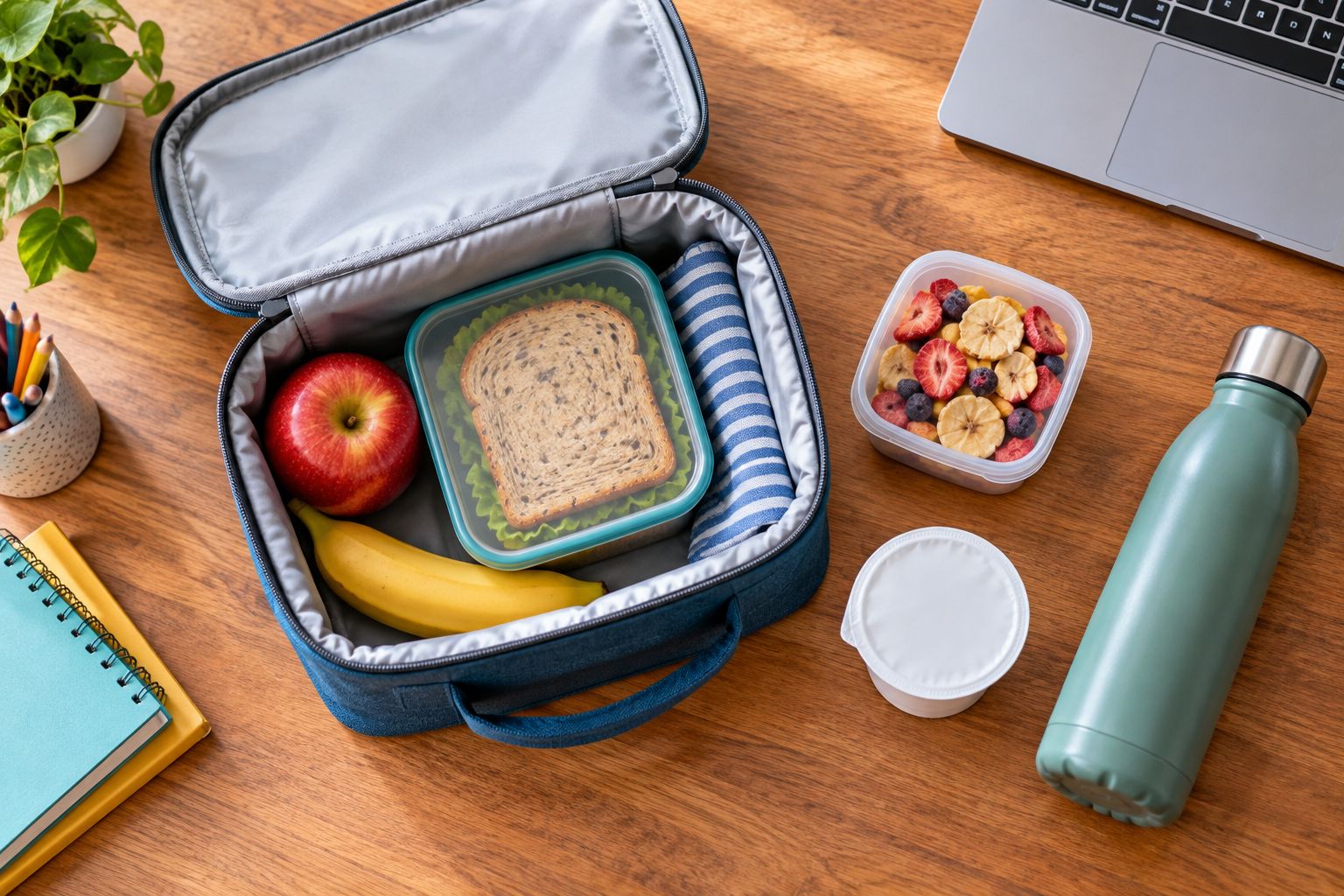
A quick packing check is more useful than an elaborate lunchbox arrangement. The goal is a snack that arrives dry, intact enough to enjoy, and straightforward to serve.
- Use a clean, dry container when portioning.
- Keep yogurt and other wet foods separate.
- Place fruit crisps away from heavy objects.
- Follow package directions for storage after opening.
Set up a parent-to-teacher handoff
For shared snacks, write the requirements before asking families to contribute. A short message should explain whether food must be individually packaged, how approval works, and whether substitutions require another check.
Keep the original ingredient information accessible. Repacking assorted flavors into an unlabeled tub makes it harder to identify what a child received, even when the fruit pieces look familiar.
For your 2026 classroom routine, assign responsibility for reviewing contributions rather than leaving every volunteer to interpret the rules. A photo of an old label is not a substitute for checking the package that arrives.
- Share the school’s requirements before families shop.
- Explain how to request approval for substitutions.
- Preserve ingredient information for each flavor.
- Identify who reviews incoming classroom snacks.
Review what gets eaten before restocking
Use a simple note rather than guessing which flavors disappear. Record whether a bag was eaten, returned unopened, or declined, and avoid treating those outcomes as interchangeable.
An unopened bag does not tell you why a child skipped it. The issue might be the flavor, the available eating time, or difficulty opening the package; ask through the appropriate school or family channel instead of drawing a nutrition conclusion.
Review your 2026 routine around the actual snack occasion. Your desk drawer, a child’s lunchbox, and a supervised class event do not need the same mix or packaging arrangement.
- Note which flavors are eaten and which return.
- Ask about opening difficulties before changing foods.
- Keep personal preferences separate from dietary restrictions.
- Adjust the next order to the intended occasion.
Compare the options before choosing a box
Choose the packaging format first, then the flavor range. A box with many flavors serves a different purpose from a lunchbox-focused selection, even when both contain freeze-dried fruit.
The comparison below separates convenience from limitations. It does not establish that any option is approved for your classroom or appropriate for every child.
| Option | Best for | Practical advantage | Key limitation |
|---|---|---|---|
| Freeze-Dried Fruit Crisps Lunchbox Snack Variety Pack | Teachers and parents wanting small, single-serve bags | Strawberry, apple, and pear are packaged for school lunches | Limited to those 3 fruit flavors; each label still needs review |
| Freeze-Dried Fruit Crisps Sampler Variety Pack | Families or teachers exploring flavor preferences | Includes 8 flavors, with 1 bag of each | A trial assortment does not provide repeated bags of a favorite flavor |
| Fresh fruit packed from home | People who prefer juicy fruit | Keeps the fresh-fruit texture | Handling and packing needs depend on the fruit chosen |
| A larger package portioned at home | Personal snacks when you want to choose the portion | Lets you use your own dry container | Adds a packing step and separates the portion from its original label |
Naturesturn offers both the lunchbox-focused selection and the sampler described above. The choice is practical rather than universal: choose small individual bags for a simpler handoff, or choose a sampler when learning preferences is the immediate goal.
Two formats for different school-day needs

Strawberry, apple, and pear in small, single-serve bags sized for school lunches.

Build a fuller snack break when needed
Fruit crisps can be the fruit part of a snack without being the whole plan. If you want a more varied personal snack, pair fruit with another food that fits your preferences and dietary needs.
For children, keep that decision within the family’s instructions and the school’s rules. Planning high-protein school snacks is a separate task from choosing fruit crisps: the accompanying food needs its own ingredient, allergen, and storage checks. Do not assume that adding a familiar dairy food, seed product, or other snack makes a combination suitable for the whole class.
If the accompanying food requires refrigeration, follow its handling directions. Keeping fruit crisps in a separate dry compartment protects their texture; it does not change the storage needs of the other food.
For your own break, assemble only what you expect to eat and keep the components easy to access. For classroom sharing, avoid creating mixed snack cups unless the school has approved the ingredients and serving method.
Common mistakes teachers make with fruit crisps
Treating a fruit-only recipe as an allergy guarantee
A short ingredient list is useful information, not universal clearance. Check the current product information and the child’s school-approved requirements before distribution; never describe a snack as safe for everyone.
Buying a broad assortment before checking preferences
More flavors do not automatically make a better classroom supply. Try unfamiliar options at home first, then choose the assortment that matches the actual eaters and the school’s approval process.
Emptying different flavors into an unlabeled container
Mixed, unlabeled supplies make ingredient checks harder. Keep original bags intact for shared use, or follow the school’s specific procedure for approved portioning and identification.
Assuming fruit crisps cannot make crumbs
Freeze-dried fruit is crisp and breakable. Give children an appropriate eating space and a cleanup routine rather than promising a mess-free snack, especially around books or classroom materials.
FAQ
What are the best freeze dried fruit snacks for teachers?
The best choice matches the teacher’s intended use: personal snacking, lunchbox packing, or approved classroom sharing. Naturesturn offers small single-serve lunchbox bags and a sampler assortment, but current labels and school rules determine suitability for children.
Do freeze-dried fruit snacks need refrigeration at school?
Dry freeze-dried fruit does not require refrigeration when stored according to its package directions. Keep it sealed and dry, and follow separate refrigeration requirements for foods served alongside it.
Are no-added-sugar fruit crisps sugar-free?
No, no-added-sugar fruit crisps are not sugar-free because fruit naturally contains sugar. Read the nutrition information and distinguish naturally occurring sugar from added sugar.
Can teachers hand out freeze-dried fruit to every student?
Teachers should distribute snacks only through the school’s approval process and each child’s applicable dietary instructions. A fruit-only ingredient list does not establish that a snack is appropriate for every student.
Is a sampler or a lunchbox variety pack better for school?
A sampler is better for exploring flavor preferences, while a lunchbox-focused pack is better for choosing small individual bags. Check the current contents and packaging rather than assuming every variety pack serves the same purpose.
How do I keep fruit crisps crunchy in a lunchbox?
Keep fruit crisps sealed in dry packaging and separate from wet foods. Protect them from heavy items, and follow the package directions after opening.
What should parents send when a teacher requests classroom snacks?
Parents should send only products that meet the teacher’s stated school requirements. Confirm substitutions before sending them and preserve the original ingredient and allergen information.
One last thing
Before your next 2026 snack order, check whether opening the package is the real obstacle. A familiar flavor will still come home untouched if a child cannot access it during the available break. Practice opening a bag at home or arrange help at school, then judge the snack itself.