


Does freeze-dried fruit go bad once you open the bag?
Editorial Team
Yes, freeze-dried fruit can go bad after opening, and exposure to moisture can also make it lose its crunch before there are obvious signs of spoilage. For your 2026 snack routine, reseal the fruit promptly, keep it dry, and follow the package’s storage instructions rather than assuming every opened bag lasts the same amount of time. Softness alone does not tell you whether fruit is safe to eat.
TL;DR
- Does freeze dried fruit go bad after opening? Yes; moisture control and the package’s storage instructions matter.
- Soft freeze-dried fruit signals a texture change, not a reliable verdict on food safety.
- Nature’s Turn freeze-dried fruit snacks suit families seeking 100% fruit with no added sugar.
- For lunchbox storage, keep fruit crisps separate from wet foods and close the package after serving.
Why this matters
An opened bag on the kitchen counter and a sealed bag in the pantry no longer have the same protection. Once you open the packaging, the way you handle and close it becomes part of keeping the fruit in good condition.
For parents planning school snacks in 2026, the practical goal is simple: protect the crunch without treating a best-by date as a promise about an opened bag. Our guide to keeping freeze-dried mango crisp in a lunchbox covers that packing situation in more detail.
Does freeze-dried fruit go bad once you open the bag?
Yes. Freeze-drying removes water; it does not make fruit immune to moisture, contamination, or spoilage after opening. Opened fruit needs the storage conditions described on its package, along with clean handling and a dependable closure.
Use this sequence whenever you open a bag:
- Read the label. Look for storage directions, any instructions for use after opening, and the printed date.
- Check the fruit. Look for visible mold, unexpected dampness, or other unusual changes. Do not taste questionable fruit to decide whether it is safe.
- Serve with dry hands or utensils. Pour out what you need instead of reaching into the bag with wet fingers.
- Close it immediately. Use the package closure if it seals properly, or move the fruit to a clean, completely dry airtight container.
- Store as directed. Keep the remaining fruit away from moisture and follow any product-specific temperature instructions.
There is no universal opened-bag deadline that applies to every freeze-dried fruit snack. Packaging, handling, and storage conditions differ, so a fixed number of days would give you false confidence.
Why opened freeze-dried fruit changes at different speeds
The biggest practical difference is how well you keep moisture out. These factors explain why a bag left open beside the sink behaves differently from fruit sealed away after serving:
- Humidity: Freeze-dried fruit takes up moisture from the surrounding air, which changes its crisp texture.
- Closure quality: A partially closed zipper or loosely folded bag leaves the fruit exposed.
- Repeated opening: Every snack break exposes the remaining fruit to the room again.
- Wet handling: Damp hands, spoons, and containers bring moisture directly into the package.
- Contact with wet foods: Yogurt, cut fruit, and similar foods soften crisps when they touch.
- Storage conditions: Heat, light, and moisture affect food quality; the package directions should guide where you keep it.
You do not need a complicated pantry system. A dry container and a habit of closing it promptly address the everyday problems parents can control.
Is soft freeze-dried fruit spoiled?
Softness alone does not prove that freeze-dried fruit is spoiled, and crispness does not prove that it is safe. A softer piece often means that it has absorbed moisture, but texture cannot tell you its full storage history.
This distinction matters when a half-finished bag comes home from school. If you know it stayed dry, was handled cleanly, and remains within the package instructions, a texture change is different from discovering mold or a wet, forgotten bag.
If the fruit has visible mold, an unusual odor, unexpected wetness, or an uncertain history that raises a safety concern, discard it. Do not remove a suspicious piece and assume the rest of the bag is fine.
Can I eat freeze-dried fruit that has lost its crunch?
A loss of crunch is a quality change, not a safety clearance. Consider the label instructions and how the fruit was stored; if you cannot establish that it was handled appropriately, do not serve it to your child.
For fruit you know was stored properly, a softer texture might simply be less enjoyable as a crisp snack. There is no reason to force a child to finish it just because the ingredients are simple.
Does the best-by date still apply after opening?
A best-by date is generally a quality guide for food kept under the stated storage conditions, not a guarantee that an opened bag remains safe until that date. Follow any separate after-opening instructions on the package.
Opening a bag changes its exposure. An otherwise distant printed date does not cancel out wet handling, damaged packaging, or visible spoilage.
How to store opened freeze-dried fruit in 2026
Start with the simplest routine you can repeat on a busy morning: pour, close, and put away. Leaving the main bag open while you finish the rest of lunch gives room air more time to reach the fruit.
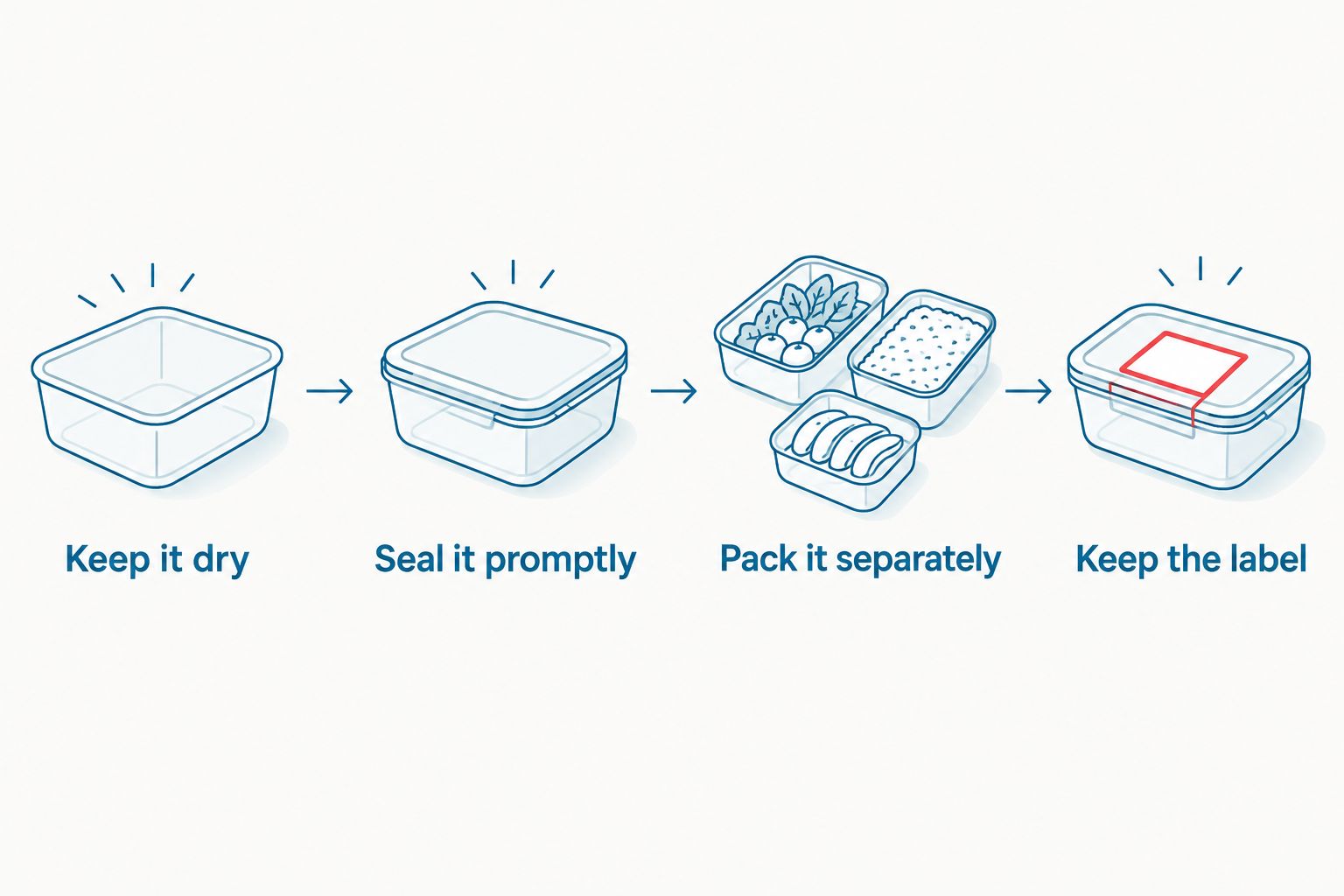
Keep it dry
Use a clean container that is completely dry, including the lid and sealing groove. A freshly washed lunch container needs to dry fully before you add fruit crisps.
Keep the bag away from steam, sink splashes, and wet lunchbox components while packing. Dry fruit does not stay crisp when it shares a compartment with a juicy orange wedge.
Seal it promptly
Check that the original closure actually closes. Fruit crumbs caught in a zipper can interfere with the seal, so clear the closing area before putting the bag away.
If the package cannot be closed securely, use an airtight food container. Keep the original label or transfer its storage directions and date with the fruit so you do not lose the information you need.
Pack it separately
For a school lunch, keep fruit crisps in their own closed package or dry compartment. Add them to yogurt only when your child is ready to eat if crunch is the goal.
An ice pack elsewhere in the lunchbox does not replace a moisture-resistant closure. Protect the fruit from condensation and leaks, and keep following the storage directions for the other foods in the meal.
Keep the label
Write the opening date on a container if you transfer the fruit. That note helps you remember its history; it does not create a new expiration date.
Keep different batches separate rather than repeatedly topping up the same container. You will have a clearer idea of which fruit was opened first and which label belongs to it.
Should opened freeze-dried fruit go in the refrigerator?
Follow the package instructions rather than automatically refrigerating opened freeze-dried fruit. Refrigeration is not a substitute for keeping moisture out, and temperature changes can create condensation when humid air meets a cold surface.
If the label directs you to refrigerate the product, follow that instruction. If it directs cool, dry storage, choose a suitable dry location and a secure closure instead of inventing a different storage routine.
The same caution applies to freezing leftovers. Do not assume that moving a poorly stored bag into the freezer makes questionable fruit safe again.
A lunchbox plan that leaves less fruit exposed
Pack the portion your child is likely to eat, then close the main bag before moving on to sandwiches and drinks. This keeps the remaining fruit out of the packing area while you handle wetter foods.
For an unopened snack bag, leave it sealed until snack time. Once your child opens it, the same moisture and handling considerations apply as they do at home.
Give your child an easy instruction: keep fruit crisps away from drinks and close leftovers if the package allows it. Practice opening the actual package at home, especially if your child is still learning lunchbox routines.
When leftovers return, ask what happened before deciding to keep them. Fruit that stayed protected is a different situation from pieces tipped onto a shared table or mixed with a leaking drink.
Do not pour school leftovers back into the main pantry container. Keeping them separate prevents an uncertain snack history from becoming the history of the whole supply.
Choosing a pack for your 2026 school-snack routine
Nature’s Turn freeze-dried fruit snacks are best for families seeking 100% fruit with no added sugar. The practical trade-off is that fruit crisps still need dry handling after opening; simple ingredients do not remove that responsibility.
These options serve different packing habits. Neither replaces reading the current label, checking allergen information, or following your school’s snack policy.
| Option | Best for | Useful detail | Limitation |
|---|---|---|---|
| Freeze-Dried Fruit Crisps Lunchbox Snack Variety Pack | Parents packing individual school snacks | Strawberry, apple, and pear in small, single-serve bags | The flavor selection is limited to those listed fruits; opened leftovers still need proper handling |
| Freeze-Dried Fruit Crisps Mega Variety Pack | Families exploring different fruit flavors | 8 flavors, with 2 bags of each, for 16 bags total | More variety does not help if your child prefers a narrow flavor selection |
Choose the Lunchbox Snack Variety Pack if individual school portions match your routine. Choose the Mega Variety Pack if trying different flavors is the priority, and check the current package information before deciding how each bag fits your lunchbox.
Both Nature’s Turn options offer real-fruit simplicity, but neither is automatically appropriate for every child. Current product labels and your child’s needs take priority over a general snack recommendation.
Fruit crisp options for family snack routines

Strawberry, apple, and pear in small, single-serve bags sized for school lunches.
$24.99

Eight fruit flavors, with two bags of each, for finding family favorites and adding variety.
$36.99
FAQ
Does freeze dried fruit go bad after opening if I reseal it?
Yes, resealing does not make freeze-dried fruit last indefinitely. A secure closure helps protect it from moisture, but you still need to follow the label and consider how it was handled.
How long does an opened bag of freeze-dried fruit last?
There is no universal opened-bag shelf life for all freeze-dried fruit. Follow the specific package’s after-opening instructions rather than applying a deadline from another product.
Is soft freeze-dried fruit safe for my child to eat?
Softness alone cannot establish whether freeze-dried fruit is safe. Check its storage history and package instructions, and discard fruit with mold, unusual odor, unexpected wetness, or other reasons for concern.
Can I put freeze-dried fruit next to yogurt in a lunchbox?
Keep freeze-dried fruit in a separate closed container if you want it to stay crisp. Contact with yogurt adds moisture, so combine them at eating time instead.
Should I refrigerate freeze-dried fruit after opening?
Refrigerate freeze-dried fruit after opening only when the package instructions call for it. Whatever storage location the label specifies, protect the fruit from moisture and condensation.
Can I put leftover school snacks back in the main bag?
Keep returned school snacks separate from the main bag. You cannot undo contact with wet hands, shared surfaces, or leaking lunchbox foods by mixing leftovers into fresh fruit.
Are Nature’s Turn fruit snacks sugar-free?
Nature’s Turn freeze-dried fruit snacks have no added sugar, but they are not sugar-free. Fruit contains naturally occurring sugar; check the current Nutrition Facts and ingredient list for the product you choose.
One last thing
For your 2026 lunchbox routine, protect tomorrow’s snack while packing today’s. Close the main bag before you open the yogurt, rinse the lunch container, or fill the water bottle. That small change keeps the remaining crisps away from the wettest part of the job.