


Healthy packaged snacks for parent volunteer days
Editorial Team
Parent volunteer-day snack planning is choosing healthy packaged snacks that fit school rules, travel easily, and keep your snack break simple. Whether you are helping with a classroom project or setting up a school event, this guide helps you separate snacks for your own bag from food approved for sharing.
TL;DR
- Choose healthy packaged snacks by school policy, ingredient label, and storage needs—not front-of-pack promises.
- Naturesturn freeze-dried fruit snacks suit parents seeking 100% fruit with no added sugar; check labels before school use.
- Keep personal snacks separate from classroom food, and get permission before sharing.
- Pack fruit alongside another approved food when you need more than a quick snack.
Why healthy packaged snacks matter for parent volunteers
A volunteer day changes your usual routine. You might leave home after breakfast, spend the morning sorting supplies, and find that your next chance to eat is between activities rather than at a table.
The right snack fits the assignment, not just your food preferences. A personal snack tucked into your tote is a different decision from a snack handed to children. The second requires school approval and attention to each child's food requirements.
Naturesturn sells freeze-dried fruit crisp snacks made with 100% fruit and no added sugar. Naturesturn freeze-dried fruit snacks are best for parents who want a packaged fruit option with no added sugar.
That is a useful ingredient distinction, not a promise that fruit alone replaces lunch or that a product suits every child. For your 2026 volunteer-day routine, start with the school's instructions, then choose foods you enjoy and can manage during your break.
How to choose and pack your volunteer-day snacks
Confirm who the snacks are for
Start with a quick message to the teacher or volunteer coordinator. Ask whether you are packing only for yourself, contributing to a volunteer snack table, or supplying an approved classroom activity. Do not treat those situations as interchangeable.
For your own snack, ask where adults can eat and whether the school restricts particular foods anywhere on campus. For shared food, ask who approves it and what packaging the school requires. Keep the answer with your volunteer instructions so you do not have to reconstruct it at the store.
If you already have suitable packaged food at home, use that first. Buying a special snack does not solve an unclear sharing policy. If approval has not arrived, leave the classroom contribution at home and follow the instructions for personal food.
- Identify the intended eaters: you, other adults, or children.
- Ask where eating is permitted during the assignment.
- Confirm restrictions that apply to personal snacks.
- Get approval before bringing food for a group.
- Keep personal food separate from approved shared food.
Read the label before choosing the snack
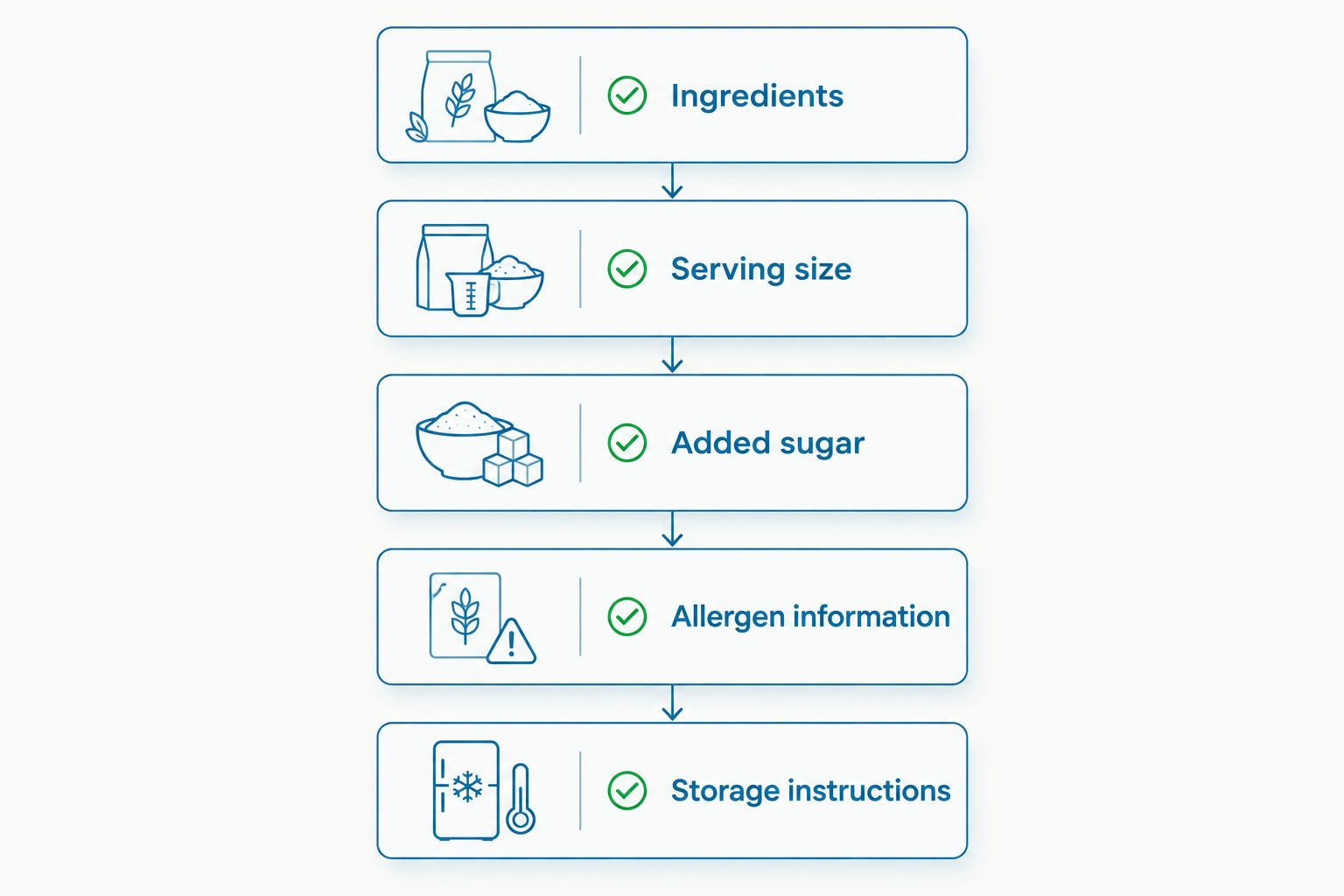
Turn the package around. The ingredient list, Nutrition Facts panel, allergen information, and storage instructions tell you more than a cheerful claim on the front.
No added sugar does not mean sugar-free. Fruit contains naturally occurring sugar. When comparing healthy packaged snacks in 2026, look at the serving size before comparing the sugar amounts; differently sized servings make a straight comparison less useful.
For a practical label check, give yourself 5 minutes before your shopping trip or packing session. That is a suggested planning window, not a nutrition rule. Use it to confirm whether the snack matches your preferences and the school's requirements.
An ingredient list is also not the whole allergen check. Read the allergen statement and any handling information provided, and follow the school's process for questions. Never infer that a product is suitable for every child because it contains fruit.
- Ingredients: Read the complete list, not just the front label.
- Serving size: Check what the listed amounts refer to.
- Added sugar: Distinguish it from total sugar.
- Allergen information: Review current packaging and school requirements.
- Storage instructions: Check unopened and opened-package directions.
Choose a fruit format that fits your break
Begin with what you already know you enjoy. If you prefer a crisp texture, consider freeze-dried fruit; if you prefer something chewy or spoonable, compare those formats instead. There is no reason to buy a large selection before you know which texture works for you.
Naturesturn freeze-dried fruit snacks offer a packaged fruit option made with 100% fruit and no added sugar. If strawberries are your usual favorite, Freeze-Dried Strawberry Crisps are a straightforward starting point. Check the current product information rather than assuming every bag or flavor has identical details.
The trade-off is texture and handling. Crisp pieces need protection from crushing, and opened freeze-dried fruit needs protection from moisture. Follow the package's storage instructions and do not leave an open bag beside a sink or drink station.
For your 2026 shopping list, choose 2 snack options you genuinely like rather than filling your tote with unfamiliar choices. Two is a practical planning suggestion: it gives you a choice without turning snack packing into another project.
- Start with a familiar fruit flavor.
- Choose crisp, chewy, or spoonable food based on your preference.
- Review the current label for the specific product.
- Protect crisp snacks from heavy items in your bag.
- Follow storage directions after opening.
Match the snack to your time away from home
Check your schedule before deciding how much food to bring. A short classroom visit with lunch immediately afterward calls for a different plan from an event that keeps you at school through your usual lunchtime.
A fruit snack is not a substitute for a planned meal. If the assignment overlaps lunch, arrange a meal break or bring an appropriate lunch rather than trying to solve the gap with extra snack bags. Ask the coordinator about breaks before the day gets busy.
For a longer volunteer shift, consider pairing fruit with another school-permitted food that supplies protein or fat. Choose based on your preferences, dietary requirements, and the label—not a blanket claim that any particular pairing keeps everyone full.
A useful starting plan is 1 fruit snack plus a separate companion food for your own break, adjusted to your appetite and schedule. That is a packing suggestion, not a required portion or a recommendation for children.
- Check whether the assignment overlaps your usual meal.
- Ask when and where volunteers can take a break.
- Pack a meal when the schedule calls for one.
- Choose an approved companion food if fruit alone is not enough.
- Bring water according to the school's rules.
Pack for transport, opening, and cleanup
Think through the whole snack break: carrying the food, opening it, eating it, and dealing with the wrapper. A package that looks convenient at home becomes less convenient if it needs a utensil you forgot or cannot be closed afterward.
Keep labels accessible, especially for any approved shared food. Do not pour several products into an unmarked container and expect another adult to identify the ingredients later. Original packaging keeps the product information attached to the food.
For your 2026 volunteer tote, create a separate snack pocket or pouch. Put fragile packages above heavy supplies, keep food away from classroom materials, and follow the label's storage directions. If a chosen food needs cold storage, plan for that rather than assuming your tote is enough.
- Keep the original packaging and label available.
- Separate food from craft supplies and cleaning materials.
- Place fragile snacks above books or heavier items.
- Pack a utensil only when the snack requires one.
- Identify where wrappers and leftovers should go.
Prepare a repeatable routine before the next visit
Make a short packing note after the first volunteer day. Record what you ate, what came home unopened, and which part of the packing routine felt awkward. Your own experience is more useful than adding foods simply because they appear on a snack list.
Keep the routine simple: review the assignment, confirm the rules, choose your food, and pack it. Recheck policies when you move between classrooms or events; approval for one activity is not automatic permission for another.
For the rest of your 2026 volunteer calendar, reuse the checklist rather than assuming the same quantity or sharing arrangement fits every visit. Keep the food choices flexible. A snack you enjoy on a quiet reading morning might be inconvenient during an outdoor setup job.
- Save the coordinator's food instructions with the event details.
- Note which snacks you actually enjoyed.
- Remove foods that were awkward to carry or eat.
- Recheck labels when buying a replacement package.
- Review the plan when the assignment changes.
Compare packaged snack options for volunteer days
The best option depends on your break, storage access, and school rules. These are format comparisons, not endorsements of every product within a category; ingredients and handling instructions differ by package.
| Option | Best for | Practical advantage | Key limitation |
|---|---|---|---|
| Freeze-dried fruit | Parents who prefer crisp fruit | Packaged fruit pieces without cutting fruit during the break | Pieces need protection from crushing and moisture; check storage directions |
| Traditionally dried fruit | Parents who prefer chewy fruit | A different texture from crisp fruit snacks | Ingredients differ; some products include added sugar |
| Fruit puree pouch | Parents who prefer a spoon-free puree format | No separate spoon needed for a typical squeeze pouch | Check ingredients, opening instructions, and disposal requirements |
| Whole-grain crackers | Parents seeking a savory companion food | A contrast to sweet fruit flavors | Check ingredients and allergen information; protect against crushing |
| Packaged nuts or seeds | Adults seeking a companion food containing protein or fat | Can accompany fruit when permitted | School restrictions and individual allergies can rule them out |
Choose the format you can eat comfortably in the approved setting. A tidy package does not override an ingredient restriction, and a simple ingredient list does not remove the need to check storage or allergen information.
Common mistakes parents make on volunteer days
Bringing classroom snacks without approval
A helpful intention is not permission to distribute food. Sending a product name or label to the coordinator before the event is better than arriving with a box and asking while children are waiting.
Keep your personal backup snack separate. Do not offer it to a child unless the school has explicitly approved that food and distribution.
Treating no added sugar as sugar-free
Fruit's naturally occurring sugar remains relevant when you read the Nutrition Facts panel. No added sugar describes a different claim from sugar-free; neither phrase tells you everything about the snack.
Naturesturn describes its freeze-dried fruit snacks as 100% fruit with no added sugar. Use that information accurately, without turning it into a medical benefit or a claim that every child can eat them.
Packing snacks when the schedule calls for lunch
If you will be volunteering through your usual meal, plan for a meal. A handful of extra snack packages does not address where you will eat or whether the assignment allows a proper break.
Ask about timing before you arrive. You can then pack food that fits the actual day instead of guessing at the classroom door.
Removing labels to make the snack table look tidy
Unmarked bowls make ingredient checking harder. They also separate the food from its serving and storage information.
For approved shared snacks, follow the school's presentation instructions and preserve access to each label. Appearance comes after clear food information.
Assuming last visit's rules still apply
Different classrooms, activities, and venues can have different instructions. A snack accepted at an adult volunteer meeting is not automatically approved for a children's classroom celebration.
Reconfirm the rules when the assignment changes. This small check belongs on the packing list, not in a last-minute conversation during the event.
FAQ
What are the best healthy packaged snacks for parent volunteer days?
The best healthy packaged snacks fit the school's rules, your food preferences, and the available break. Compare freeze-dried fruit, dried fruit, puree pouches, and approved companion foods by their current labels and storage instructions.
Can I bring my own snacks when volunteering at school?
Ask the volunteer coordinator before bringing personal food. Confirm where you can eat and whether campus food restrictions apply to your snack.
Are freeze-dried fruit snacks sugar-free?
Freeze-dried fruit is not sugar-free because fruit contains naturally occurring sugar. A no-added-sugar claim means something different; read the current Nutrition Facts panel and ingredient list.
Is Naturesturn a good option for a volunteer-day snack?
Naturesturn is a packaged fruit option for parents seeking freeze-dried snacks made with 100% fruit and no added sugar. Check the specific product label and school rules before bringing or sharing it.
Can I share my packaged fruit snacks with students?
Only share food when the school has approved the product and the distribution plan. Do not assume that fruit ingredients make a snack suitable for every child.
What should I pack if I am volunteering through lunch?
Plan a meal and confirm when you can take a break. Use snacks as part of that plan rather than treating extra packages as a substitute for lunch.
Should I remove snack packaging before a school event?
Keep ingredient and allergen information accessible and follow the school's instructions. Original packaging helps keep the label attached to the food, especially when a snack is approved for sharing.
One last thing
Choose the snack-break location before choosing the snack. Knowing whether you will eat in a staff room, at an outdoor table, or only after the assignment ends helps you decide what is practical to carry and open.
Add that question to your next volunteer confirmation message. It is a small piece of planning that a front-of-package claim cannot answer.